How to Make Money on Pinterest in 2026 (7 Real Ways That Work)
Pinterest doesn’t pay you directly — it sends you buyers. Here are the seven real ways creators turn that free traffic into income, which one to start with, and how to build it so it keeps paying.


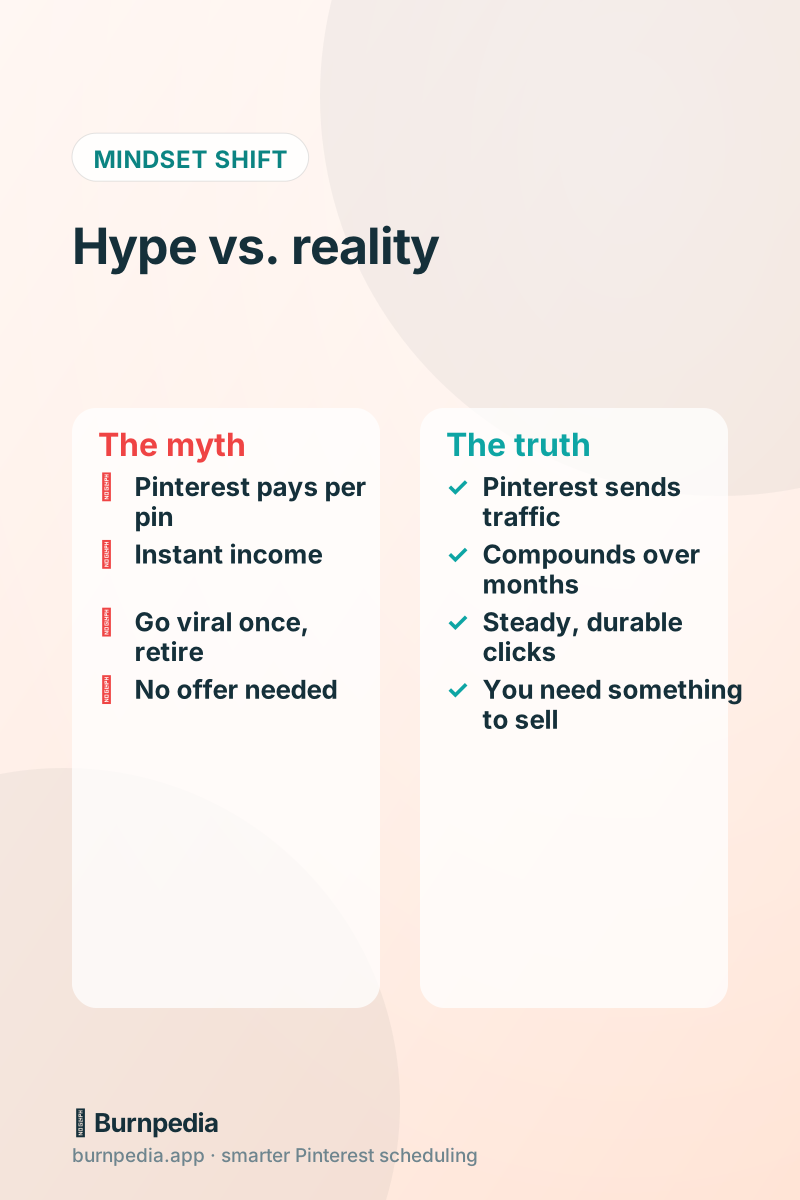
Let me clear up the single biggest misunderstanding about making money on Pinterest before we go one step further: Pinterest does not pay you. There is no “per pin” paycheck, no creator fund quietly depositing money for your pretty graphics. What Pinterest does — and this is so much better once it clicks — is send warm, ready-to-act traffic to whatever you point it at. Your job is to have something worth pointing it at. Get that one idea straight and every “way to make money on Pinterest” below suddenly makes sense.
I say this as someone who accidentally learned it the hard way. My little food blog was making pennies until I realized Pinterest wasn’t the product — it was the delivery truck. The moment I gave that truck somewhere valuable to drop people (a blog with ads, an email list, a product), the same traffic started turning into actual money. So think of this whole post as “here are the seven best places to send your Pinterest truck.” Let’s walk through all of them, then I’ll tell you which one to start with.

Way 1: Affiliate links (the fastest start)
Affiliate marketing is where you recommend products you genuinely like, and earn a commission when someone buys through your link. It’s the fastest way to earn on Pinterest because you don’t need a product, a website, or an audience of your own — just useful pins that point to things people already want to buy. You can link directly to an affiliate product, or (better) send people to a blog post or landing page first. I go deep on the whole approach in Pinterest affiliate marketing, and because Pinterest and the FTC both have rules here, please also read the affiliate rules and disclosure guide before you post a single link.
The reason affiliate income works so beautifully with Pinterest is intent. People on Pinterest are literally planning purchases — “best air fryer,” “cozy fall outfits,” “home office setup.” A helpful pin that answers that search and links to a great product is being useful and earning at the same time. Start with products you actually use, keep it honest, and let the volume of searches do the heavy lifting.
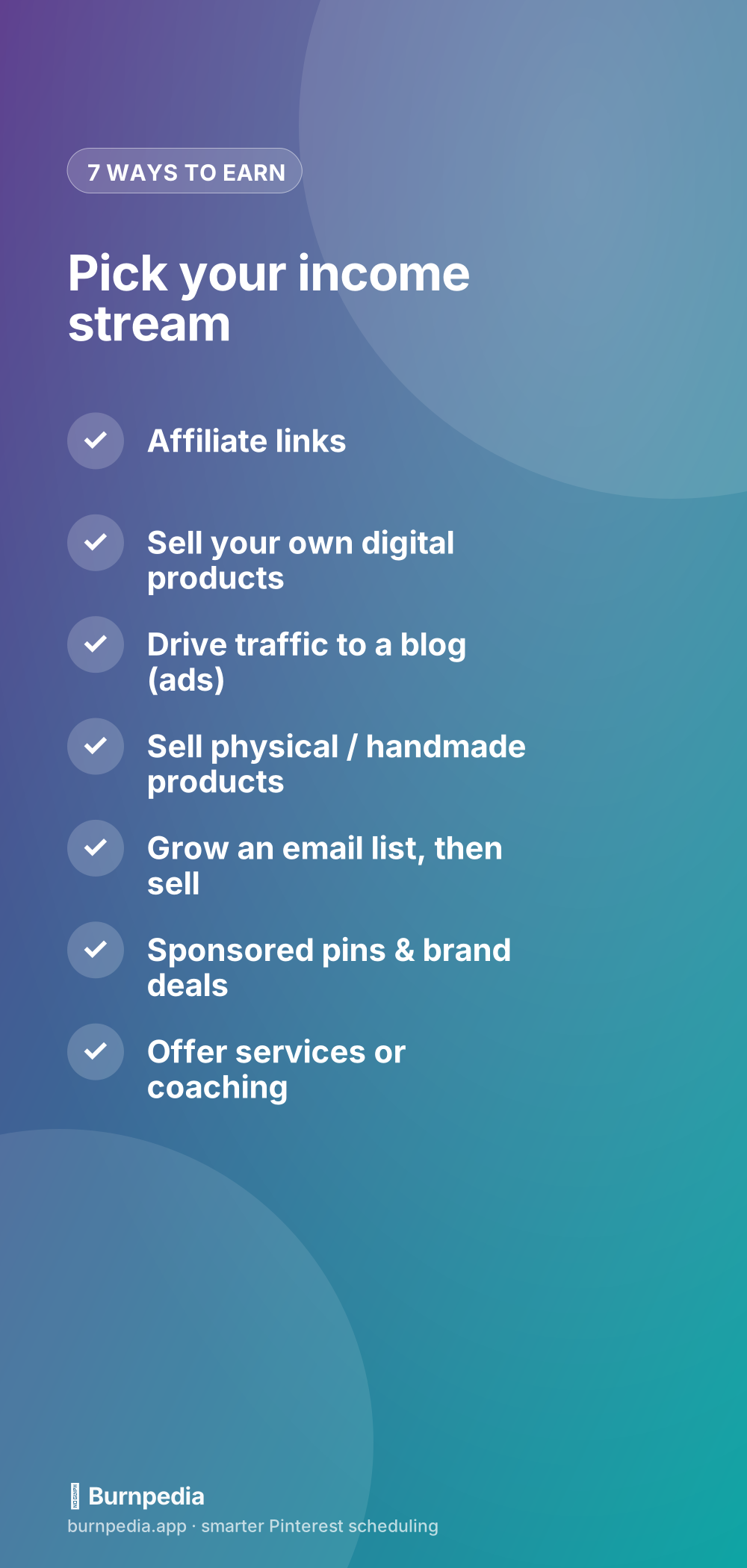
Way 2: Sell your own digital products
If affiliate income is renting someone else’s product, digital products are owning yours — and it’s where the margins get really good. Printables, templates, presets, ebooks, Notion dashboards, mini-courses: you make them once and sell them forever, with basically zero cost per sale. Pinterest is arguably the best free traffic source on earth for this, because it puts your product in front of people at the exact moment they’re searching for a solution. I wrote a full playbook on how to sell digital products on Pinterest, and a companion piece on building a digital-product business around Pinterest.
This is my favorite long-term play for most creators. Digital products turn Pinterest from “traffic” into a genuine business asset: a shop that runs while you sleep, fed by pins you made months ago. It takes more upfront work than dropping an affiliate link, but the ceiling is much higher and you keep 100% of the sale.
Way 3: Drive traffic to an ad-supported blog
The classic blogger model still works, and Pinterest is its engine. You write helpful blog posts, run display ads (Mediavine, Raptive, AdThrive, or Google AdSense to start), and Pinterest sends the pageviews that turn into ad revenue. The math is simple: more traffic, more ad impressions, more money — and Pinterest is one of the few places you can still get large volumes of free, durable traffic. My whole guide to driving Pinterest traffic to your blog breaks down exactly how to feed that engine.
The beauty here is compounding. A single blog post, pinned well, can send traffic for years, and each of those visitors sees ads. It’s slow to start and rewards patience, but once you cross the traffic thresholds that unlock premium ad networks, blog-plus-Pinterest becomes a wonderfully hands-off income stream — the kind of Pinterest passive income that keeps paying long after you’ve stopped working on it.
Way 4: Sell physical or handmade products
If you sell physical things — an Etsy shop, a Shopify store, handmade goods, print-on-demand — Pinterest is a natural storefront window. Product pins that look gorgeous and link straight to a listing put you in front of shoppers with their wallets already out. Visual, planned purchases (home decor, jewelry, apparel, gifts) do especially well. This is the same buyer-intent advantage affiliates use, except the sale is entirely yours.
The key with physical products is treating each product photo as a pin, not an afterthought — vertical, well-lit, and clearly captioned so the search engine understands it. Pin consistently, target real keywords, and send every click to a clean product page. For handmade and small-shop owners especially, Pinterest can quietly become your top traffic source.
Way 5: Build an email list, then sell to it
Here’s the one the pros quietly rely on: use Pinterest to grow an email list, then sell to that list over and over. Traffic is rented; an email list is owned. You offer a freebie (a checklist, a template, a mini-guide), Pinterest sends people to grab it, and now you can reach them any time — to launch a product, promote an affiliate deal, or share a new post. I walk through the whole funnel in growing your email list with Pinterest, and honestly, if you do only one “advanced” thing, make it this.
Email turns a fickle algorithm into a stable business. Even if Pinterest changed tomorrow, your list would still be yours. That’s why I think of list-building not as a separate income stream, but as the multiplier that makes every other stream on this list more valuable.
Way 6: Sponsored pins and brand deals
Once your account has real reach and a clear niche, brands will pay you to create pins featuring their products — sponsored content, straight up. This tends to come later, after you’ve built an engaged following and a recognizable style, but it can be lucrative. Brands love Pinterest creators because the content keeps working (and keeps being seen) long after the campaign ends, unlike a Story that vanishes in 24 hours. Keep your niche tight, your quality high, and a simple media kit ready.
Way 7: Offer services, coaching, or bookings
If you sell your time — coaching, design, photography, consulting, any local service — Pinterest can fill your calendar. Pins that showcase your work or teach a slice of what you know build trust and funnel people to a booking page or discovery call. Service businesses are exactly where a lot of people wrongly assume Pinterest “won’t work,” which is precisely why there’s so little competition. I make the honest case for who Pinterest fits (and who it doesn’t) in is Pinterest worth it for business.
So which one should you start with?
If you already have something to sell — a product, a shop, a service — start there; you just need to point Pinterest at it consistently. If you’re starting from zero, start with affiliate links (fastest to earn) while you build one email freebie and one small digital product in the background. Within a few months you’ll have a little stack: affiliate income now, a growing list, and a product that’s yours. Don’t try to run all seven at once — pick one, get it working, then add the next. And keep your expectations grounded: I put honest ranges to all of this in how much money you can really make on Pinterest.
Whatever you pick, the make-or-break factor is the same: consistency. Every one of these streams depends on steady, keyword-smart pinning over months, not a heroic week followed by silence. That’s the part almost everyone underestimates — and the part where a boring little scheduling habit quietly beats raw talent.
So, can you make money on Pinterest? Absolutely — but not by waiting for Pinterest to pay you. You make money by giving that free, buyer-rich traffic somewhere valuable to go: an affiliate link, your own product, an ad-supported blog, a shop, an email list, a brand deal, or your services. Pick the stream that fits where you are today, point Pinterest at it, and show up consistently long enough for the compounding to kick in. Do that, and “make money on Pinterest” stops being a headline and starts being a line in your bank statement. — Sadie
The income figures here are examples and ranges, not financial advice. What you earn depends on your niche, your traffic and what you sell.
Written by Sadie Brooks
Hey — I’m Sadie. I grew up in a small town outside Columbus, Ohio, moved to Austin for a job I quit within a year, and somewhere in between I started a scrappy little food blog to keep myself sane.
These days I help creators, bloggers, and small U.S. business owners grow on Pinterest without turning it into a second full-time job. I write the Burnpedia blog because I genuinely love this stuff, and because I wish someone had explained it to me in plain English years ago. Pour a coffee, pull up a chair.
Try Burnpedia freeWant Pinterest to run itself?
Every tip on this blog gets easier when your Pins publish on schedule. Burnpedia batches, times, and posts them for you — start free, no credit card.
Try Burnpedia free