How to Grow Your Email List With Pinterest (The Lead-Magnet Funnel)
Followers are nice, but an email list is an asset you own. Here’s the simple Pinterest funnel that turns anonymous browsers into subscribers you can reach anytime.

Let me share the single most valuable Pinterest lesson I ever learned: chasing followers is fine, but building an email list is where the real, durable value lives. Followers are borrowed — an algorithm decides who sees your pins, and platforms change the rules whenever they like. An email list is owned. It’s a direct line to people who raised their hand and said “yes, tell me more,” and no algorithm can stand between you and them. The good news is that Pinterest, done right, is a wonderfully steady email-list machine. You just need a simple funnel instead of hoping followers magically become subscribers.
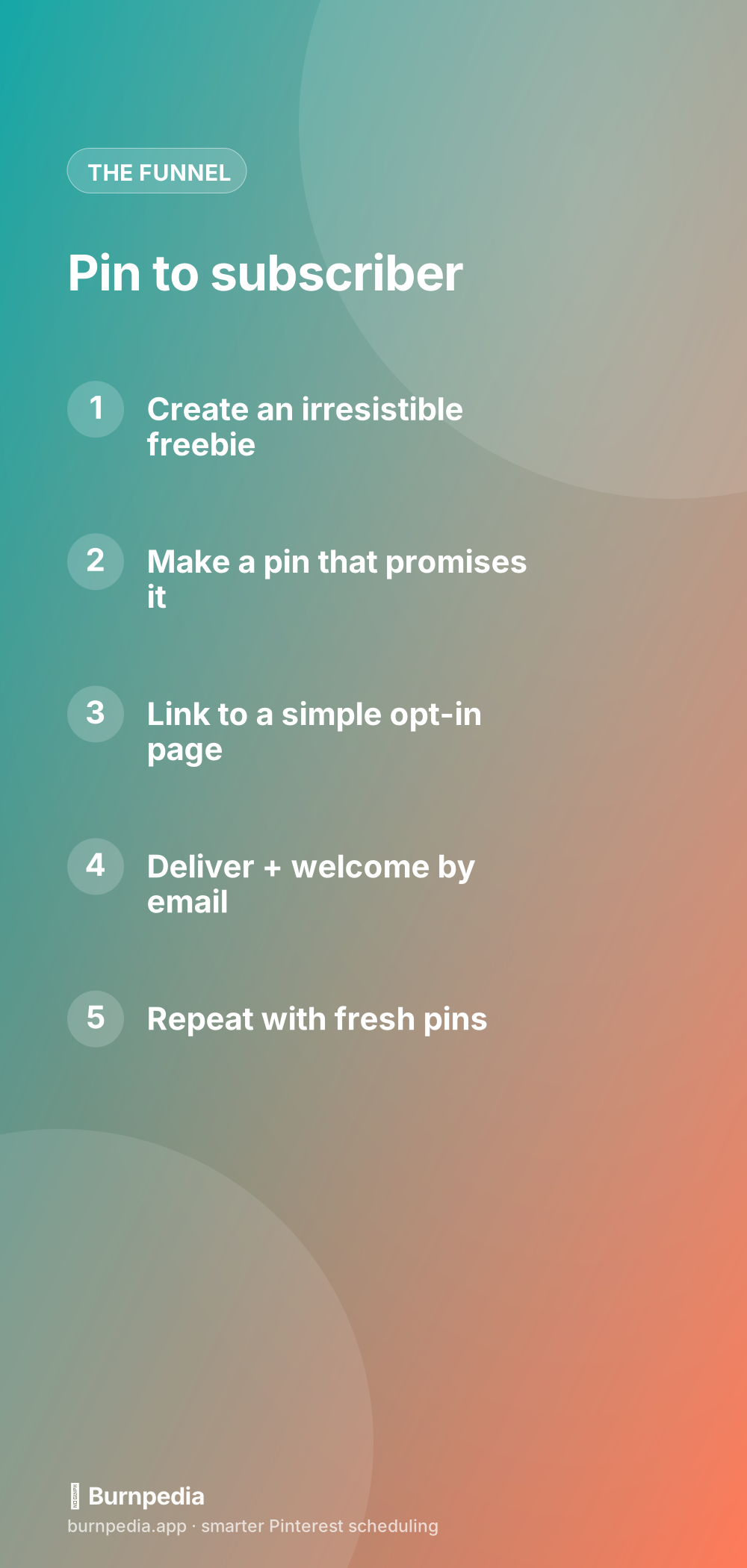
The funnel is only four moving parts: an irresistible freebie, a pin that promises it, an opt-in page that captures the email, and a welcome that delivers. Once it’s set up, every fresh pin you make quietly feeds it. Let’s build each part.
Part one: an irresistible freebie (lead magnet)
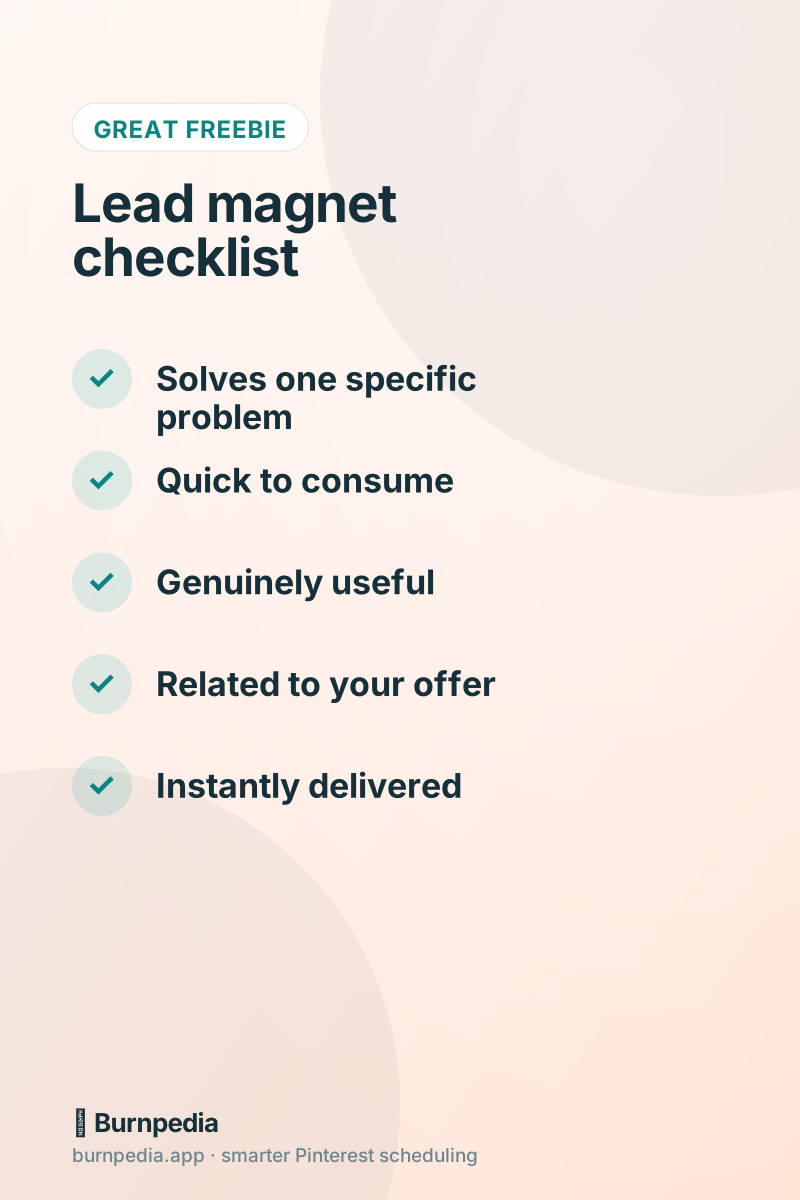
Nobody hands over their email for “sign up for my newsletter.” They hand it over for something specific and immediately useful — a lead magnet. The best ones solve one narrow problem quickly: a checklist, a printable, a template, a mini-guide, a quiz result, a swipe file, a short email course. It should be small enough to consume in one sitting, genuinely helpful, and related to whatever you eventually sell or write about, so the people who want it are the people you actually want on your list. A “7-day meal plan” attracts future customers of your recipe products; a “freelance pricing calculator” attracts future clients of your coaching.
Resist the urge to overbuild. A tidy one-page checklist that solves a real headache converts better than a sprawling 40-page ebook nobody finishes. The goal is a quick, satisfying win that makes the subscriber think, “if the freebie is this good, I want more of this person in my inbox.”
Part two: a pin that promises the freebie
Now make pins whose whole job is to promise your freebie. The image and headline should make the benefit obvious and clickable: “Free Weekly Meal Plan (Grab It),” “The 1-Page Budget Template,” “Free: 5-Day Confidence Challenge.” Design it like any great pin — tall, readable, scroll-stopping — but with a clear nudge that there’s a free thing waiting on the other side. And make several fresh pins for the same freebie over time, since fresh pins keep giving your funnel new chances at discovery.
Part three: a dead-simple opt-in page
The pin links to an opt-in page (a landing page) with one job: capture the email in exchange for the freebie. Keep it ruthlessly simple — a clear headline restating the promise, a sentence or two on what they’ll get, an image of the freebie, and a single email field with a button. No navigation to wander off into, no five other offers competing for attention. Every extra element is a reason to leave. The tighter the page, the more browsers become subscribers. This is where a lot of Pinterest traffic quietly leaks away, so it’s worth getting right.
Part four: deliver and welcome
The moment someone subscribes, deliver the freebie instantly (an automated email with the link) and follow it with a short welcome sequence. This is your chance to make a warm first impression: thank them, deliver value, tell your story briefly, and gently point them toward what’s next — your best content, or your offer when the time is right. A good welcome sequence turns a cold email address into a real relationship. Don’t skip it; the sign-up is the beginning, not the finish line.
Feed the funnel with a scheduler
Here’s what makes this scalable rather than exhausting: once the funnel exists, you just keep pointing fresh pins at it. Batch-create pins promising your freebie (and helpful pins that link to blog posts with the freebie embedded), then schedule them to publish consistently. Every pin becomes a little machine that runs day and night, converting browsers into subscribers while you’re busy elsewhere. That steady drip is how modest daily pinning turns into a list that grows every single day. Smart scheduling keeps the fuel flowing without daily effort.
Sprinkle opt-ins into your regular content too
You don’t need every pin to scream “freebie.” Plenty of your pins should just be genuinely helpful, linking to blog posts and pages — and those pages should quietly offer the relevant freebie inside them. So a reader arrives for the tip, gets value, and finds a natural “want the checklist version? grab it here” opt-in. This blends list-building into your normal content instead of making it feel like a constant sales pitch. It pairs perfectly with the traffic strategies in driving Pinterest traffic to your blog.
A simple list-building routine
Keep it light and repeatable. Have one or two solid freebies live. Each week, make a few fresh pins — some promising a freebie directly, some helpful pins linking to posts with an embedded opt-in — and schedule them out. Once a month, check which pins drive the most sign-ups and make more like them, and consider adding a new freebie for a topic that’s clearly resonating. That’s a small, steady effort feeding an asset that compounds: a list that grows a little every day and belongs entirely to you.
Give it a season and you’ll feel the shift. Instead of anxiously watching follower counts you don’t control, you’ll watch your list — real people you can email anytime, on your terms, forever. That’s the quiet power move behind so many successful creators and businesses: they used Pinterest not just for traffic, but to build an audience they truly own.
Lead-magnet ideas that actually convert
The whole funnel lives or dies on your freebie, so it’s worth getting right. The best lead magnets solve one specific, urgent problem quickly — they give a fast, satisfying win that makes someone think “if the free thing is this good, I want more.” Resist the urge to build a giant ebook nobody finishes; a tidy one-pager that fixes a real headache converts far better. If you’re not sure what to offer, start with the single question your audience asks most, and make the answer downloadable. Here are formats that reliably earn the email.
- A checklist or cheat sheet that makes a task foolproof.
- A template or swipe file people can copy and use immediately.
- A short, focused email course delivered over a few days.
- A quiz with a helpful, personalized result (and a reason to subscribe).
- A printable — planner, tracker, meal plan — that fits your niche.
Whatever you choose, make sure it’s tightly related to what you eventually sell or write about, so the people who want it are the people you actually want on your list. A “freelance pricing calculator” attracts future coaching clients; a “7-day meal plan” attracts future recipe-product buyers. Match the freebie to your offer and every subscriber arrives pre-qualified. Then feed the funnel with fresh, scheduled pins, and watch a list you fully own grow a little every single day — the quiet power move behind so many creators who look like overnight successes.
Followers are borrowed; an email list is owned. Build the four-part funnel — a great freebie, pins that promise it, a simple opt-in page, and a warm welcome — then feed it with fresh, scheduled pins. Do that, and Pinterest becomes a quiet subscriber machine, turning today’s anonymous browsers into an audience you can reach for years. Start with one good freebie, and let the funnel do the rest. — Sadie
Written by Sadie Brooks
Hey — I’m Sadie. I grew up in a small town outside Columbus, Ohio, moved to Austin for a job I quit within a year, and somewhere in between I started a scrappy little food blog to keep myself sane.
These days I help creators, bloggers, and small U.S. business owners grow on Pinterest without turning it into a second full-time job. I write the Burnpedia blog because I genuinely love this stuff, and because I wish someone had explained it to me in plain English years ago. Pour a coffee, pull up a chair.
Try Burnpedia freeWant Pinterest to run itself?
Every tip on this blog gets easier when your Pins publish on schedule. Burnpedia batches, times, and posts them for you — start free, no credit card.
Try Burnpedia free