A Pinterest Marketing Strategy That Actually Works (Without Burning You Out)
Most people “do Pinterest” by posting randomly and hoping. A real strategy is calmer than that — a clear goal, a few content pillars, fresh pins on a schedule, and numbers that tell you what to do next.

Let’s be honest about how most Pinterest “strategies” actually go. You make a few pins in a burst of motivation, post them whenever you remember, check your stats obsessively for three days, see nothing dramatic, and quietly drift away. Then a few months later you try again, from scratch, with the same result. I’ve been there, and I promise the problem was never you — it was the lack of a simple, repeatable plan. So let’s build one together, the calm kind that keeps working even on the weeks you’re busy.
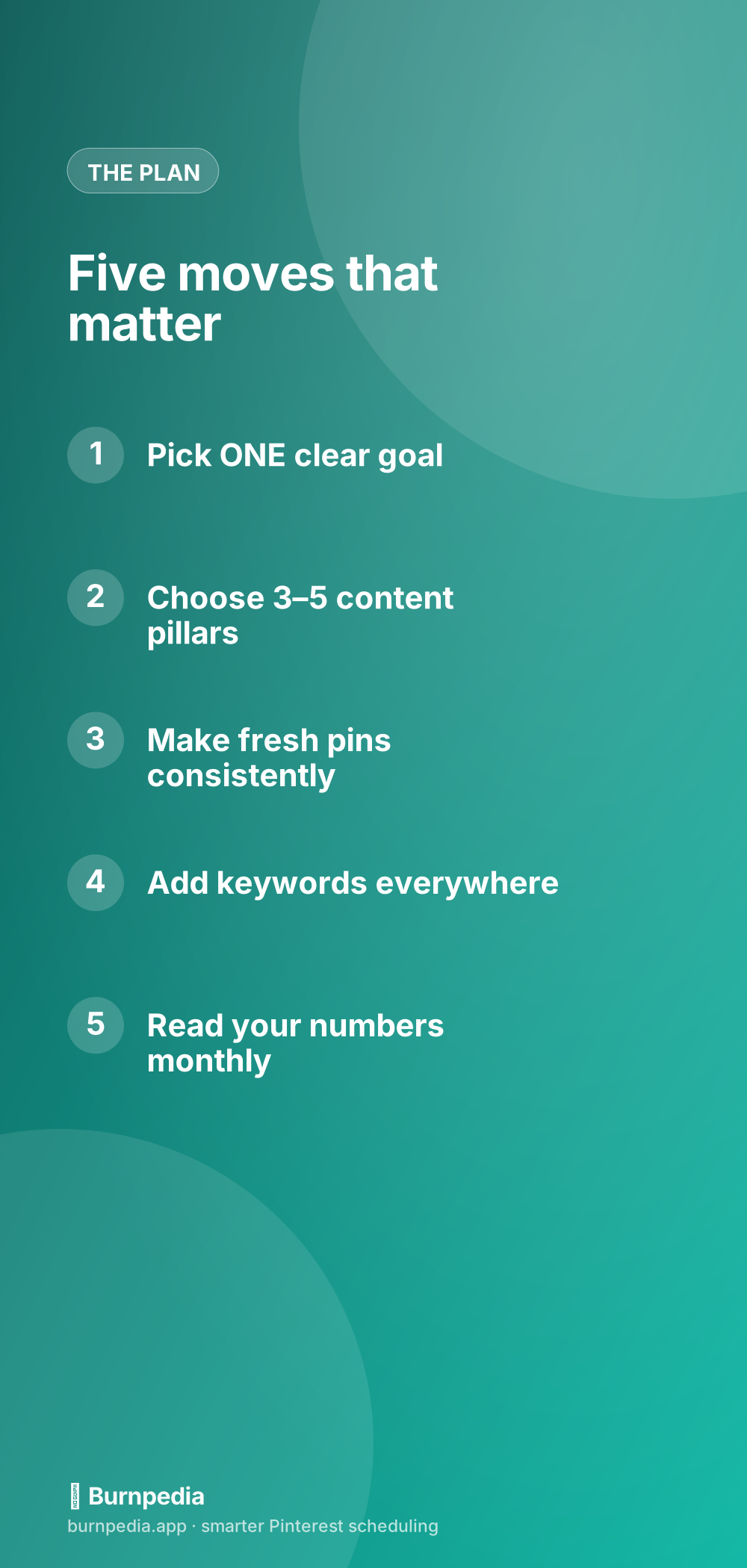
A good Pinterest strategy isn’t a giant content machine or a secret hack. It’s five unglamorous moves done consistently: one clear goal, a few content pillars, fresh pins on a schedule, keywords everywhere, and a monthly look at the numbers. That’s the whole thing. Everything else is decoration. Let’s take them one at a time.
Step one: pick ONE clear goal
Pinterest can do a lot of jobs — send traffic to a blog, sell products, grow an email list, book clients. The mistake is trying to do all of them at once, which leaves your account with no center of gravity. Pick the single outcome that matters most right now. If you’re a blogger, it’s probably traffic. If you sell things, it’s product clicks and sales. If you’re a service business, it’s email sign-ups or bookings. Write your goal on a sticky note. Every pin you make should visibly serve it.
This one decision quietly simplifies everything downstream. It tells you which pins to make, what to write in your descriptions, and which number to actually watch. Without it, you’ll chase impressions (which feel nice and mean little) instead of the outcome that pays your bills.
Step two: choose 3–5 content pillars
Pillars are the handful of topics you’ll pin about again and again. They keep you focused and they teach Pinterest what you’re about, which helps it show your pins to the right people. A food blogger might have “weeknight dinners, meal prep, cozy baking, healthy lunches.” A shop might have “gift ideas, styling tips, behind-the-scenes, customer favorites.” Three to five is the sweet spot — enough variety to stay fresh, few enough to build authority.
Your pillars usually map neatly onto boards, which is why a smart board strategy pairs so well with this. Name each board with the words your audience would actually search, and you’ve turned your pillars into a keyworded home for every pin you’ll ever make.
Step three: make fresh pins, consistently
Here’s the truth that trips people up: Pinterest rewards fresh pins, not just fresh content. A “fresh pin” is a new image — a new photo, a new design, a new title — even if it points to a page you published months ago. That means one blog post or product can become five, ten, twenty pins over time, each a new chance to get discovered. You do not need endless new content; you need endless new pins for the content you already have.
Consistency beats intensity every single time. Ten pins a week, every week, will crush forty pins in one manic Sunday followed by silence. The way to make that painless is to batch-create a stack of pins and then let a scheduler drip them out at good times. That’s exactly what smart scheduling is for — you do the creative work in one sitting, and the tool handles the calendar.
Step four: put keywords everywhere
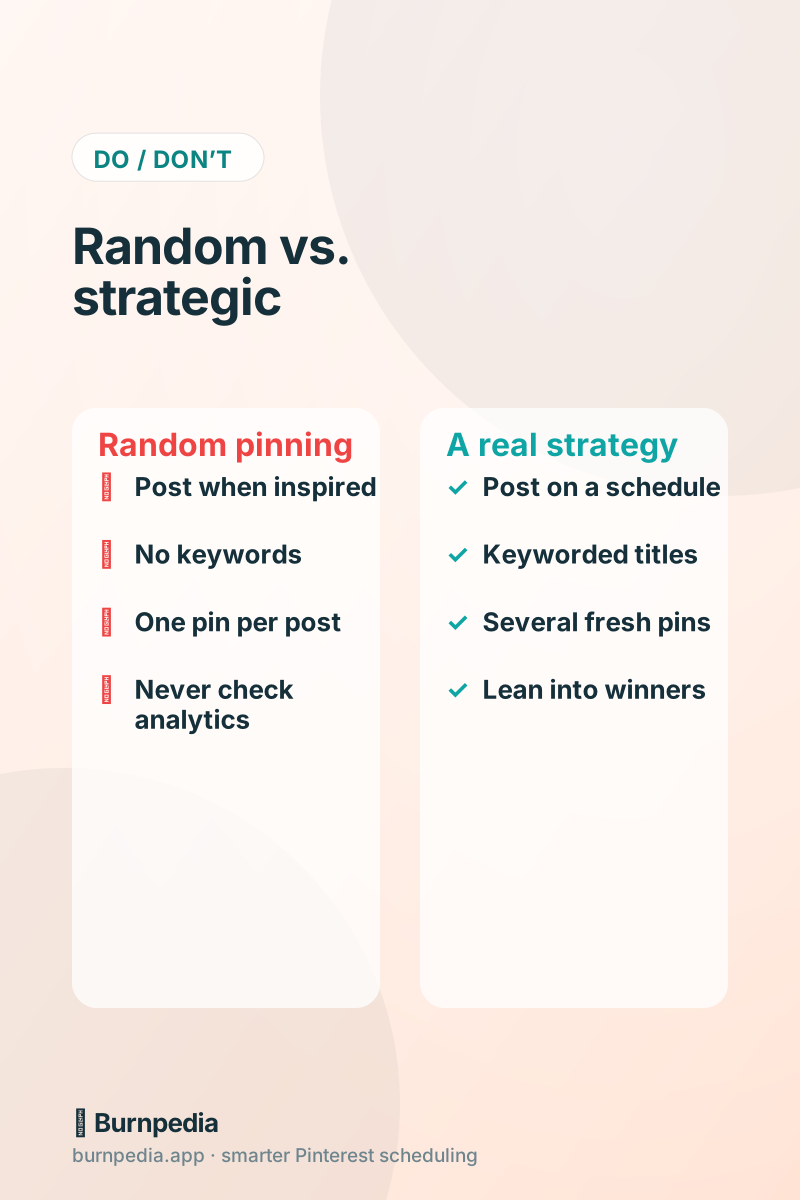
Pinterest is a search engine wearing a pretty visual costume. People type words into it, and it matches those words to your pins. So your job is to make sure the right words appear where Pinterest looks: your pin titles, your descriptions, your board names, and even the text baked into your images. Not stuffed and spammy — just naturally present, the way a helpful human would write.
The fastest way to find those words is to type your topic into the Pinterest search bar and see what auto-completes, then borrow that language. I go deep on this in the Pinterest SEO keywords guide. The payoff is huge: keyworded pins keep getting found for months, long after you’ve forgotten you made them.
Step five: read your numbers (monthly, not hourly)
The final move is the one people either skip or overdo. Skipping analytics means you’re flying blind, remaking pins that never worked. Obsessing over them daily means you panic at normal ups and downs. The healthy middle is a monthly check-in: which pins drove the most clicks, which topics are pulling ahead, which format keeps winning. Then you simply make more of what works and quietly retire what doesn’t.
This is where a good analytics view earns its keep — it surfaces your winning pins so you can lean into them instead of guessing. If a “cozy fall soups” pin is quietly crushing it, that’s your sign to make three more like it. Let the data pick your next move; it’s a much better creative director than your mood. Our guide to the metrics that matter will help you focus on the numbers that actually predict growth.
Why this compounds (and random pinning doesn’t)
The magic of Pinterest is that pins have a long shelf life. A tweet is gone in an hour; an Instagram post fades in a day. But a well-keyworded pin can surface in search and get saved for months, occasionally years. That means every pin you make on a good strategy is a tiny asset that keeps paying out. Stack enough of them and your traffic stops depending on today’s effort — it rides on the library you’ve built.
That’s the whole reason consistency matters so much here. You’re not performing for an algorithm that forgets you by dinner; you’re building a searchable catalog. Random pinning never compounds because there’s no through-line — no pillars, no keywords, no learning loop. A strategy compounds precisely because each month builds on the last.
Your first 30 days
If you want a concrete start, here’s the month I’d run. Week one: write your one goal, pick your pillars, and set up (or rename) boards to match, with keyworded names. Week two: batch-create 10–20 fresh pins across your pillars, all keyworded, and load them into a scheduler. Week three: keep the pins flowing and start turning your best older content into new fresh pins. Week four: do your first monthly analytics review and plan the next month around your early winners.
That’s it — no hacks, no hustle-until-you-hate-it. A clear goal, a few pillars, fresh pins on a schedule, keywords everywhere, and a monthly look at what’s working. Do those five things for a season and Pinterest stops being a mystery and starts being a dependable little traffic engine. Future you, watching visitors roll in from pins you made months ago, is going to be so glad you started. — Sadie
Written by Sadie Brooks
Hey — I’m Sadie. I grew up in a small town outside Columbus, Ohio, moved to Austin for a job I quit within a year, and somewhere in between I started a scrappy little food blog to keep myself sane.
These days I help creators, bloggers, and small U.S. business owners grow on Pinterest without turning it into a second full-time job. I write the Burnpedia blog because I genuinely love this stuff, and because I wish someone had explained it to me in plain English years ago. Pour a coffee, pull up a chair.
Try Burnpedia freeWant Pinterest to run itself?
Every tip on this blog gets easier when your Pins publish on schedule. Burnpedia batches, times, and posts them for you — start free, no credit card.
Try Burnpedia free