Pinterest for Coaches & Service Businesses: Fill Your Pipeline Quietly
You don’t sell a product people pin — you sell transformation. Here’s how coaches and service businesses use Pinterest to attract ideal clients and grow an email list that books calls.

Coaches, consultants, and service providers often assume Pinterest is only for bloggers and shops — for people with products to pin or recipes to share. But some of the smartest client pipelines I’ve seen run quietly on Pinterest. Here’s why it fits: you don’t sell a physical thing, you sell transformation, and Pinterest is where people go when they’re dreaming about a better version of their life or business. They’re searching “how to start a side hustle,” “morning routine for productivity,” “meal plan to lose weight,” “how to price freelance work.” Those searchers are your future clients, early in their journey, raising their hands.
Your Pinterest goal isn’t likes or even followers — it’s leads, specifically email subscribers you can nurture toward working with you. The general business foundation applies (see how to use Pinterest for business), but coaches need one thing above all: a funnel. Let’s build it.
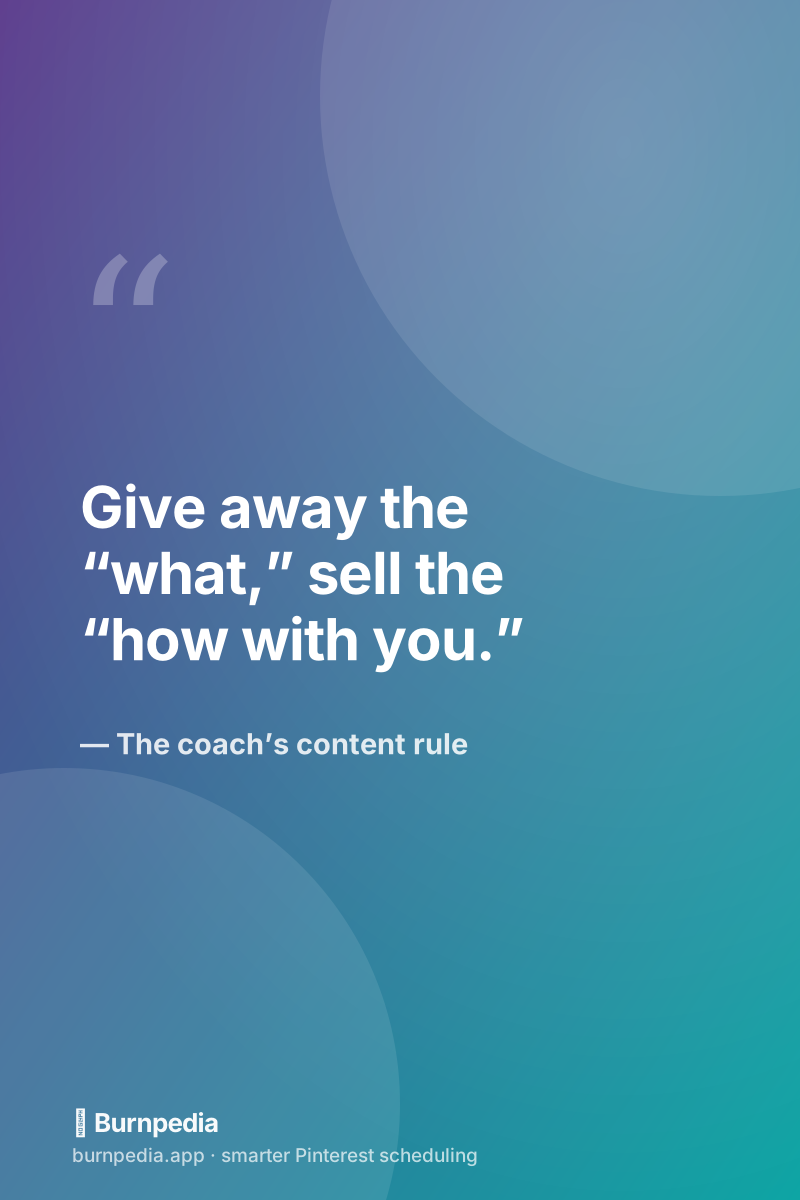
Give away the “what,” sell the “how with you”
The content rule for coaches is simple and freeing: give away genuinely useful “what to do” advice, and reserve the deep “how to do it with my help” for your paid offers. A productivity coach freely shares “5 habits that protect your focus”; the paid program is the accountability and personalization. This generosity does two jobs at once — it attracts the right people by demonstrating real expertise, and it builds the trust that eventually makes them want your guidance. Hoarding your best tips out of fear just makes you invisible; sharing them makes you the obvious choice.
So make tip-driven pins: quick frameworks, mindset shifts, checklists, common mistakes to avoid, “start here” guides. Each pin should solve one small problem completely and leave the reader thinking, “if the free stuff is this good, imagine the paid stuff.” That thought is what starts the relationship.
Build the funnel: pin → lead magnet → email
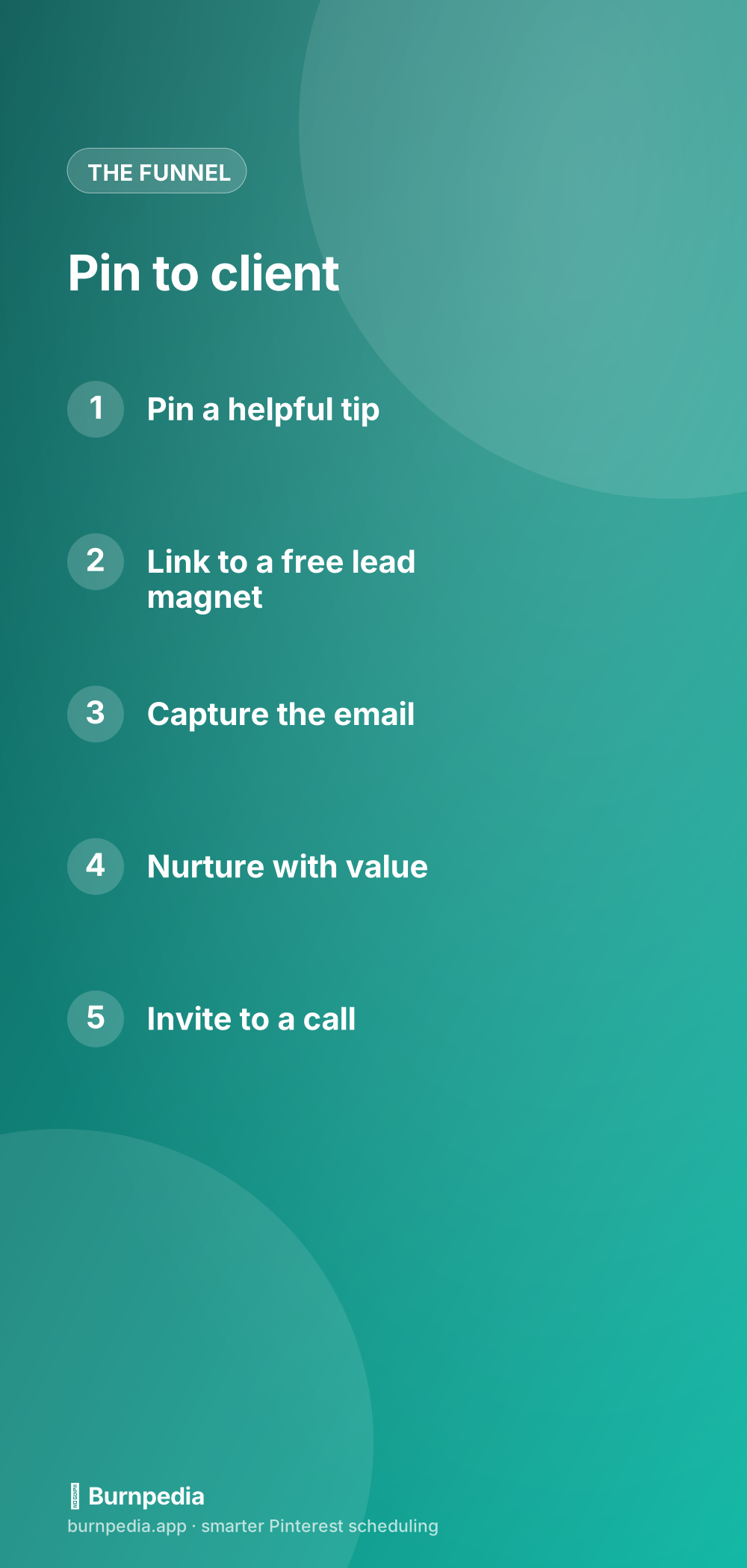
This is the part that turns Pinterest from a vanity project into a pipeline. Don’t just link pins to a blog post and hope. Link them to pages with a free lead magnet — a checklist, a mini-course, a template, a quiz — that someone gets in exchange for their email. The pin earns the click, the free resource earns the email, and now you have a lead you can nurture. This is the single highest-leverage move for coaches, and it’s exactly what growing your email list with Pinterest is all about. Miss this step and you’re getting traffic but no leads.
Keyword like a searching seeker
Pinterest is a search engine, so your pins need the exact words your future clients type. They rarely search “life coach” — they search the problems you solve: “how to stop procrastinating,” “budget for beginners,” “confidence tips,” “how to start a business with no money.” Meet them at the problem, not the job title. Weave those searchable phrases into your titles, descriptions, and board names. The keyword-finding guide shows you how to pull the precise language straight from Pinterest.
Organize boards around your client’s journey
Structure boards around the transformation you offer and the problems your people face: “Productivity Tips,” “Starting a Side Hustle,” “Money Mindset,” “Healthy Habits.” Keyworded board names help searchers and signal to Pinterest exactly who your account serves, so it shows you to the right seekers. A clear, themed set of boards also reassures a visitor that you’re a focused expert in their specific struggle, not a scattered generalist. Focus reads as authority.
Stay consistent without adding a full-time job
You’re busy coaching clients and running a business, and Pinterest quietly fades without regular pins. The answer, as always, is batching plus scheduling. Set aside an hour, turn your expertise into a stack of tip pins pointing at your lead magnets, and load them into a scheduler to publish across the coming weeks at good times. Your top-of-funnel keeps filling whether you’re on a client call, on stage, or on holiday. That hands-off consistency is what makes the whole funnel worth building. Smart scheduling makes it a small habit, not a chore.
Repurpose everything you already teach
You are sitting on a mountain of content: past emails, program modules, social posts, client FAQs, webinar slides. Each of those can become a pin (or several). A single teaching point becomes a quick tip pin; a common client question becomes a “here’s the answer” pin linking to your lead magnet. You don’t need to invent new material — you need to slice what you already teach into pinnable pieces. That mindset makes producing a steady stream of pins feel light instead of daunting, because the ideas already exist.
A realistic coach routine
Keep it sustainable. Twice a month, spend an hour turning your expertise into tip pins that point at a lead magnet, and schedule them out. Once a month, check which pins and topics drive the most clicks and sign-ups, and make more like them. Then let your email nurture sequence do the closing work — sharing value, building trust, and inviting the right people to a call. That’s a couple of focused hours a month feeding a pipeline that runs on its own the rest of the time.
Give it a season and the shape of it becomes clear: strangers find your helpful pins, grab your free resource, join your list, get to know and trust you through your emails, and a steady trickle of them raise their hand to work with you. All of it kicked off by a pin they found while dreaming about the change you help people make. That’s a quiet, dignified, compounding way to fill a coaching practice — no cold DMs required.
Tip-pin ideas that attract clients
If you’re not sure what to pin, remember that your future clients are searching for the problems you solve, not your job title. So make pins that answer those problems generously. Each tip pin should completely solve one small piece of the puzzle and leave the reader thinking, “if the free advice is this good, I want this person’s help.” You already teach all of this — the trick is slicing what you know into small, pinnable pieces. Here are formats that consistently attract the right people and point them toward your lead magnet.
- Quick frameworks: “The 3-step method for…,” “How to… in 10 minutes.”
- Mindset shifts that reframe a problem your clients struggle with.
- Common mistakes to avoid — and what to do instead.
- “Start here” beginner guides that meet people at the very first step.
- Checklists and templates that deliver a fast, satisfying win.
Point each of those at a page with a relevant free lead magnet, and your generosity quietly becomes a pipeline. People find your helpful pin, grab the freebie, join your list, and get to know and trust you through your emails — until a steady trickle of them raise their hand to work with you. It’s the calmest, most dignified client-generation there is: no cold outreach, no pushiness, just useful pins doing quiet work while you focus on serving the clients you already have. Give away the “what,” and let the funnel handle the rest.
Pinterest for coaches isn’t about going viral — it’s about quietly attracting the right people and turning them into leads you can nurture. Give away the “what,” funnel clicks to a lead magnet, keyword like a seeker, and let a scheduler keep the top of your funnel full. Do that, and you’ll build the calmest client-generation machine you’ve ever run — one that keeps working long after you’ve logged off. — Sadie
Written by Sadie Brooks
Hey — I’m Sadie. I grew up in a small town outside Columbus, Ohio, moved to Austin for a job I quit within a year, and somewhere in between I started a scrappy little food blog to keep myself sane.
These days I help creators, bloggers, and small U.S. business owners grow on Pinterest without turning it into a second full-time job. I write the Burnpedia blog because I genuinely love this stuff, and because I wish someone had explained it to me in plain English years ago. Pour a coffee, pull up a chair.
Try Burnpedia freeWant Pinterest to run itself?
Every tip on this blog gets easier when your Pins publish on schedule. Burnpedia batches, times, and posts them for you — start free, no credit card.
Try Burnpedia free