Pinterest Marketing by Niche: Which Playbook Fits Your Industry
The Pinterest fundamentals are universal, but the winning move looks different for a boutique than it does for a personal trainer. Here is the by-niche map so you can copy the playbook that actually fits what you do.


Here is something that took me way too long to figure out: Pinterest advice is usually written as if everyone is the same business. “Post consistently, use keywords, make tall pins.” All true! All useful! And all a little frustrating when you are a skincare brand and the example is a food blogger, or you run a boutique and every screenshot is somebody’s minimalist home office. Because the truth is that Pinterest genuinely works differently depending on what you sell — not the fundamentals, but the flavor. The boards you make, the photos that stop the scroll, the exact hook that earns the click: those shift a lot from niche to niche.
So think of this post as the map, and the niche guides underneath it as the detailed directions. I want to give you the shared foundation every niche stands on, then point you straight to the playbook built for your corner of the world. If you are still deciding whether Pinterest even fits your business, start with the niches that work best on Pinterest — then come back here to go deeper on yours.
The part that never changes
Before we split into lanes, let’s lock in the through-line, because if you skip these, no amount of niche-specific cleverness saves you. Pinterest is a visual search engine, not a social feed. People arrive with intent — they are planning a wedding, a workout plan, a bathroom remodel, a summer trip — and they are looking for ideas to save and act on later. That single fact drives everything. It means you win by being findable (keywords in your titles, descriptions, and boards), by being clickable (tall, bright, benefit-clear pins), and by being consistent (a steady stream of fresh pins so the algorithm keeps testing you). Those five moves are universal.
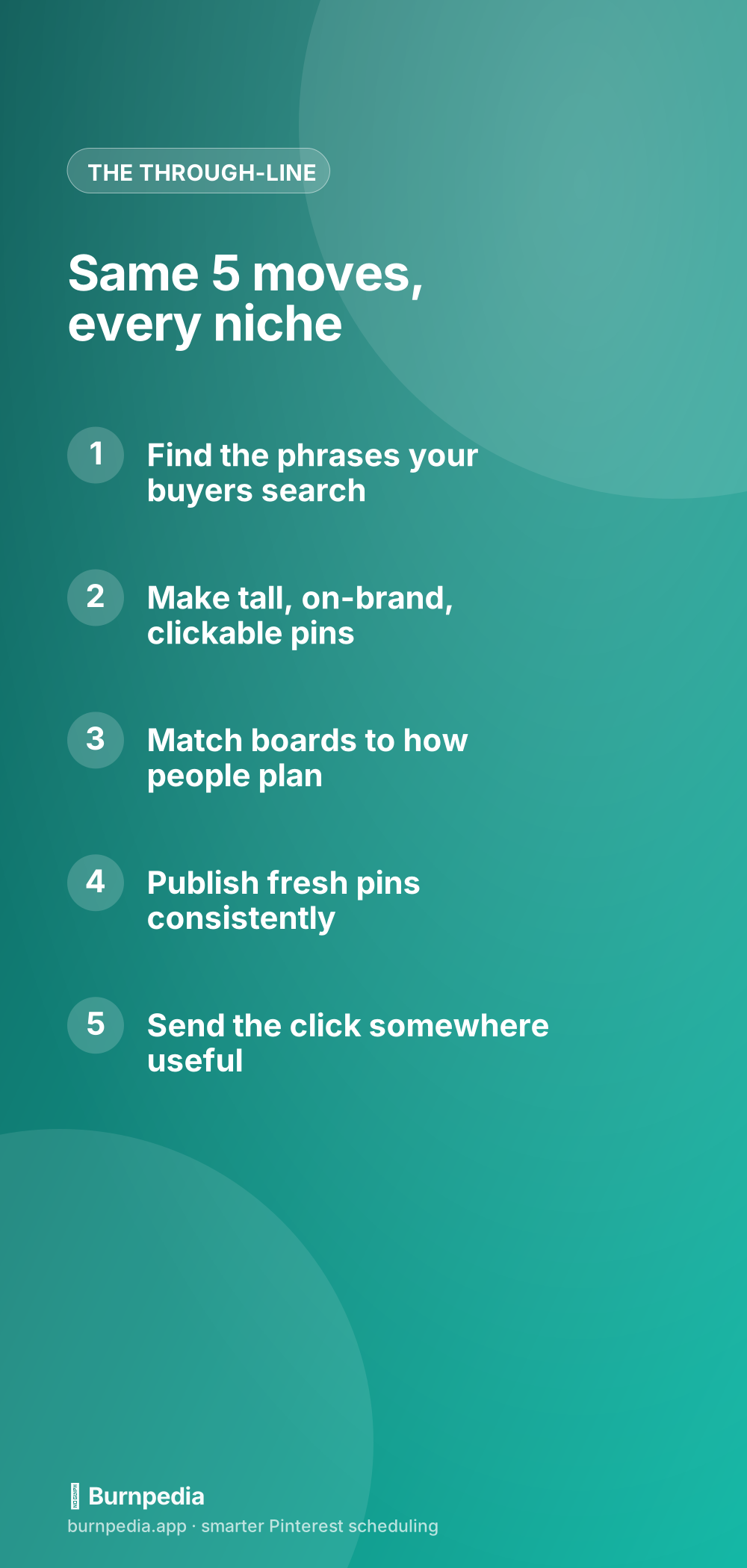
Notice what is NOT on that list: going viral, posting daily by hand, or chasing followers. Pinterest rewards the slow compounding of useful, well-labeled pins far more than it rewards any single big moment. If you internalize how the machine actually decides what to show — which I break down in how the Pinterest algorithm works — the niche tactics below stop feeling like tricks and start feeling like obvious applications of the same rules.
Where the niches split
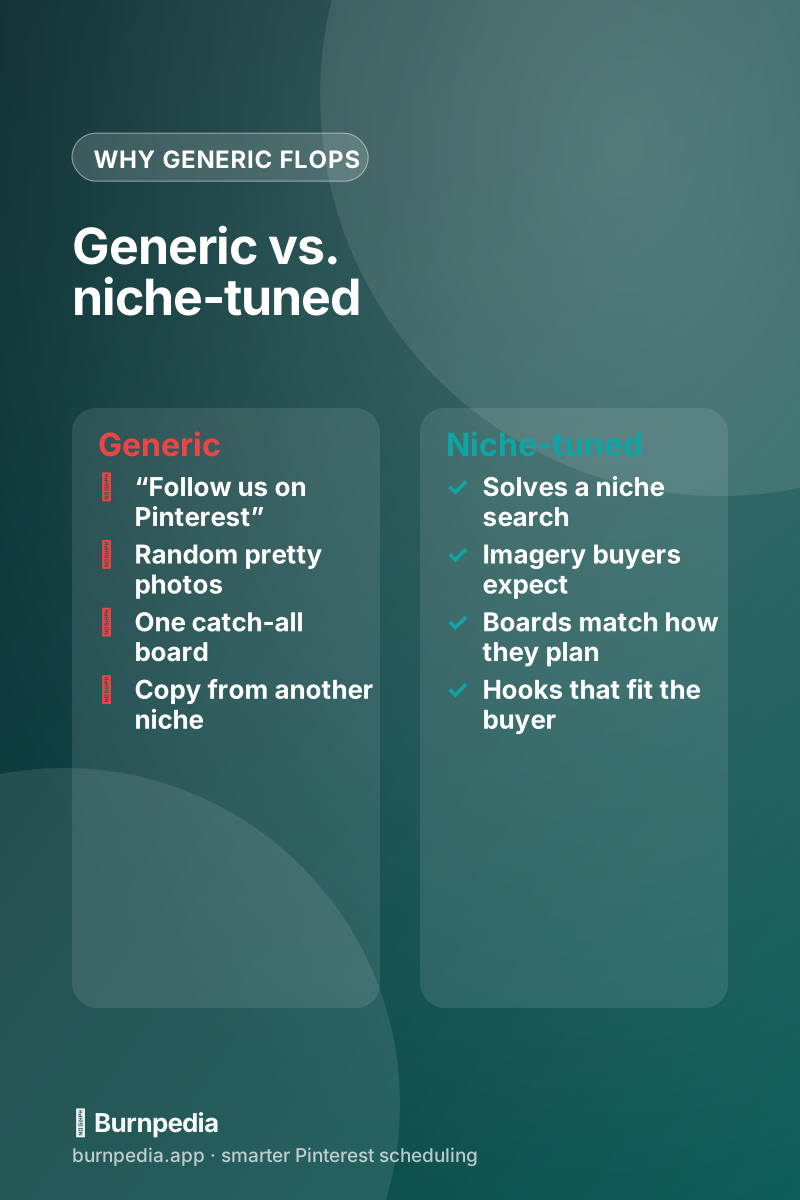
Now the fun part — the differences. What changes from niche to niche is mostly three things: the imagery people expect, the way they organize their planning, and the buying journey behind the click. A fashion shopper wants to see the garment styled on a real body and is often ready to buy now. A home decor fan is building a slow, aspirational board for a project that might be months away. A fitness client needs to trust you before they commit their body and their mornings to your program. Same platform, completely different psychology — and your pins, boards, and calls to action should reflect it.

That is why “copy the tactic from a different niche” so often flops. The gorgeous flat-lay that crushes it for a stationery shop looks oddly flat for a personal trainer, whose audience responds to real bodies, real sweat, and real results. The urgent “Shop the sale” hook that works for apparel feels pushy on an interior design pin, where the reader is dreaming, not buying today. Match the move to the mindset and everything gets easier.
Find your lane (the 5 niche playbooks)
Here are the five deep-dive guides in this series. Each one is a full playbook — the imagery that works, the boards to build, the seasonal rhythm, and the exact hooks that fit that buyer. Jump to yours:
- Pinterest for fashion & apparel brands — styled, shoppable outfit pins and the seasonal drop calendar that drives sales.
- Pinterest for beauty & skincare brands — routines, before-and-afters, and turning “how do I…” searches into buyers.
- Pinterest for interior designers & home decor — room-by-room boards for the long, aspirational planning journey.
- Pinterest for fitness & wellness coaches — building trust with real results and turning savers into clients.
- Pinterest for travel bloggers & creators — destination guides, planning boards, and evergreen seasonal traffic.
Not seeing an exact match? Don’t worry — pick the niche closest to your buyer’s mindset. A candle maker borrows from home decor; a wellness supplement brand borrows from beauty and fitness both; a boutique hotel lives somewhere between travel and interior design. The mindset is what matters, not the label.
The one thing every niche gets wrong
Across every single niche I’ve ever worked in, the failure mode is identical, and it has nothing to do with strategy: people post in an enthusiastic burst for two weeks, see nothing happen (because Pinterest is slow to warm up), get discouraged, and quit right before it would have started working. Pinterest is a compounding game. The pins you publish this month are still pulling traffic six, nine, twelve months from now — but only if you keep feeding it consistently instead of vanishing after your motivation runs out.
One fundamental, five flavors
Want to see how the “same fundamentals, different flavor” idea actually plays out? Take one shared rule — put the search phrase in your title — and watch it flex. A fashion brand writes “fall wedding guest outfit”; a beauty brand writes “simple morning skincare routine for oily skin”; an interior designer writes “small living room layout ideas”; a fitness coach writes “beginner home workout no equipment”; a travel creator writes “3 days in Lisbon itinerary.” Identical principle, wildly different execution — because each one is meeting a different buyer at a different point in a different journey. That is the whole thing in a nutshell.
The same is true for boards (occasion vs. concern vs. room vs. goal vs. destination), for imagery (a styled outfit vs. an honest before-and-after vs. a full room vs. real results vs. a useful itinerary), and for the call to action (buy now vs. learn the routine vs. save for later vs. grab the freebie vs. read the guide). So when you open your niche’s playbook, don’t treat it as a separate set of rules — treat it as this shared foundation, translated into your buyer’s language. Get the translation right and Pinterest stops feeling generic and starts feeling like it was built for exactly what you do.
Where to go from here
So here’s the plan: lock in the five universal fundamentals, then open the guide for your specific niche and steal the details that fit your buyer. Don’t try to run all five playbooks — run yours, deeply and consistently, for a few months. If your business genuinely straddles two niches, read both guides and blend them; the mindsets overlap more than you’d think. And if you’re still not sure Pinterest is worth the effort for what you do, I made the honest case (with the caveats) in is Pinterest worth it for business.
Pinterest rewards people who show up for their specific audience with the specific thing that audience is searching for — over and over, patiently, for longer than feels natural at first. Pick your lane, follow the playbook that fits it, and give it the time it actually needs. That’s the whole game, and it’s more winnable than the generic advice makes it sound. Now go find your niche below and get specific. — Sadie
Written by Sadie Brooks
Hey — I’m Sadie. I grew up in a small town outside Columbus, Ohio, moved to Austin for a job I quit within a year, and somewhere in between I started a scrappy little food blog to keep myself sane.
These days I help creators, bloggers, and small U.S. business owners grow on Pinterest without turning it into a second full-time job. I write the Burnpedia blog because I genuinely love this stuff, and because I wish someone had explained it to me in plain English years ago. Pour a coffee, pull up a chair.
Try Burnpedia freeWant Pinterest to run itself?
Every tip on this blog gets easier when your Pins publish on schedule. Burnpedia batches, times, and posts them for you — start free, no credit card.
Try Burnpedia free