Pinterest for Fitness & Wellness Coaches
People plan their health transformations in private, on Pinterest, long before they hire anyone. Here is how a fitness or wellness coach shows up in that moment, builds trust, and turns quiet savers into paying clients.


Fitness and wellness are trust businesses, full stop. Nobody hands over their body, their mornings, and their money to a coach they don’t believe in. And here’s the thing most coaches miss about Pinterest: people plan their health changes in private, weeks or months before they ever reach out to anyone. They’re quietly saving “beginner home workouts,” “high-protein meal prep,” “how to start running,” “morning routines for energy” — building a plan for the new version of themselves. That quiet, pre-decision moment is where you want to be. Not shouting a sales pitch, but showing up as the genuinely helpful expert who makes them think, “okay, this person actually knows what they’re talking about.”
So the fitness playbook on Pinterest is fundamentally a trust-building playbook, and it looks a lot like coaching itself: help first, prove you can deliver results, then invite the ready ones to work with you. This is the same trust-then-offer arc that works for coaches in general — I go broad on it in the Pinterest for coaches guide — but fitness and wellness have their own specific creative and their own conversion path, which is what we’re digging into here.
Give away a real win
The content that works for fitness coaches gives people an actual result they can use today, for free. A “beginner’s first-week workout,” a “5 high-protein breakfasts,” a “10-minute mobility routine,” a “how to build a sustainable habit” explainer. When someone tries your free tip and it works — they feel a little stronger, they actually stick to the routine, the meal prep saves their week — you’ve done something no ad can do: you’ve proven you can help them. That felt result is the foundation of the trust that eventually turns into a coaching client. Be generous with the free wins; the depth and personalization is what people pay for later.

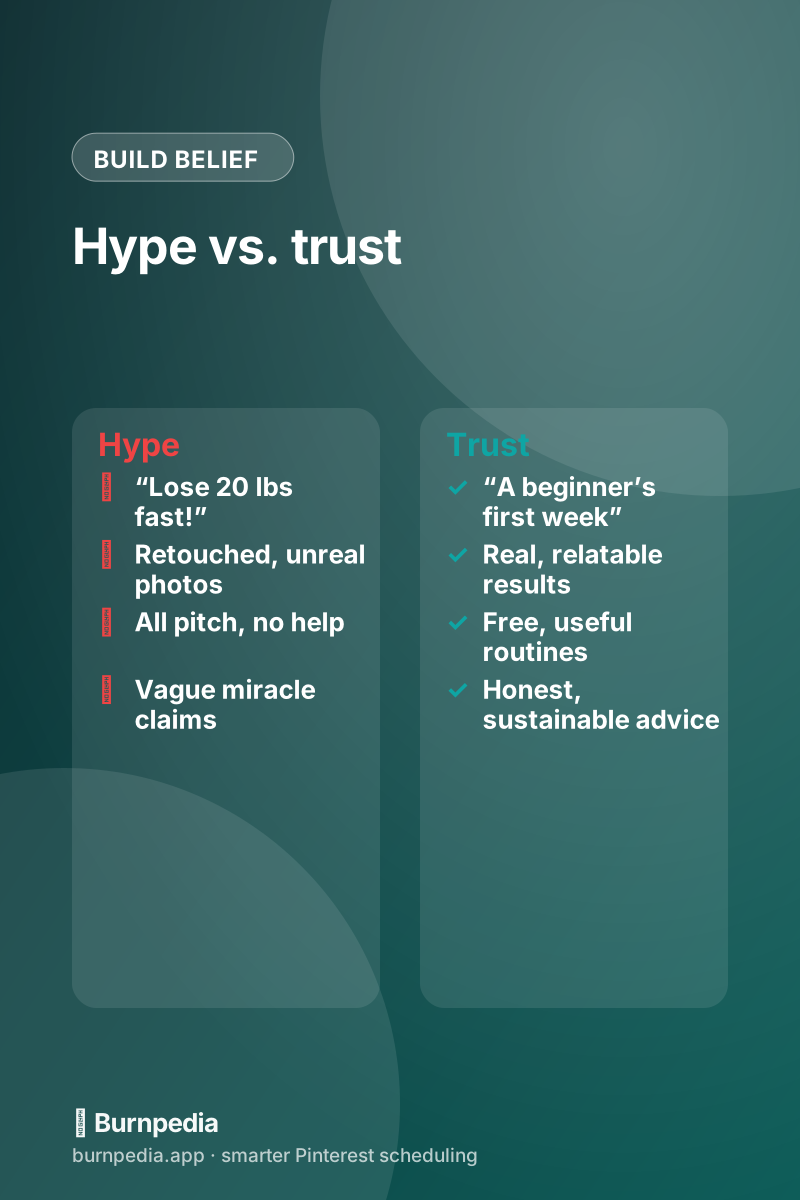
And please, be the honest one. Fitness is drowning in hype — miracle transformations, “lose 20 pounds in two weeks,” retouched bodies, and vague claims. You can win enormous trust simply by being the realistic, sustainable, believable voice in a sea of nonsense. Show relatable results and normal bodies, talk about consistency over crash diets, and be upfront about what actually takes time. In a hype-soaked niche, honesty isn’t just ethical — it’s your sharpest marketing edge, because it’s what exhausted, burned-by-fads people are desperate to find.
Turn savers into an email list
Here’s the conversion move that most fitness coaches skip: Pinterest is fantastic at getting people to save your stuff, but a save isn’t a client. You need to move the interested ones off Pinterest and into a space where you can actually build a relationship — and that means email. Offer a genuinely valuable freebie (a “7-day beginner workout plan,” a “meal prep starter guide,” a “habit tracker”) and let your pins link to a simple landing page where people trade their email for it. Now you’re nurturing a warm list of people who already trust you, instead of hoping they remember your name. The full mechanics of this are in growing your email list with Pinterest, and for a coach it’s the single highest-leverage thing you can do.
From there, the path is classic and it works: someone finds your free workout pin, downloads your free plan, joins your email list, gets a few weeks of genuinely helpful (not salesy) emails, and then — when you finally invite them to coaching — they’re not a cold stranger, they’re someone who has already gotten results from your free stuff and trusts you to give them more. Pinterest fills the top of that funnel with warm, self-selected people who were literally already planning to change. Your email nurture does the converting. It’s a beautiful, low-pressure system.
Use video where it counts
Fitness is one of the niches where video genuinely shines, because movement is so much clearer shown than described. A quick clip of proper form, a 15-second mobility flow, a “do this instead” correction — these stop the scroll and prove your expertise in a way a static graphic can’t. You don’t need a studio; a phone and decent light is plenty. The whole approach to making short, useful Pinterest video without burning out is in the Pinterest video marketing guide — and for fitness coaches it’s worth leaning into, because “show me how” is the whole job.
Pick a lane and own it
One thing that dramatically speeds up a fitness coach’s Pinterest growth is niching down within your niche. “Fitness” is impossibly broad and crowded; “strength training for women over 40,” “postpartum core recovery,” “home workouts for busy parents,” or “beginner running for people who hate running” are specific enough that you can genuinely own them. When your pins, boards, and freebies all speak to one clear person with one clear goal, two good things happen: Pinterest understands exactly who to show you to, and the right people feel like you’re reading their mind. Specificity isn’t limiting here — it’s the fastest path to being the obvious choice for a defined group.
Wellness coaches — nutrition, sleep, stress, habits, mindset — follow the exact same arc, just with different content. A sleep coach pins “a calming evening routine”; a nutrition coach pins “high-protein snacks that actually fill you up”; a habit coach pins “how to make a new habit finally stick.” In every case it’s: answer the private question, give a real free win, capture the email, nurture, invite. The niche detail changes; the trust-first machine underneath it doesn’t. Find the one specific person you’re best at helping, and build your whole Pinterest presence around making their life measurably better.
The fitness takeaway
Fitness and wellness on Pinterest come down to trust, earned patiently: answer the real questions people are quietly asking, give away wins that actually work, be the honest voice in a hyped-up niche, capture interested savers onto an email list with a great freebie, nurture them, and invite the ready ones to coaching. Layer in short-form video where form and movement matter, and keep it all consistent. Do that and Pinterest becomes a steady source of warm, pre-sold leads who found you exactly when they decided to change. To see how this compares to the other niches, head back to the Pinterest-by-niche map.
The reason I love Pinterest for coaches is that it meets people in the most sincere moment there is — the quiet, private decision to take better care of themselves. You don’t have to hard-sell that person; you just have to be genuinely helpful, genuinely honest, and genuinely present when they go looking for a plan. Do that consistently and the clients follow, because you’ll be the one who was there, being real, from the very first save. And unlike a crowded social feed, that first save doesn’t vanish overnight — it sits on their board, quietly reminding them of you every time they open their plan, right up until the day they’re finally ready to commit. That patience, working in your favor around the clock, is the whole edge. — Sadie
Written by Sadie Brooks
Hey — I’m Sadie. I grew up in a small town outside Columbus, Ohio, moved to Austin for a job I quit within a year, and somewhere in between I started a scrappy little food blog to keep myself sane.
These days I help creators, bloggers, and small U.S. business owners grow on Pinterest without turning it into a second full-time job. I write the Burnpedia blog because I genuinely love this stuff, and because I wish someone had explained it to me in plain English years ago. Pour a coffee, pull up a chair.
Try Burnpedia freeWant Pinterest to run itself?
Every tip on this blog gets easier when your Pins publish on schedule. Burnpedia batches, times, and posts them for you — start free, no credit card.
Try Burnpedia free