Pinterest for Beauty & Skincare Brands: The Complete Guide
Beauty is a search-and-educate niche: people come to Pinterest asking how to fix, glow, and routine their way to results. Here is how a skincare or cosmetics brand earns that trust and turns it into sales.


Beauty might be the most natural fit for Pinterest of any niche, and here’s why: beauty is a question business. People don’t just buy a serum — they arrive with a problem and a question. “How do I get rid of hormonal acne?” “What’s a simple morning skincare routine?” “How do I make my makeup last all day?” “What actually helps with dark circles?” Pinterest is where they type those questions, and if your brand is the one that shows up with a genuinely helpful answer — that happens to feature your product — you don’t just get a click, you get trust. And in beauty, trust is the whole ballgame.
So the winning move for a skincare or cosmetics brand is not “post pretty product shots and hope.” It’s to become the helpful expert who answers the questions your ideal customer is already asking, and to let the product ride along inside that help. This is education-first marketing, and Pinterest is built for it. If you sell your beauty products through a store, pair this with the Shopify setup guide so the buying path is smooth — but the strategy below is what makes people want to click in the first place.
Lead with the answer, not the ad
The pins that work in beauty teach something. A step-by-step morning routine. A “skincare for beginners” explainer. A breakdown of what an ingredient actually does. A “how to apply” tutorial. The product is present — it’s the serum in step three, the concealer in the tutorial — but the pin’s job is to be useful on its own, whether or not the person buys today. This feels counterintuitive if you’re used to hard-selling, but it’s exactly why it works: you’re earning a place in someone’s routine and their trust, and beauty purchases follow trust more than any other category.

Before-and-afters deserve their own mention because they are pure gold in beauty — and also a place to be careful. Honest, realistic results (good lighting, real skin, no wild claims) build enormous credibility and get saved constantly. Overly airbrushed or exaggerated transformations do the opposite: they read as fake and erode the trust you’re trying to build. Show real, and let the honesty be the selling point. In a niche full of hype, being the believable brand is a genuine competitive edge.
Organize boards by concern, not by product
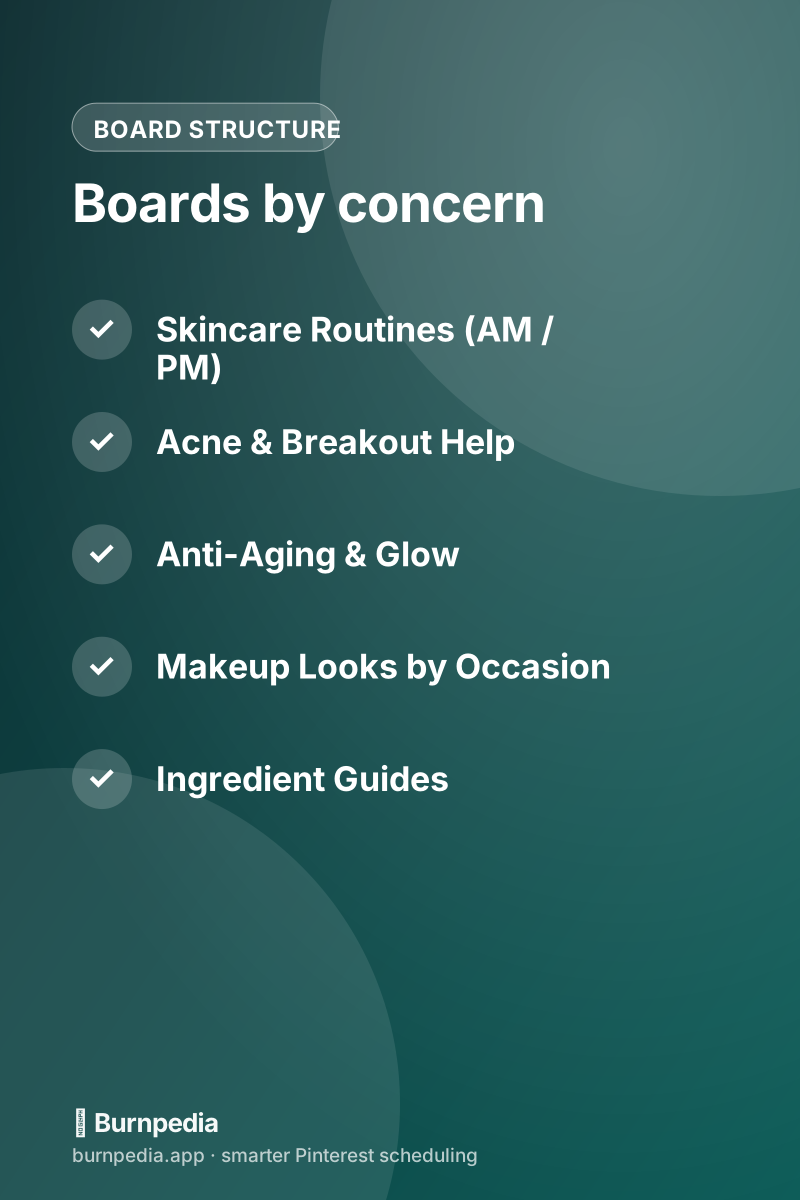
Your boards should mirror how people think about beauty, which is by concern and by routine — not by your SKU list. “Acne & Breakout Help,” “Glowy Skin Routines,” “Anti-Aging Tips,” “Everyday Makeup Looks,” “Ingredient Guides.” Each board name is a topic people actually search and want to follow. This structure also does your SEO a favor by grouping related pins under a clear keyworded theme. The mechanics of matching keywords to searches are in the Pinterest SEO keywords guide, and beauty is a niche where getting the search language right (“hormonal acne,” “sensitive skin,” “dewy makeup”) pays off fast because the queries are so specific.
And yes — make every educational pin quietly shoppable. The routine pin links to the routine bundle; the ingredient explainer links to the product with that ingredient; the tutorial links to the exact shade. You’ve earned the click by being helpful, so give the interested reader a frictionless way to act on it. Rich pins that show your live price and availability remove the last bit of hesitation right there on the pin.
Beauty has seasons too
It’s easy to think skincare is evergreen — and a lot of it is, which is wonderful for compounding traffic — but beauty absolutely has seasonal spikes worth planning for. Winter dry-skin routines, summer SPF and sweat-proof makeup, wedding and prom season glam, “new year new routine” in January, holiday gift sets and party looks in Q4. Getting these live a few weeks early (Pinterest needs lead time to rank a pin) means you catch the search wave instead of chasing it. A simple seasonal beauty calendar plus a steady drip of evergreen routine content is the ideal mix.
Consistency beats intensity (especially here)
Beauty brands often start strong — a big batch of gorgeous pins — then go quiet for a month when things get busy. Pinterest punishes that quietly, because the algorithm rewards fresh, steady output over sporadic bursts. The good news is that beauty content is endlessly repurposable: one routine can become a step-by-step pin, a before-and-after, an ingredient spotlight, and a “5 mistakes” pin, each targeting a different search. You never actually run out of angles; you just need a system to publish them consistently instead of all at once.
Turn one product into a dozen angles
A worry I hear constantly from beauty brands is “I only have a handful of products — what could I possibly pin about every week?” The answer is that each product is a dozen pins waiting to happen, because you’re not pinning the product, you’re pinning the questions around it. Take a single vitamin C serum: you can make a “what does vitamin C do for skin?” explainer, a “morning routine featuring it,” a “vitamin C vs. retinol” comparison, a “mistakes people make with serums,” a “how to layer it correctly,” and an honest before-and-after. That’s six distinct, search-driven pins from one bottle — each catching a different question, each pointing back to the same product page.
This is why beauty brands almost never actually run out of content; they just run out of the habit of reframing. Keep a running list of the real questions customers ask you — in DMs, in reviews, at the counter — and treat each one as a pin. Those questions are pure keyword gold, because they’re the exact phrases other people are typing into Pinterest too. Answer them one by one and you’ll build a deep, trusted, endlessly useful presence around even a small product line.
The beauty takeaway
Beauty on Pinterest is simple to say and powerful to do: answer the questions your customer is already asking, teach the routine with your product inside it, keep your results honest, organize boards by concern, make every pin shoppable, and show up consistently through the seasons. Do that and you become the trusted friend who happens to sell exactly the thing that solves their problem — which, in beauty, is worth more than any ad. When you’re ready to map this against the other niches, head back to the Pinterest-by-niche overview.
The beauty brands that win here aren’t shouting about their products — they’re quietly the most helpful voice in the room, answering “how do I…” a thousand times a week while their product sits naturally in frame. Be that voice, be honest, and be consistent, and Pinterest will send you customers who already trust you before they ever land on your site. That’s a much easier sale than a cold one, and it’s waiting for you in the search bar. Start with the ten questions you get asked most, turn each one into a genuinely helpful pin this month, and let the trust — and the traffic — build steadily from there. — Sadie
Written by Sadie Brooks
Hey — I’m Sadie. I grew up in a small town outside Columbus, Ohio, moved to Austin for a job I quit within a year, and somewhere in between I started a scrappy little food blog to keep myself sane.
These days I help creators, bloggers, and small U.S. business owners grow on Pinterest without turning it into a second full-time job. I write the Burnpedia blog because I genuinely love this stuff, and because I wish someone had explained it to me in plain English years ago. Pour a coffee, pull up a chair.
Try Burnpedia freeWant Pinterest to run itself?
Every tip on this blog gets easier when your Pins publish on schedule. Burnpedia batches, times, and posts them for you — start free, no credit card.
Try Burnpedia free