Pinterest for Fashion & Apparel Brands: A 2026 Playbook
Fashion is one of the biggest categories on Pinterest, and shoppers arrive ready to plan their next outfit. Here is how a clothing brand or boutique actually turns that intent into saves, clicks, and sales.


Fashion and Pinterest are almost embarrassingly well matched. Think about how people actually shop for clothes: they don’t usually wake up needing one specific sweater — they get an idea (“I need something for a fall wedding,” “I want to redo my winter capsule,” “what do I even wear to a beach vacation?”), and then they go looking for inspiration. That is exactly the moment Pinterest owns. Someone plans the outfit first, saves a few looks, and then buys. If you sell clothing, accessories, or run a boutique, your job is to be the pin they save during that planning moment — and then make it stupidly easy to click through and buy.
This is the single biggest mindset shift for fashion brands: you are not posting a product catalog, you are posting outfit inspiration that happens to be shoppable. The brands that treat Pinterest like a lookbook win; the ones who treat it like a product feed of white-background shots quietly disappear. If you also sell through Etsy or Shopify, keep the deeper store setup in the Pinterest for Shopify guide handy — this post is about the fashion-specific creative and strategy.
Show the outfit, not just the item
The number one thing that separates fashion pins that get saved from ones that get scrolled past is context. A cardigan photographed alone on a white background is a product; the same cardigan styled with the jeans, the boots, the bag, and a real person wearing it on an autumn street is an outfit — and outfits are what people save. Pinterest users are building a vision of themselves, and you want to hand them the whole picture, not a component. Styled-on-a-body imagery, flat-lays of a complete coordinated look, and “ways to wear it” pins consistently outperform lone product shots.

Then name the occasion right in the title, because that’s what people search. Nobody types “ribbed cardigan” into Pinterest and stops there — they type “fall wedding guest outfit,” “cozy work from home outfits,” “first date outfit ideas,” “capsule wardrobe winter.” Your title is where you meet that search head-on. Lead with the occasion and the season, and you’ll rank for the exact planning query that sends ready-to-shop people your way.
Make every pin shoppable
Fashion is one of the few niches where the buyer is often ready to purchase now, not months from now — so don’t make them hunt. Every outfit pin should link directly to the product (or a “shop the look” page), and setting up rich pins so your live price and availability show on the pin itself removes friction at exactly the right second. If your product feed and rich pins aren’t connected yet, that’s the first technical job worth doing; the rich pins setup guide walks through it. A gorgeous pin that dead-ends with no obvious way to buy is a sale you handed to someone else.
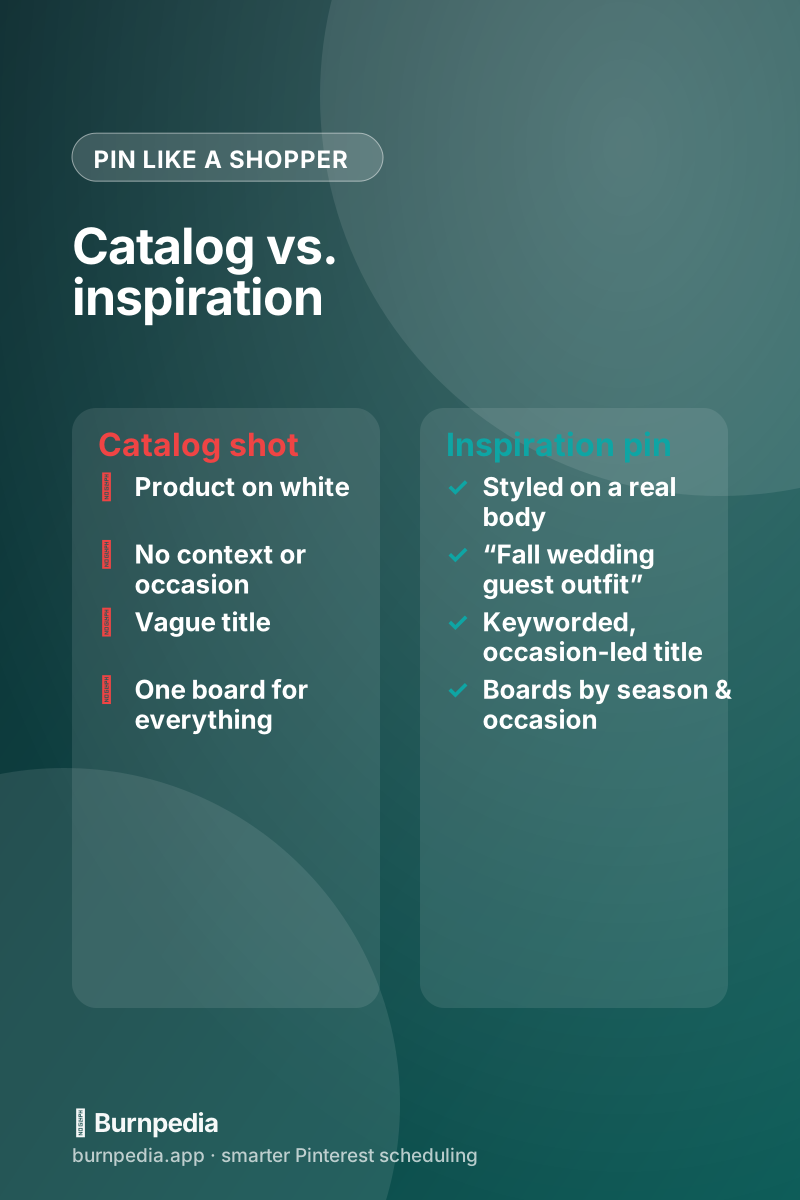
Structure your boards the way a shopper thinks, which is by occasion and season, not by product category. “Fall Outfits,” “Wedding Guest Looks,” “Vacation Style,” “Cozy Weekend,” “Workwear” — these mirror the searches and the mental buckets people plan in. A single board called “Our Products” tells Pinterest nothing and helps no one. Keyworded, occasion-led boards give the algorithm clear topical signals and give shoppers a reason to follow the specific board that matches their current mission.
Pin to the calendar, a month early
Fashion runs on seasons, and Pinterest rewards you for being early. People start planning fall outfits in late summer and holiday party looks in October, so your seasonal pins need to be live before the season actually arrives — Pinterest needs a few weeks to circulate and rank a pin, so “on time” is already late. Build a simple seasonal calendar (spring refresh, summer vacation, back-to-school, fall layering, holiday party, winter capsule) and get ahead of each one. The broader rhythm of this is in planning seasonal content, and it is the fashion brand’s single biggest unfair advantage if you use it.
- Spring: transitional layers, wedding guest season, Easter, vacation prep
- Summer: beach and resort wear, festival looks, everyday hot-weather outfits
- Fall: layering, back-to-school, cozy staples, boots and knits
- Holiday: party outfits, gift guides, NYE looks, cold-weather dressing
Refresh your winners instead of chasing new ones
Here’s a move most fashion brands miss: when a product sells well, you don’t need a brand-new product to make a new pin — you need a new pin for the same product. Pinterest loves fresh pins (new images, new angles, new styling), so take your best seller and shoot it three more ways: styled differently, a flat-lay, a close-up detail, a “3 ways to wear it” carousel. Each fresh pin is another shot at ranking for a slightly different search, all pointing at the same proven product page. You compound the winner instead of constantly starting from zero.
Two fashion mistakes worth avoiding
Two traps swallow a lot of fashion brands, so let me flag them. The first is pinning only your own products and nothing else — an account that’s 100% “buy my stuff” feels like a billboard, and people follow inspiration, not billboards. Mix in styling tips, trend explainers, “how to wear” guides, and genuinely helpful outfit ideas so your account is worth following even between purchases. The second trap is ignoring the size, fit, and body-diversity questions your shoppers actually have; pins and boards that show real, varied bodies and answer “will this work for me?” build trust and get saved far more than a single idealized model ever will.
And don’t sleep on the humble “outfit formula” pin — the simple flat-lay or graphic that shows a repeatable recipe (“white tee + tailored trousers + loafers = effortless”). Those get saved obsessively because they solve the daily “what do I wear?” problem, and every one of them is a natural home for your products. Fashion shoppers aren’t just buying garments; they’re buying the confidence of knowing how to put them together. Sell that confidence and the garments come along for the ride.
Putting it together
So the fashion playbook, start to finish: style the full outfit instead of the lone item, name the occasion in your title so you catch the search, make every pin shoppable with a direct link and rich pins, organize boards by season and occasion the way shoppers actually plan, publish each season a month early, and keep refreshing your best sellers with fresh pins. Do that consistently and Pinterest becomes a quiet, compounding storefront that plans outfits with your customers and hands you the sale. For the wider view of how this fits every other industry, jump back to the Pinterest-by-niche map.
The brands that win at fashion on Pinterest aren’t the ones with the biggest ad budget — they’re the ones who show up like a stylist, not a catalog, and who plan their seasons like they mean it. You already have the products and the photos; you just need to present them the way a shopper dreams instead of the way a warehouse ships. Style the look, name the moment, and get a little ahead of the calendar. Your future customers are on Pinterest right now, planning the exact outfit you sell. — Sadie
Written by Sadie Brooks
Hey — I’m Sadie. I grew up in a small town outside Columbus, Ohio, moved to Austin for a job I quit within a year, and somewhere in between I started a scrappy little food blog to keep myself sane.
These days I help creators, bloggers, and small U.S. business owners grow on Pinterest without turning it into a second full-time job. I write the Burnpedia blog because I genuinely love this stuff, and because I wish someone had explained it to me in plain English years ago. Pour a coffee, pull up a chair.
Try Burnpedia freeWant Pinterest to run itself?
Every tip on this blog gets easier when your Pins publish on schedule. Burnpedia batches, times, and posts them for you — start free, no credit card.
Try Burnpedia free