Pinterest for Travel Bloggers & Creators
People plan trips on Pinterest months in advance — which makes it a goldmine of evergreen traffic for travel creators. Here is how to turn destination guides and packing lists into a steady stream of readers and income.


If you’re a travel blogger or creator and you’re not taking Pinterest seriously, I want to gently grab you by the shoulders, because travel might be the best organic-traffic niche on the entire platform. Here’s why: people plan trips on Pinterest, months ahead, and they plan them thoroughly. They save destination guides, itineraries, packing lists, “best time to visit,” “where to eat,” “hidden gems” — assembling a whole trip long before they book anything. And unlike Instagram, where that gorgeous sunset photo is dead in 48 hours, a Pinterest travel guide keeps getting discovered and clicked for years. For a travel creator who monetizes with blog traffic, ads, and affiliates, that’s the difference between content that evaporates and content that pays rent forever.
The core shift for travel creators is this: Pinterest is not where you show off your trip, it’s where you help someone plan theirs. The pretty view is the hook, but the value — and the click, and the traffic — comes from being genuinely useful to a planner. And because almost all travel content lives on a blog you can monetize, Pinterest is really a traffic engine feeding your site. The mechanics of turning pins into blog traffic are in driving Pinterest traffic to your blog, and travel is arguably the niche where that pipeline pays off best.
Make useful pins, not just pretty ones
A jaw-dropping photo of Santorini gets admired and scrolled past. A pin that says “3 Days in Santorini: The Perfect Itinerary” — over that same photo — gets saved, because it promises to solve the planner’s actual problem. That’s the whole trick in travel: pair the beautiful destination image with a specific, useful promise. Itineraries, “X days in [place],” packing lists, “best time to visit [place],” “what [place] is really like,” budget breakdowns, “where to stay in [place].” Usefulness is what earns the save and the click; the beauty just stops the scroll long enough for the usefulness to land.

And target specific destination searches, because that’s how travel planners actually search — not “travel inspiration” but “things to do in Lisbon,” “Iceland ring road itinerary,” “Tokyo on a budget.” The more specific the destination and the intent, the warmer the planner and the easier the ranking. Finding those exact phrases is a keyword exercise, and the fastest source is Pinterest’s own search bar; how to find Pinterest keywords shows you how to mine it. Every specific guide you rank for is an evergreen stream of pre-qualified travel readers.
Organize boards by destination
Structure your boards the way trips are planned: by destination and trip type. “Italy Travel,” “Japan Itineraries,” “Weekend Getaways,” “Budget Travel,” “National Parks,” “Travel Packing Tips.” A planner researching a specific place wants to follow the board that matches their trip, and Pinterest wants the clear topical signal a keyworded board provides. Every pin should link through to the full blog post — the complete guide, the detailed itinerary — not just to a photo, because the blog post is where your traffic, ad revenue, and affiliate links live. A pin that dead-ends on an image is a reader (and a click) you didn’t capture.
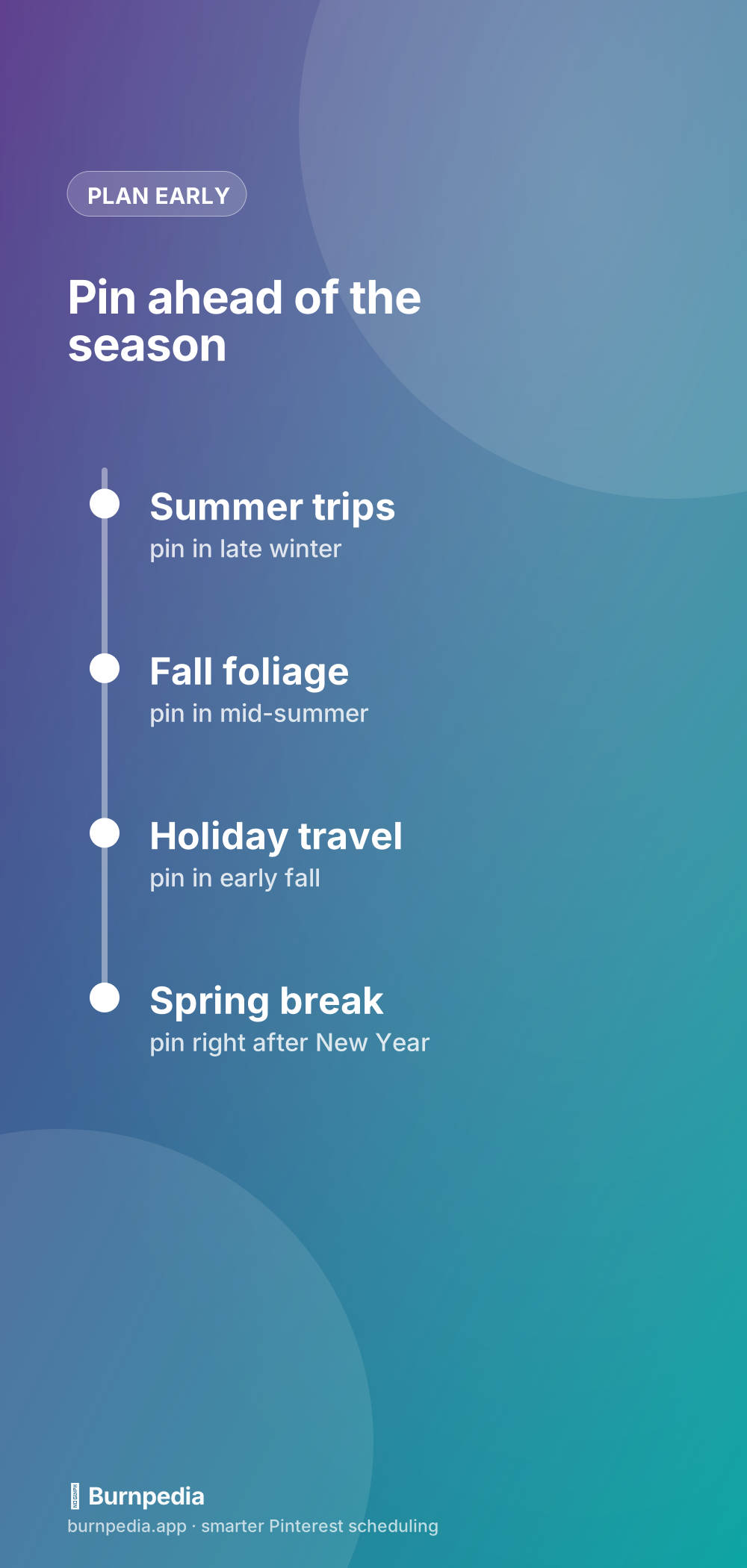
Now, timing — because travel is deeply seasonal and Pinterest rewards being early. People plan summer trips in late winter, fall-foliage trips in mid-summer, holiday travel in early fall, and spring break right after New Year. Since Pinterest needs a few weeks to circulate and rank a pin, you want your seasonal guides live three to six months before people travel, catching them in the planning window rather than the packing one. Build a simple “pin ahead” calendar and your seasonal guides will ride the wave instead of missing it.
Evergreen is your superpower — so compound it
The magic of travel on Pinterest is how long a good guide lives. A “best things to do in Portugal” pin can get saved and clicked for years, because Portugal isn’t going anywhere and people keep planning trips there. That means your job isn’t to constantly chase new content — it’s to build a library of solid destination guides and then keep them alive with fresh pins. Take your best-performing guide and make new pins for it (new image, new angle, new title) every so often, since Pinterest favors fresh pins even for the same URL. This is exactly the evergreen-refresh rhythm that food and travel bloggers thrive on; the food blogger playbook leans on the same compounding logic if you want to see it in a sister niche.
How travel creators actually make money from this
Let’s connect the traffic to the income, because that’s the whole point. For most travel creators a Pinterest-fed reader monetizes in a few stacking ways: display ads that pay per thousand pageviews (so more traffic literally equals more revenue), affiliate links to the hotels, tours, gear, and booking sites you recommend inside the guide, and your own products — an itinerary pack, a city guide, a presets bundle, a course. A single well-ranked destination guide can quietly earn from all three at once, every month, for years, without you touching it again. That’s the compounding beauty of building an evergreen library instead of chasing a feed.
The strategic move is to point your Pinterest energy at the guides with the best monetization potential, not just the prettiest destinations. “Where to stay in Tulum,” “best travel credit cards,” and “what to pack for Iceland” convert far better than a generic “beautiful places to visit,” because the reader is close to spending and your links match their intent. Match your most useful, most commercial guides to the specific searches people make while planning, and Pinterest becomes less of a pretty photo album and more of a quiet, always-on income stream tied to your blog.
The travel takeaway
Travel on Pinterest is a beautiful, patient traffic machine: make genuinely useful destination pins instead of just pretty ones, target specific place-based searches, organize boards by destination, link every pin to the full blog post where your money lives, publish seasonally months ahead, and keep your evergreen guides alive with fresh pins. Do that and you build a compounding library that sends pre-qualified travel planners to your site for years, long after the trip photos would’ve faded on any other platform. To place this next to the other niches, jump back to the Pinterest-by-niche overview.
Travel is the niche where Pinterest’s slow, evergreen nature stops being a frustration and becomes the entire point. You’re not chasing a moment — you’re building a guidebook the whole internet can find, that keeps helping strangers plan the trip of their dreams (and clicking to your site) year after year. Publish useful, publish ahead, and let the guides compound. Your next thousand readers are on Pinterest right now, dreaming about somewhere you’ve already written about. All you have to do is make sure your guide is the one they find, and then keep it fresh enough that Pinterest keeps handing it to the next dreamer, and the next after that. Do that and a single focused afternoon of writing and pinning can quietly pay you back for years. — Sadie
Written by Sadie Brooks
Hey — I’m Sadie. I grew up in a small town outside Columbus, Ohio, moved to Austin for a job I quit within a year, and somewhere in between I started a scrappy little food blog to keep myself sane.
These days I help creators, bloggers, and small U.S. business owners grow on Pinterest without turning it into a second full-time job. I write the Burnpedia blog because I genuinely love this stuff, and because I wish someone had explained it to me in plain English years ago. Pour a coffee, pull up a chair.
Try Burnpedia freeWant Pinterest to run itself?
Every tip on this blog gets easier when your Pins publish on schedule. Burnpedia batches, times, and posts them for you — start free, no credit card.
Try Burnpedia free