Pinterest for Interior Designers & Home Decor Brands
Nobody redecorates on impulse — they dream, save, and plan for months. That slow, aspirational journey is exactly what Pinterest is built for. Here is how designers and decor brands become part of it.


Home decor is one of the most-searched categories on all of Pinterest, and once you understand the psychology behind it, you’ll see why it’s such a perfect fit. Nobody redecorates a room on impulse. They start dreaming months before anything changes — saving a sofa here, a paint color there, a “someday” bathroom — slowly assembling a vision until they finally feel ready to buy pieces or hire someone. That long, patient, aspirational planning journey is Pinterest’s native habitat. If you’re an interior designer, a decorator, or a home decor brand, your entire opportunity is to become part of that vision board early, and to still be there when the person is finally ready to spend.
This changes how you should think about results. Decor is not a “post today, sell today” niche — it’s a “get saved today, sell in three months” niche, and that’s a feature, not a bug. Because Pinterest content compounds and room ideas are evergreen, a single beautiful room pin can keep getting saved and sending you clients for literally years. The patience required is real, but so is the payoff. Organizing all of that starts with smart boards, which is why the board strategy guide pairs so well with this one.
Shoot rooms, not products
The single most important creative rule in decor: people save rooms, not products. A single armchair on a white background is a catalog item; that same armchair in a warm, lived-in reading nook — with the throw, the lamp, the plant, the light coming through the window — is a room someone wants to live in, and that’s what gets saved. Even if you sell individual products, photograph them in context, styled into a complete, aspirational space. The full-room shot is your hardest-working asset. It sells the feeling, and the feeling is what people are actually shopping for when they redecorate.

Before-and-after transformations are the other decor superpower. A dated, cluttered room turning into a serene, styled one is almost impossible not to save — the transformation tells a story and proves you can create the result, whether you’re a designer showing your work or a brand showing what your products can do. Shoot the “before” even when it’s ugly (especially when it’s ugly); the contrast is the content. These pins earn saves, clicks, and the “I want that” reaction that turns a scroller into a lead.
Build boards room by room
People plan by room, so organize by room. “Living Room Ideas,” “Small Bathroom Inspiration,” “Cozy Bedroom Decor,” “Kitchen Makeovers,” “Entryway Styling.” You can go a layer deeper with style-plus-room boards where it makes sense — “Modern Farmhouse Kitchen,” “Boho Living Room,” “Minimalist Bedroom” — because people often search by style and room together. Each board is a clear, keyworded topic that Pinterest can understand and a specific bucket a planner wants to follow. Name them the way someone would actually search, and skip the cutesy names that rank for nothing.
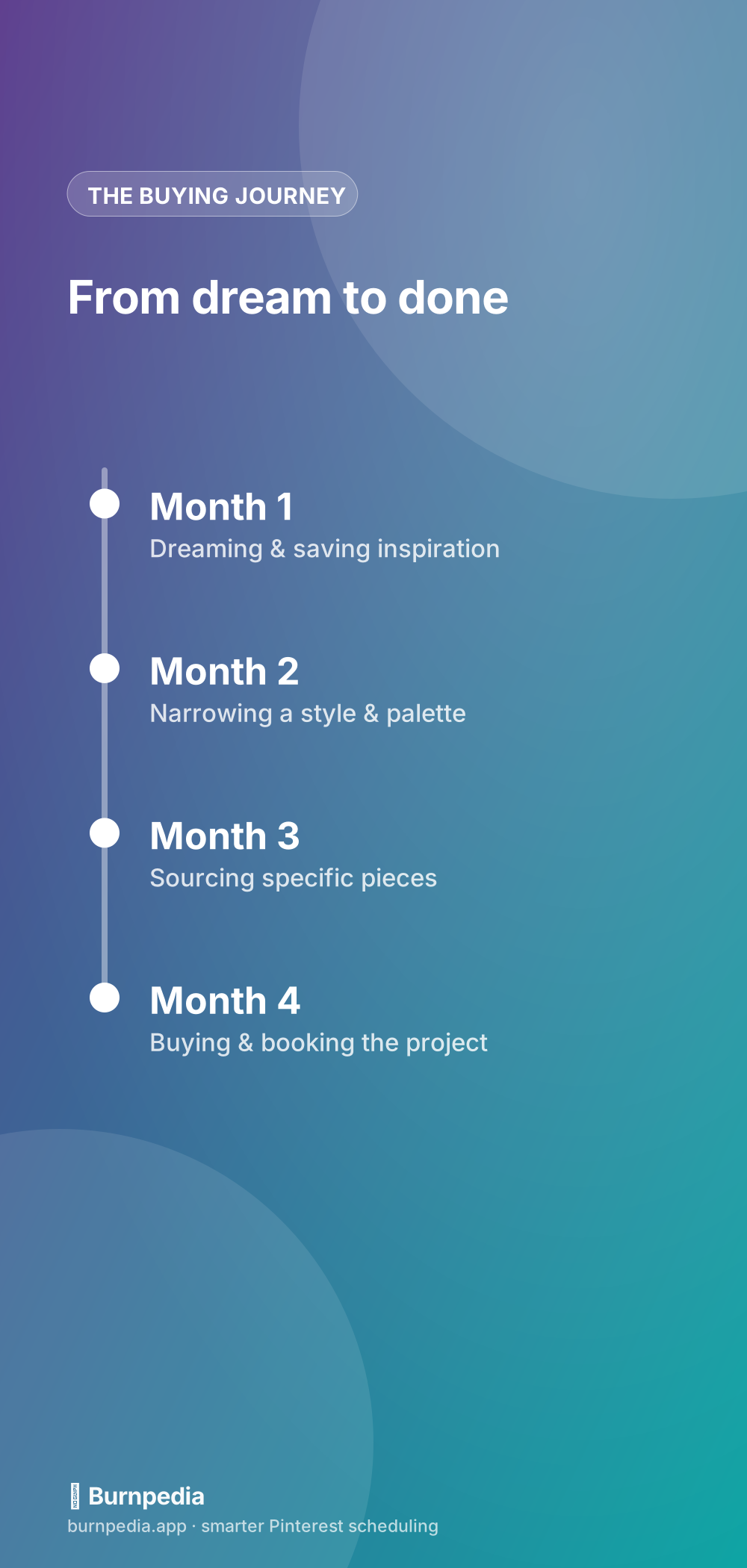
Notice the buying journey above, because it should shape your pins. Early-stage dreamers want broad inspiration (“cozy living room ideas”); mid-stage planners want specifics (“best warm white paint colors,” “small space storage ideas”); late-stage buyers want sources (“where to buy,” “shop this room”). Great decor accounts serve all three stages, which means every inspirational room pin should also link to something actionable — the source list, the product, the “work with me” page. Getting found for those specific searches is a keyword game; the ranking playbook covers exactly how to show up for them.
Decor is beautifully evergreen (so pin all year)
Unlike fashion, most decor content doesn’t expire — a stunning living room from last spring is just as save-worthy next winter. That makes decor one of the best niches for compounding traffic, because your library keeps working long after you publish it. There are seasonal moments worth catching (holiday decor, spring refreshes, “cozy fall home,” outdoor spaces in summer), and those are covered in the seasonal content guide — but your backbone is a steady stream of evergreen room ideas that never stop getting saved. The strategy is: evergreen rooms as the foundation, seasonal spikes layered on top.
Two content types decor brands underuse
Two kinds of pins punch way above their weight in decor, and most accounts underuse both. The first is the “how to” problem-solver pin: “how to style a small living room,” “how to make a rental feel like home,” “how to arrange a gallery wall,” “paint colors for a north-facing room.” These solve the specific headaches planners are stuck on, so they get saved and clicked with real intent — and they position you as the expert who can fix things, not just the brand that sells things. The second is the shoppable “get the look” pin, where a beautiful room links straight to the sources, letting a dreaming saver become a buyer the moment they’re ready.
It also helps to think in complete “looks” the way fashion does. A single lamp is a product; a “cozy modern living room” look — with the sofa, the rug, the art, the lamp, and the plant all sourced and linked — is a vision someone can actually recreate, and it earns far more saves. Bundle your pieces into styled, recreatable rooms and you make it easy for someone to buy five things instead of one, all while feeling like you handed them a finished idea rather than a shopping list.
The decor takeaway
Interior design on Pinterest rewards patience and beauty in equal measure: shoot full styled rooms instead of lone products, lean hard on before-and-afters, organize boards room by room the way people plan, serve every stage of the long buying journey with a link to act on, and keep a steady stream of evergreen room ideas flowing all year. Do that and you become the designer or brand whose work quietly lives on thousands of vision boards — right up until those dreamers are ready to buy. To see how this mindset compares to the faster-moving niches, jump back to the by-niche overview.
The thing I love about decor on Pinterest is how forgiving it is over time. You don’t need to go viral or catch a trend — you need to keep publishing genuinely beautiful, well-labeled rooms, and let them accumulate on the boards of people who are slowly, dreamily planning the exact space you can help them create. Show up like the calm, capable designer you are, be patient with the timeline, and let your best rooms do the selling for years. One more nudge: don’t hide your best work behind a login or a portfolio PDF — the finished rooms you’re proudest of are exactly the pins that pull dream clients, so put them out where Pinterest can circulate them freely. And resist the urge to redesign your entire strategy every few weeks; decor rewards the account that quietly, consistently keeps adding beautiful, well-labeled rooms far more than the one that reinvents itself every month. Pick your signature styles, name your boards the way people search, keep the fresh pins flowing, and let the library compound. The dreamers are already out there, quietly building the vision — make sure your rooms are in it. — Sadie
Written by Sadie Brooks
Hey — I’m Sadie. I grew up in a small town outside Columbus, Ohio, moved to Austin for a job I quit within a year, and somewhere in between I started a scrappy little food blog to keep myself sane.
These days I help creators, bloggers, and small U.S. business owners grow on Pinterest without turning it into a second full-time job. I write the Burnpedia blog because I genuinely love this stuff, and because I wish someone had explained it to me in plain English years ago. Pour a coffee, pull up a chair.
Try Burnpedia freeWant Pinterest to run itself?
Every tip on this blog gets easier when your Pins publish on schedule. Burnpedia batches, times, and posts them for you — start free, no credit card.
Try Burnpedia free