Your First 30 Days on Pinterest: A Simple Week-by-Week Plan
You’ve set Pinterest up — now what? Here’s a calm, week-by-week plan for your first 30 days that builds the one habit that actually drives growth, with realistic expectations along the way.

You’ve done the setup — business account, claimed site, optimized profile, keyworded boards. So… now what? This is exactly where a lot of new accounts stall, staring at a blank calendar with no idea what to actually do day to day. So let me hand you a simple, calm, week-by-week plan for your first 30 days. The goal of this month is not to go viral or hit some follower number — it’s to build the one habit that actually drives Pinterest growth: consistent, keyword-aware pinning. Nail the habit now, and the results follow later. Here’s how to spend your first four weeks.
This plan assumes your foundation is already in place from the Pinterest setup guide. If you want a strategy-flavored companion to this timeline, new Pinterest account strategy digs into the thinking behind a fresh account’s early moves. This post is the practical, do-this-each-week version.
Week 1: Finish setup and start pinning
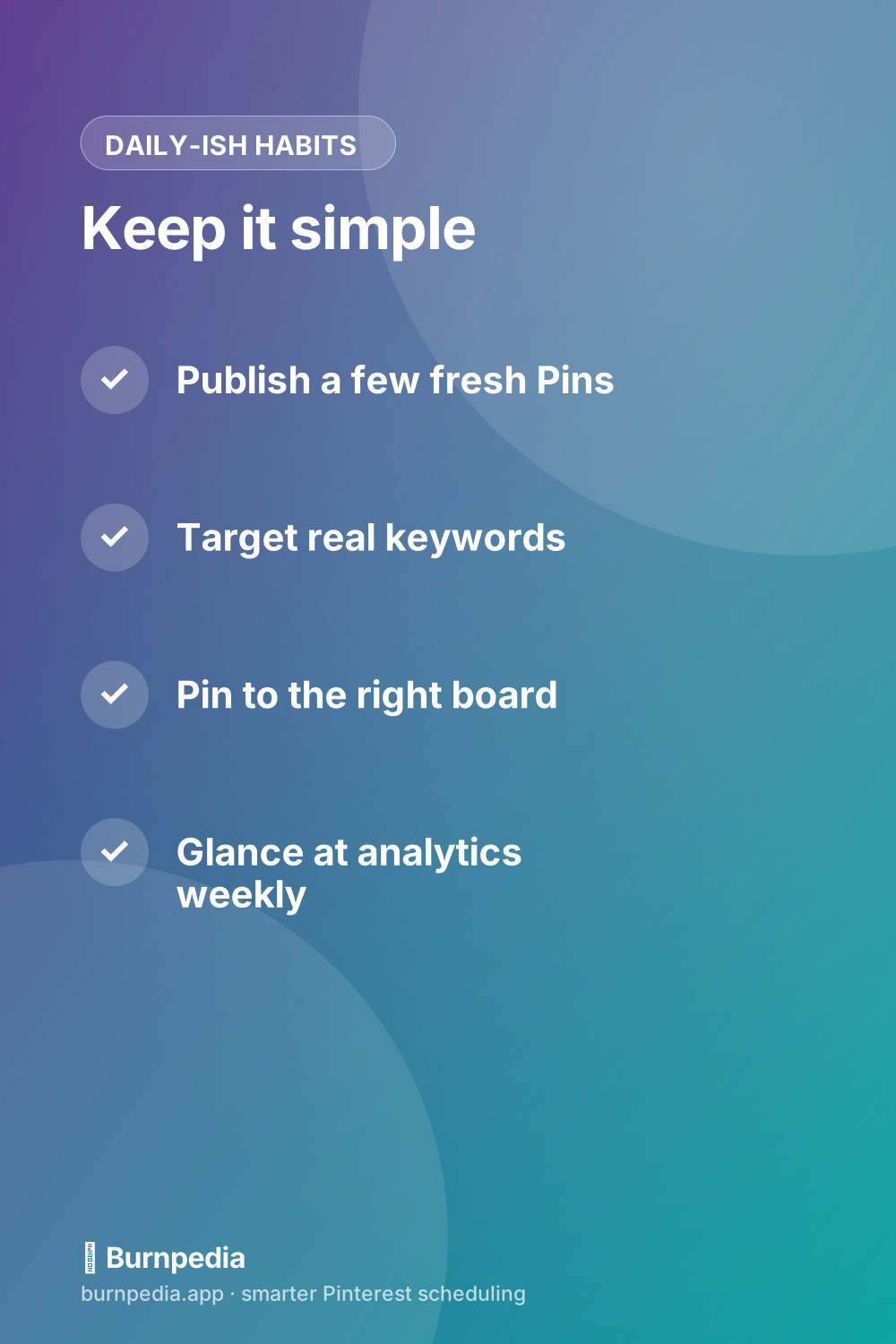
Your first week is about crossing the starting line. Double-check your foundation is complete (business account, claimed website, optimized profile, five to ten keyworded boards), then start actually publishing. Create and pin your first batch of helpful, on-topic Pins to the right boards, using clear titles and keyword-aware descriptions. Don’t obsess over perfection — the point of week one is momentum, not masterpieces. A steady trickle of decent Pins beats agonizing over one flawless graphic. Get comfortable with the basic loop: make a Pin, write a good description, pin it to the right board.
Aim for a manageable, repeatable number of fresh Pins per day — enough to build a rhythm without burning out. Consistency at a modest pace beats a heroic burst followed by silence, which is the classic new-account failure. Whatever number you can genuinely sustain is the right number.
Week 2: Find your keywords and your rhythm
With the basic habit forming, week two is about getting smarter. Spend time discovering the exact keywords your audience searches — the search bar, guided search, and Trends are your free tools here, and finding Pinterest keywords walks through the method. Start weaving those real search terms into your Pin titles, descriptions, and board choices. Also settle into a posting rhythm you can actually keep: a specific number of Pins, at roughly consistent times. You’re turning random effort into a deliberate, keyword-informed routine.
Week 3: Batch and schedule ahead
By week three, doing everything manually every single day starts to feel like a chore — and that’s exactly when new accounts quietly quit. So this is the week you get ahead of yourself. Set aside one focused session to batch-create a bunch of Pins at once, then schedule them to publish steadily over the coming days and weeks. This single shift — from daily scrambling to batch-and-schedule — is what makes consistency sustainable for real humans with busy lives. You do the work in one calm sitting, and your account keeps publishing without you.
This is the habit that carries you past the one-month mark, when motivation naturally dips. An account that runs on a schedule keeps showing up even on the days you don’t feel like it, and showing up is the entire game on Pinterest. Automating the publishing removes the willpower tax that kills most new accounts around now.
Week 4: Read the data and refine
By week four you finally have a little data, so spend some time actually reading your analytics. Which Pins got the most saves and clicks? Which topics and keywords are resonating? You’re not looking for huge numbers yet — you’re looking for early signals about what to do more of. Then simply refine: make more of what’s working, adjust what isn’t, and keep your batch-and-schedule habit rolling into month two. That loop — publish, observe, refine, repeat — is the entire long-term engine of Pinterest growth, and you’ll have built it in 30 days.
What to actually expect
Here’s the honest expectation-setting your first month needs: you probably won’t see dramatic results in 30 days, and that is completely normal. Pinterest is a slow-burn platform where the payoff compounds over months, not days — I lay out the realistic arc in how long Pinterest takes to work. Judging your first month by traffic or followers will only discourage you. Judge it instead by whether you built the habit. If you end month one with a real, sustainable pinning routine, you have won — the results are simply on their way.
What not to do in month one
Just as important as the plan is avoiding the classic first-month traps. Don’t obsess over follower count — on Pinterest, followers matter far less than they do on social media, because most of your reach comes from search and recommendations, not your follower feed. Don’t buy followers or engagement; it does nothing useful and can hurt you. Don’t pin frantically for three days and then vanish for two weeks — that stop-start pattern is worse than a slower, steadier rhythm. And don’t keep redesigning your strategy every few days because you’re not seeing results yet; month one is too early for results, and constant pivoting prevents anything from gaining traction.
The deeper trap under all of those is impatience — the urge to force fast results from a platform that rewards patience. Every one of those mistakes comes from wanting proof too soon and reacting to its absence. If you can internalize that your first month is a habit-building phase whose payoff arrives later, you’ll calmly avoid all of them and simply keep pinning while others burn out chasing overnight wins. Calm consistency genuinely is the whole secret, unglamorous as that sounds.
And then, at day 30, don’t stop — evolve. Month two is where you deepen what month one started: keep the batch-and-schedule habit, lean harder into the keywords and Pin styles your early data liked, and start experimenting with fresh formats and topics within your niche. The routine you built in your first 30 days becomes the engine you refine for the next 300. Think of day 30 not as a finish line where you check for results, but as the moment your foundation is finally solid enough to build real momentum on. Keep going, keep refining, and let the compounding you can’t yet see quietly get to work.
If you only remember one thing from this whole plan, make it this: your first 30 days are a success if you end them with a habit, full stop. Not a follower milestone, not a traffic spike — a habit. Everyone who’s ever grown on Pinterest went through an unglamorous early stretch where they were pinning consistently into what felt like silence, trusting that the compounding would come. It does. So give yourself permission to have a quiet month one, protect the routine above all else, and let the results arrive on Pinterest’s timeline instead of your impatience’s. Build the habit now, and month one becomes the foundation everything else stands on.
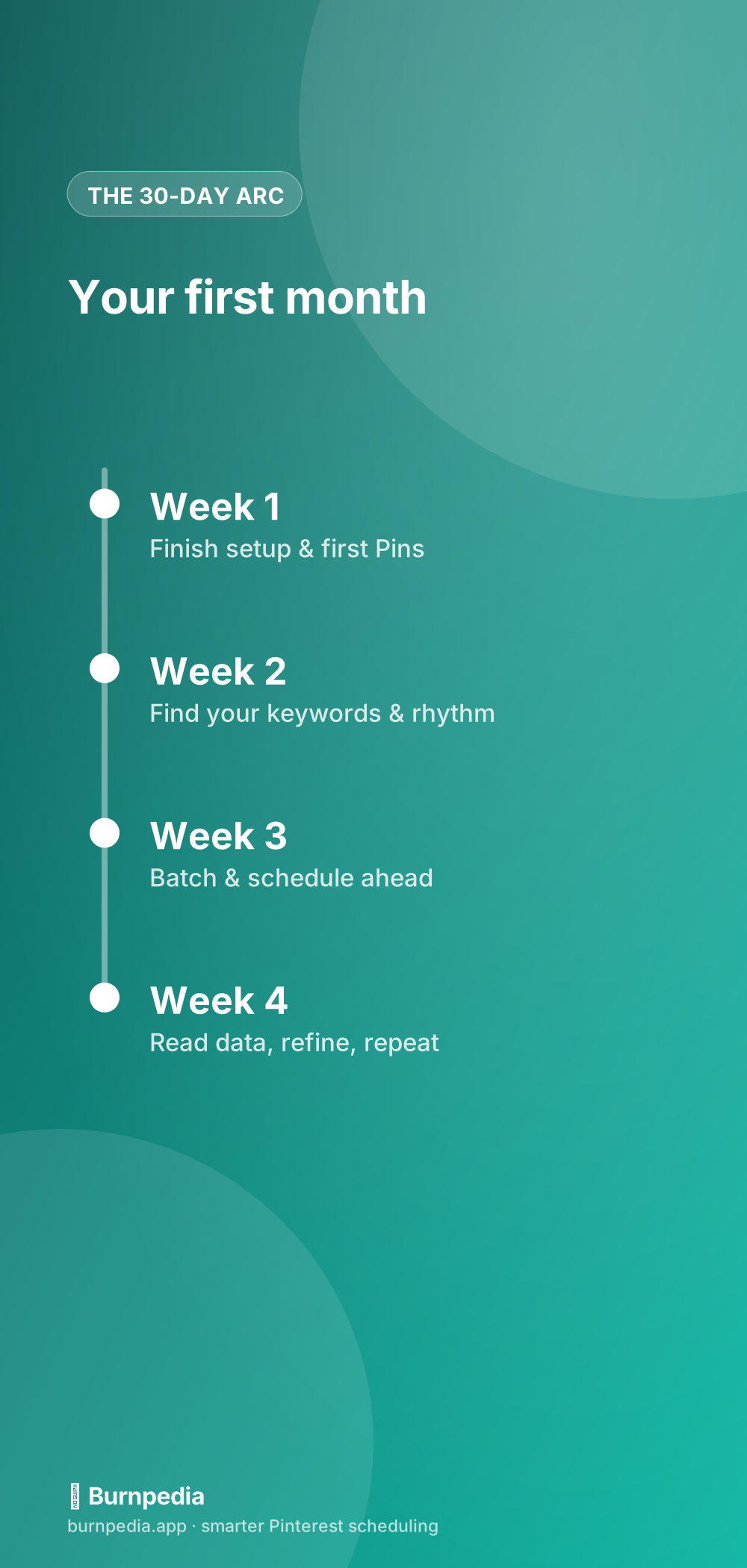
So there’s your first 30 days: week one, finish setup and start pinning; week two, find your keywords and rhythm; week three, batch and schedule ahead; week four, read the data and refine. Notice that none of it is about chasing viral moments — it’s about calmly building the consistent, keyword-aware habit that quietly powers all Pinterest growth. Do this month well, and you’ll cross into month two with momentum, a system, and the patience to let it compound. Build the habit now, and let it pay you later. — Sadie
Written by Sadie Brooks
Hey — I’m Sadie. I grew up in a small town outside Columbus, Ohio, moved to Austin for a job I quit within a year, and somewhere in between I started a scrappy little food blog to keep myself sane.
These days I help creators, bloggers, and small U.S. business owners grow on Pinterest without turning it into a second full-time job. I write the Burnpedia blog because I genuinely love this stuff, and because I wish someone had explained it to me in plain English years ago. Pour a coffee, pull up a chair.
Try Burnpedia freeWant Pinterest to run itself?
Every tip on this blog gets easier when your Pins publish on schedule. Burnpedia batches, times, and posts them for you — start free, no credit card.
Try Burnpedia free