New Pinterest Account? Your First 90 Days (What to Do, in Order)
A new Pinterest account is slow at first — and that’s completely normal. Here’s exactly what to do in your first 90 days so the slow start turns into compounding growth.
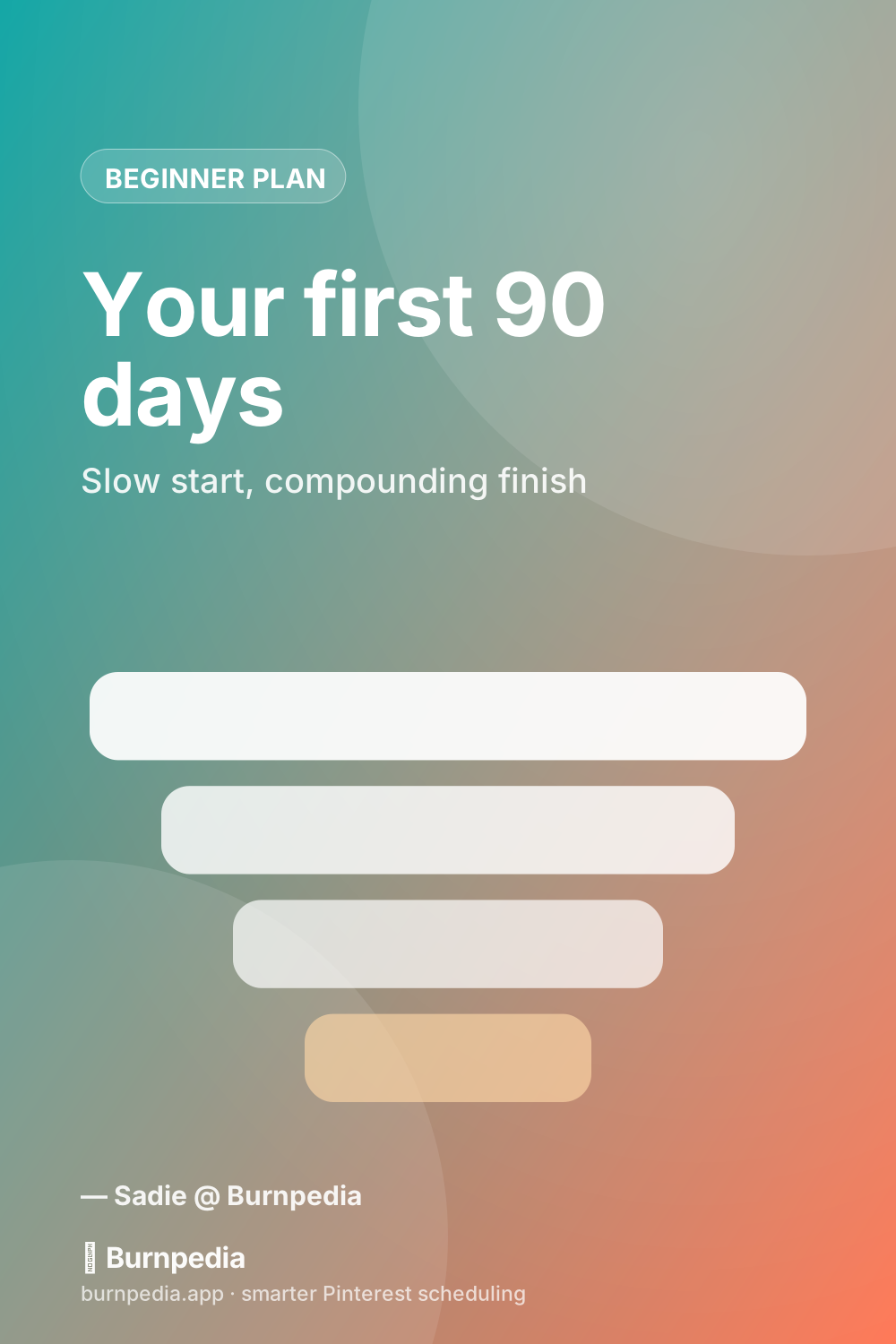
Starting a brand-new Pinterest account can be quietly demoralizing, and I want to prepare you for that so you don’t quit right before it works. For the first few weeks, you’ll pin diligently and see… almost nothing. Tiny impressions, few clicks, no followers. This is completely normal. A new account has no history and no trust, and Pinterest takes time to figure out what you’re about and start showing your pins widely. The people who succeed aren’t the ones who explode instantly — they’re the ones who set up correctly, stay consistent through the quiet phase, and let growth compound. Here’s exactly what to do, in order, for your first 90 days.
Think of it as planting a garden. The first weeks look like nothing’s happening above ground, but roots are forming. Do the right things now and month three onward is when you start seeing real sprouts. This plan is the beginner-friendly companion to the full Pinterest strategy — same principles, sequenced for a fresh account.
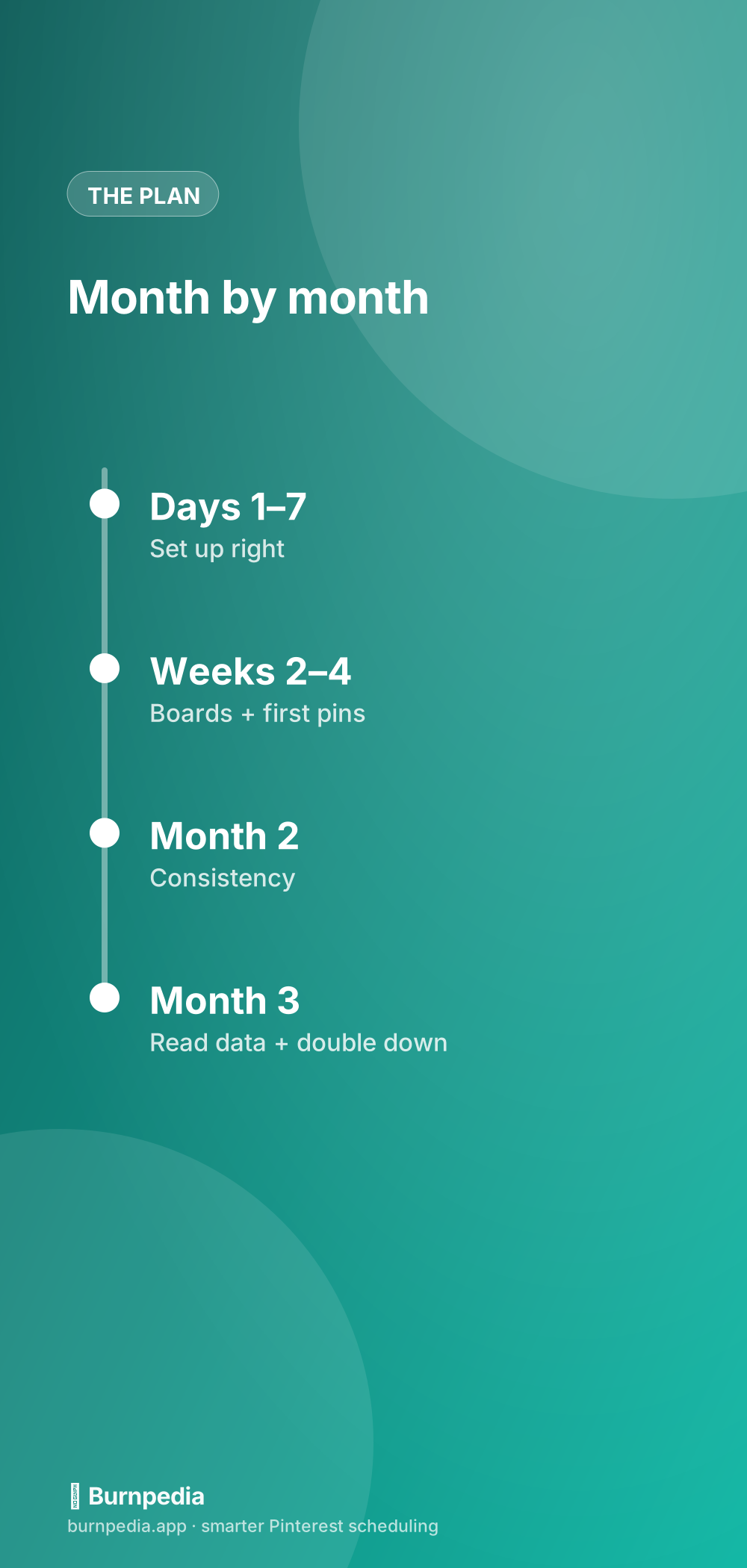
Days 1–7: set up right (do this once)
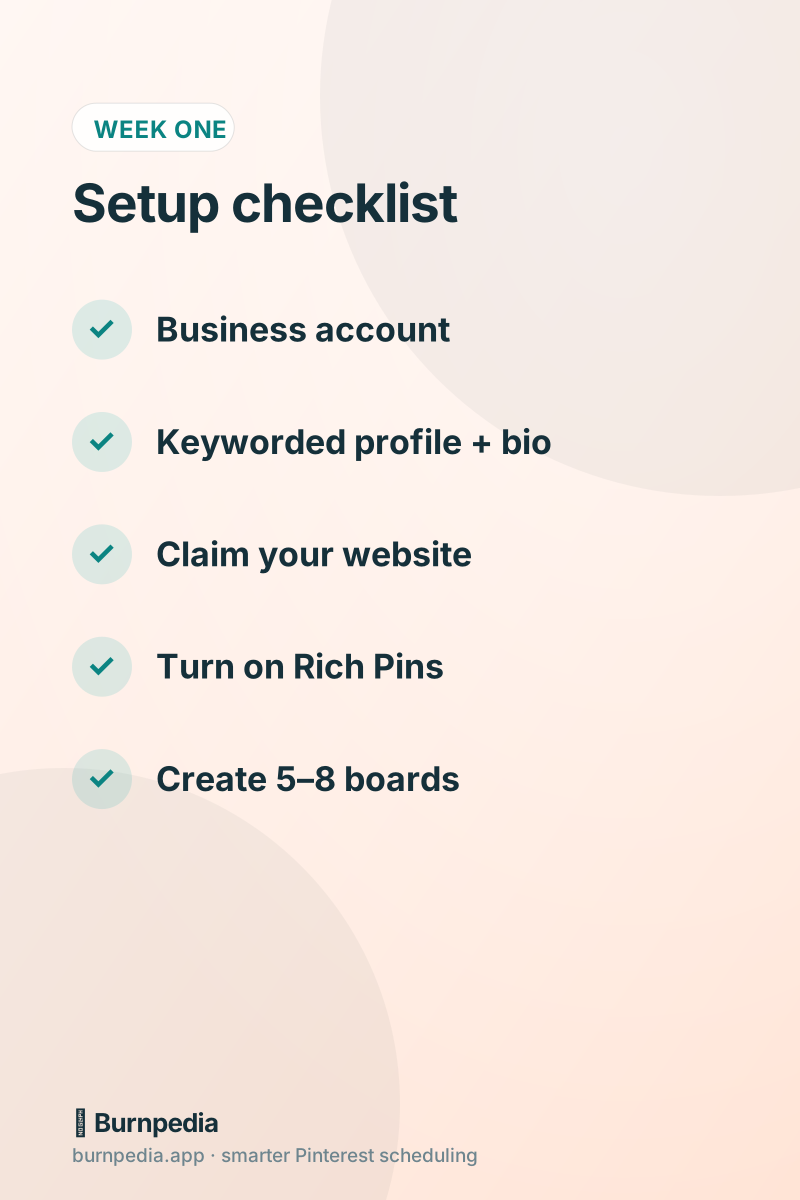
Your first week is pure setup, and doing it properly saves you months of struggle. Create a free business account (or convert your personal one). Fill out your profile like a storefront: a clear name, a keyworded bio that says who you help and how, and a recognizable photo or logo. Claim your website so Pinterest trusts your domain, and turn on Rich Pins so your pins pull your page titles and descriptions automatically — the Rich Pins guide walks you through it. This is one-time work that quietly benefits every pin you’ll ever post.
Before the week ends, decide your content pillars — the three to five topics you’ll pin about consistently — because everything downstream flows from them. Don’t skip this; a new account with no clear focus confuses Pinterest and takes far longer to gain traction. Clarity now buys speed later.
Weeks 2–4: build boards and start pinning
Now create five to eight boards that map to your pillars, each with a keyworded name and a one-sentence keyworded description. This gives your future pins keyworded homes and tells Pinterest exactly what your account is about — the board strategy guide has the details. Then start pinning your own fresh, keyworded pins to the most relevant board. Aim for a modest, sustainable pace right away rather than a huge burst; a few quality pins a day, every day, beats forty in one afternoon and silence after.
Resist two rookie temptations here. First, don’t obsessively refresh your analytics — they’ll be tiny and it’ll only discourage you. Second, don’t spam the same pin to twenty boards to “fill” your account; Pinterest wants fresh images, not aggressive repetition. Steady, genuine, keyworded pinning is what builds the trust that unlocks reach later.
Month 2: consistency is the whole job
Month two is where most new accounts quietly die — the novelty’s worn off, results are still thin, and it feels pointless. It is not pointless; it’s the roots forming. Your only job this month is to keep pinning consistently. The single best way to survive this phase is to remove daily willpower from the equation: batch a couple of weeks of fresh pins in one sitting and let a scheduler publish them at good times, so consistency happens even on the days you’re not feeling it. That’s exactly what smart scheduling is for, and for a new account it’s the difference between quitting and compounding.
A healthy pace for a new account is a handful of fresh pins a day — enough to stay active and signal life, not so much that you burn out. Remember “fresh” means new images, so one piece of content can become several pins. How often should you pin has the nuance, but the headline is: consistent and sustainable beats heroic and short-lived, every time.
Month 3: read the data and double down
By month three, you’ll finally have enough data to learn from — and often the first real sprouts of traction. Now do your first proper analytics review. Which pins earned the most saves and, more importantly, outbound clicks? Which topics and formats are pulling ahead? Whatever’s working, make more of it; whatever’s flat, quietly retire. This is the moment your account shifts from “pinning into the void” to “deliberately amplifying what works.” Focus on clicks over impressions — this guide explains why — so you optimize for real results, not vanity.
What “success” looks like at 90 days
Let’s set honest expectations so you don’t judge yourself against fantasy. At 90 days, success is not going viral. It’s having a properly set-up account, a tidy set of keyworded boards, a growing library of fresh pins, a consistent publishing habit (ideally scheduled ahead), and the first signs of real traction — a handful of pins that are clearly out-performing, a trickle of steady clicks, maybe your first followers who found you through search. That’s a healthy 90-day account, and it’s exactly the foundation that turns into serious growth over the following months.
The reason patience pays here is Pinterest’s long memory. Every keyworded pin you make in these slow early weeks doesn’t expire — it keeps sitting in search, quietly accumulating saves and authority. So the library you build now keeps working and compounding long after you built it. The account that looks like “nothing’s happening” at week three is often the same account pulling steady traffic at month six, precisely because someone kept planting during the quiet phase.
New-account mistakes to avoid
Most new accounts that fail don’t fail because of bad luck — they fail because of a handful of avoidable mistakes made in the anxious early weeks. Knowing them in advance is half the battle, because almost all of them come from impatience or from copying tactics that stopped working years ago. Steer clear of these and you’ll already be ahead of the majority of new accounts, most of which quietly sabotage themselves before Pinterest ever gets the chance to reward them.
- Refreshing analytics obsessively — early numbers are tiny and will only discourage you.
- Spamming the same image to many boards instead of making fresh, varied pins.
- Skipping keyworded board names and descriptions, so Pinterest can’t tell what you do.
- Pinning in bursts then vanishing — consistency matters far more than volume.
- Quitting in month two, right before the roots you planted start to sprout.
Notice that nearly every mistake is really a form of impatience — expecting fast results, then either overworking or giving up when they don’t come. The antidote is to set your expectations correctly (slow start, compounding finish) and to remove daily willpower from the equation with a scheduler, so consistency happens whether or not you feel motivated on any given day. Do the calm, correct things for ninety days without panicking, and you’ll have built the exact foundation that turns into real, lasting Pinterest growth — the kind most people quit just before reaching.
A new Pinterest account is slow at first, and that’s not failure — it’s roots forming. Set up right in week one, build keyworded boards and start pinning in weeks two to four, protect your consistency through month two (ideally with a scheduler doing the heavy lifting), and read your data to double down in month three. Do that, and the account that felt like shouting into the void becomes a compounding traffic engine right about the time most people would have quit. Plant now; harvest later. — Sadie
Written by Sadie Brooks
Hey — I’m Sadie. I grew up in a small town outside Columbus, Ohio, moved to Austin for a job I quit within a year, and somewhere in between I started a scrappy little food blog to keep myself sane.
These days I help creators, bloggers, and small U.S. business owners grow on Pinterest without turning it into a second full-time job. I write the Burnpedia blog because I genuinely love this stuff, and because I wish someone had explained it to me in plain English years ago. Pour a coffee, pull up a chair.
Try Burnpedia freeWant Pinterest to run itself?
Every tip on this blog gets easier when your Pins publish on schedule. Burnpedia batches, times, and posts them for you — start free, no credit card.
Try Burnpedia free