Pinterest Ads on a Small Budget ($5–10/Day That Works)
A small budget isn’t a disadvantage on Pinterest — it forces the discipline that makes ads profitable. Here’s exactly how to make $5–10 a day count and grow it only when it works.


Here’s something the “you need a big ad budget” crowd won’t tell you: a small budget is not actually a disadvantage on Pinterest. In fact, it can be an advantage, because it forces the exact discipline that makes ad spending profitable — focus, patience, and ruthless prioritization. When you only have five or ten dollars a day, you can’t afford to spray it across a dozen audiences and untested Pins, so you’re pushed into doing the one thing that actually works: putting a small amount of money behind a proven winner, aimed at exactly the right people. Let me show you how to make a tiny budget punch far above its weight.
This is the frugal companion to how much Pinterest ads cost — that post covers the pricing mechanics, this one is the survival guide for spending as little as possible while still learning something real. If you’re brand new, skim the Pinterest ads guide first; then come back and we’ll make every dollar earn its keep.
Rule 1: one proven Pin, one tight audience
With a small budget, concentration is everything. Do not run five Pins across five audiences — you’ll gather five puddles of meaningless data and learn nothing. Instead, pick a single Pin that’s already earning saves and clicks organically, and aim it at one tight, high-intent audience. That’s it. All your budget flows to one clear test, which means you actually accumulate enough data on that one thing to know whether it works. Focus is how small budgets buy real answers.
For the audience, lead with specific long-tail keywords — the highest-intent, often cheapest targeting there is — rather than broad interests. Small budgets and broad targeting are a terrible pair, because you’ll never spend enough to reach a broad audience meaningfully. Keep it narrow and relevant; Pinterest ad targeting has the full method, but on a shoestring, “narrow” is the whole strategy.
Rule 2: choose the cheaper objective
On a small budget, pick a traffic or consideration objective rather than an expensive conversions campaign or a broad awareness one. Traffic clicks are relatively affordable and still bring you people with intent, and they generate data faster on a tiny spend. You can graduate to conversion optimization later, once you’ve proven the funnel and have a little more to work with. Starting cheap and specific gets you to a real signal without burning through your limited budget on Pinterest’s pricier goals.
And set a hard daily cap — five to ten dollars — so there is zero chance of an accidental overspend. This is the beauty of Pinterest ads for the budget-conscious: you name the ceiling, and the platform simply cannot exceed it. That safety means you can experiment and learn without ever risking money you can’t afford to lose.
Rule 3: patience is your cheapest tactic
The single most expensive mistake on a small budget is impatience — pausing, tweaking, and restarting before your ad has gathered enough data to mean anything. Every restart wastes the little budget you have on the algorithm’s re-learning phase. Set your campaign live and then genuinely leave it alone for several days. Judging (and fiddling) too soon is the number-one reason small-budget ads fail, which I unpack in why your Pinterest ads aren’t working. Doing nothing, for once, is the winning move.
Rule 4: scale only what earns
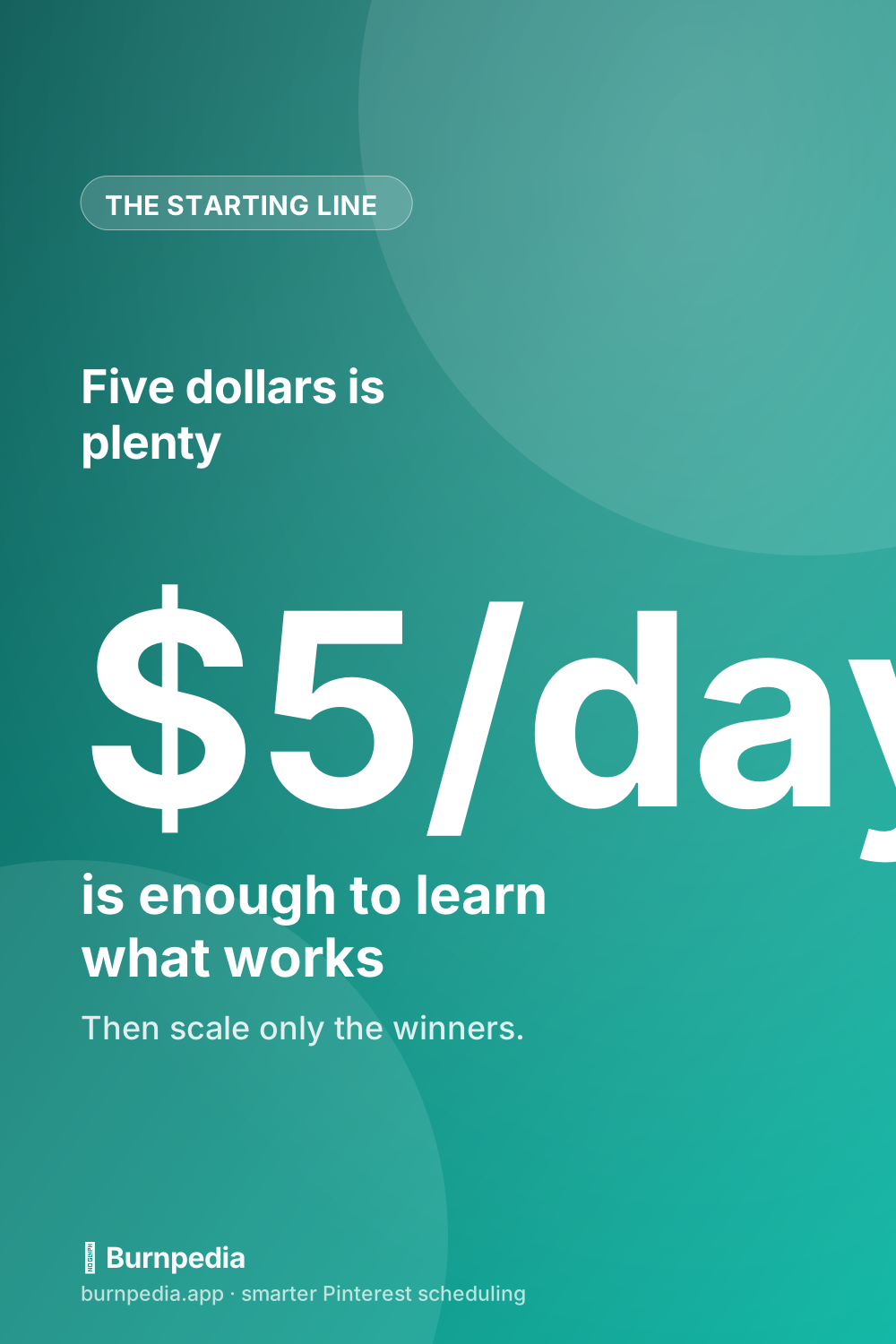
Once you have a few days of data, judge your campaign on one number: cost per real result versus what that result is worth to you. If a click, signup, or sale is costing you less than it earns you, congratulations — you’ve found a profitable little engine, and now you can carefully add budget to it. If it’s not profitable yet, don’t scale; fix the targeting, the creative, or the landing page first. The whole small-budget philosophy is “prove it tiny, then grow it” — never pour more money into something that isn’t already earning its keep at five dollars a day.
When you do scale, do it gradually — nudging the budget up rather than doubling it overnight, so the campaign stays stable and you keep watching the numbers. A profitable five-dollar-a-day ad, grown patiently, can become a profitable fifty-dollar-a-day ad. That’s how small budgets turn into real ones: not by starting big and hoping, but by starting tiny, proving it, and compounding.
Reinvest your profits, don’t top up losses
Here’s the mindset shift that turns a tiny ad budget into a growing one: fund your ads from their own profits, not from your hope. Once your five-dollar-a-day campaign is genuinely profitable — a result costs you less than it earns you — you can start feeding some of that profit back in to grow the budget. This way, your advertising scales on the back of money it actually made, which is both safe and self-sustaining. What you never want to do is keep topping up a campaign that isn’t profitable out of a feeling that it’s “about to turn around.” Small budgets can’t absorb that kind of wishful funding.
This profit-first approach also keeps you honest about your numbers. If a campaign can’t generate the profit to fund its own growth, that’s a clear signal to stop and fix the underlying offer, creative, or targeting rather than pour in more of your own limited cash. The discipline of “it grows only from what it earns” protects you from the classic small-advertiser death spiral of chasing a loss with more spend. Let profitability, not optimism, be the thing that decides when the budget goes up.
One last small-budget tactic: focus your spend where your audience is most active rather than smearing it thinly across all hours and days. If your analytics show your people engage most in the evenings or on weekends, concentrating a modest budget into those windows can stretch it further than letting it dribble out around the clock. You don’t need fancy tools for this — just pay attention to when your results actually come in, and lean your limited dollars into those moments. On a shoestring, focus in every dimension — one Pin, one audience, the best times — is what makes the money punch above its weight.
It’s worth saying plainly: some of the most profitable Pinterest advertisers you’ll ever meet started with exactly five dollars a day and never made a dramatic leap. They just found one thing that worked, fed it patiently from its own profits, and let it compound. A small budget isn’t a lesser version of “real” advertising — for a disciplined operator it’s often the smarter version, because every constraint forces a good decision. You can’t afford to be lazy or vague on five dollars a day, and that enforced focus is precisely what makes the money work. Start where you are; the budget grows itself if you let the numbers lead.
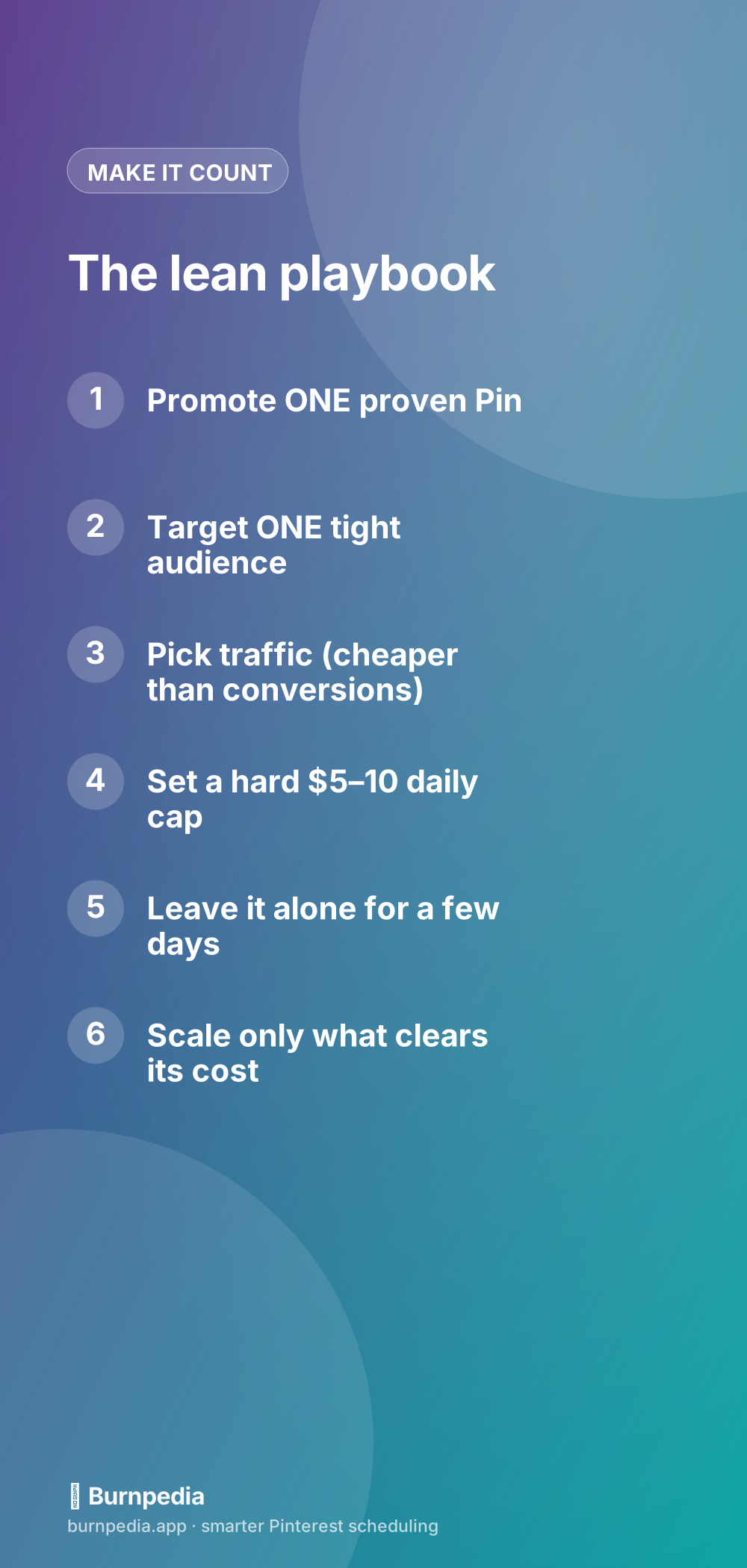
So don’t let a small budget stop you. Promote one proven Pin to one tight audience, choose the cheaper objective, cap your spend, and — hardest of all — leave it alone long enough to learn. Then scale only what clears its cost, gradually. Handled this way, five or ten dollars a day isn’t a limitation; it’s a disciplined little laboratory that teaches you exactly what’s worth spending more on. Start small, stay patient, and let profitability — not hope — decide when you grow. — Sadie
The prices and budgets here are examples, not financial advice. What you pay depends on your audience, your bids and the season.
Written by Sadie Brooks
Hey — I’m Sadie. I grew up in a small town outside Columbus, Ohio, moved to Austin for a job I quit within a year, and somewhere in between I started a scrappy little food blog to keep myself sane.
These days I help creators, bloggers, and small U.S. business owners grow on Pinterest without turning it into a second full-time job. I write the Burnpedia blog because I genuinely love this stuff, and because I wish someone had explained it to me in plain English years ago. Pour a coffee, pull up a chair.
Try Burnpedia freeWant Pinterest to run itself?
Every tip on this blog gets easier when your Pins publish on schedule. Burnpedia batches, times, and posts them for you — start free, no credit card.
Try Burnpedia free