Pinterest Ad Targeting: How to Reach the Right People
Great targeting is where cheap, profitable Pinterest ads are won or lost. Here’s how to use keywords, interests, and audiences to put your budget in front of people ready to buy.

If Pinterest ad cost is the question, targeting is most of the answer. The difference between an ad that quietly prints money and one that quietly drains your account almost always comes down to who saw it. Show a great Pin to the wrong people and you’ll pay for clicks that never convert; show a decent Pin to exactly the right people at the right moment, and cheap, profitable results follow. So this is arguably the most important skill in Pinterest advertising — and the good news is it’s very learnable. Let me walk you through the targeting options and, more importantly, how to actually use them.
This post pairs closely with how much Pinterest ads cost, because targeting is the single biggest lever on your cost per result. Nail your audience and everything downstream — your budget, your ROI, your patience — gets easier. Let’s make sure your money only reaches people who might genuinely buy what you sell.

Keywords: catch people mid-decision
Keyword targeting is Pinterest’s superpower and where I’d start. Because Pinterest is a search engine, targeting keywords lets you put your ad in front of people at the exact moment they’re searching for what you offer — “budget wedding centerpieces,” “capsule wardrobe for work,” “meal prep for two.” That is the highest-intent moment there is. Use specific, long-tail keywords rather than broad one-word terms: “handmade ceramic mug” will find better buyers (and cost less) than just “mug.” If you’re not sure which terms your buyers actually use, finding Pinterest keywords shows you how to pull them straight from the search bar.
The mistake to avoid is dumping in dozens of vague, high-competition keywords hoping something sticks. That drives your costs up and your relevance down. A tight list of genuinely relevant, specific terms almost always outperforms a sprawling one. Think “who is typing this and would they buy my thing?” for every keyword you add.
Interests and demographics: catch relevant browsers
Beyond active searchers, you can target by interest — reaching people who engage with certain categories (home decor, fitness, DIY, parenting) even when they’re browsing rather than searching. Interest targeting casts a wider net than keywords, which is useful for awareness and for finding new buyers, but it’s lower-intent, so watch your costs and expect to refine. Layer on demographics — age, gender, location, device — to focus further, especially if your product is local or skews to a particular audience. A local service business, for instance, should absolutely limit targeting to its actual service area.
My advice: don’t stack every option on top of each other at once, or you’ll end up with an audience so narrow it can’t spend, or so muddled you can’t tell what’s working. Start with keywords for intent, add light demographic focus if it obviously applies, and expand deliberately from there.
Audiences: your secret weapon
The most powerful targeting comes from audiences built on your own data. Retargeting shows ads to people who already visited your site or engaged with your Pins — warm prospects who are far more likely to convert, which makes retargeting some of the cheapest, highest-return spend available. Actalike audiences ask Pinterest to find new people who resemble your existing customers or visitors, a brilliant way to scale once you know who your buyer is. Both require the Pinterest tag and a little audience size to work, so they’re usually a phase-two move — but they’re where serious advertisers get their best numbers.
How to actually test targeting
Here’s the discipline that separates people who improve from people who guess: change one variable at a time. If you run three different audiences inside one messy campaign, you’ll never know which worked. Instead, test one clear audience per campaign or ad group, give each enough budget and time to produce real data, and compare cost per result. Keep the winners, cut the losers, and let the data — not your hunch about who your customer is — tell you where to spend. You will frequently be surprised by who actually buys.
And revisit your targeting as you learn. The audience you assumed was perfect on day one is often not the one converting on day thirty. Treat targeting as a living thing you refine, not a box you fill in once and forget. That ongoing refinement is exactly how your cost per sale drifts down over time.
Negative keywords: the money-saver nobody uses
Here’s a lever most beginners never touch, and it can quietly save a real chunk of budget: negative keywords. These are terms you tell Pinterest to exclude, so your ad doesn’t show for searches that look related but bring the wrong people. If you sell premium handmade candles, adding “cheap” or “DIY” as negatives stops you paying for clicks from bargain-hunters and craft-makers who’ll never buy. Watch your search-term data after a few days, spot the irrelevant queries eating your budget, and exclude them. It’s a small, ongoing bit of gardening that steadily improves who your money reaches.
The same “subtract the wrong people” thinking applies to your audience settings generally. If your product is for a specific age range, region, or device, use exclusions to trim away the audience that can’t or won’t convert, rather than paying to reach them and hoping. Precision isn’t just about who you include — it’s equally about who you deliberately leave out. Every irrelevant impression you prevent is budget redirected toward someone who might actually buy.
One more nuance worth knowing: whether to combine your targeting types in one ad group or separate them. Stacking keywords and interests together in a single group can muddy your data, because you can’t tell which drove the result. When you’re learning, it’s often cleaner to test keyword targeting and interest targeting in separate ad groups, so each produces a clear signal you can act on. Once you know which works for your niche, you can combine deliberately. The theme, as always, is clarity: structure your campaigns so the data tells you something you can actually use, instead of a blur you have to guess about.
It helps to picture one real person when you build any audience — a specific customer, with a specific need, typing a specific search. If you can’t describe that person in a sentence, your targeting is probably still too broad. “Women, 25 to 45, interested in home” is a demographic; “a new homeowner searching for small-space storage ideas on a budget” is a buyer you can actually reach and sell to. The more vividly you can picture who you’re trying to put your Pin in front of, the tighter and more profitable your targeting becomes — because you stop paying to reach everyone and start paying to reach that person.
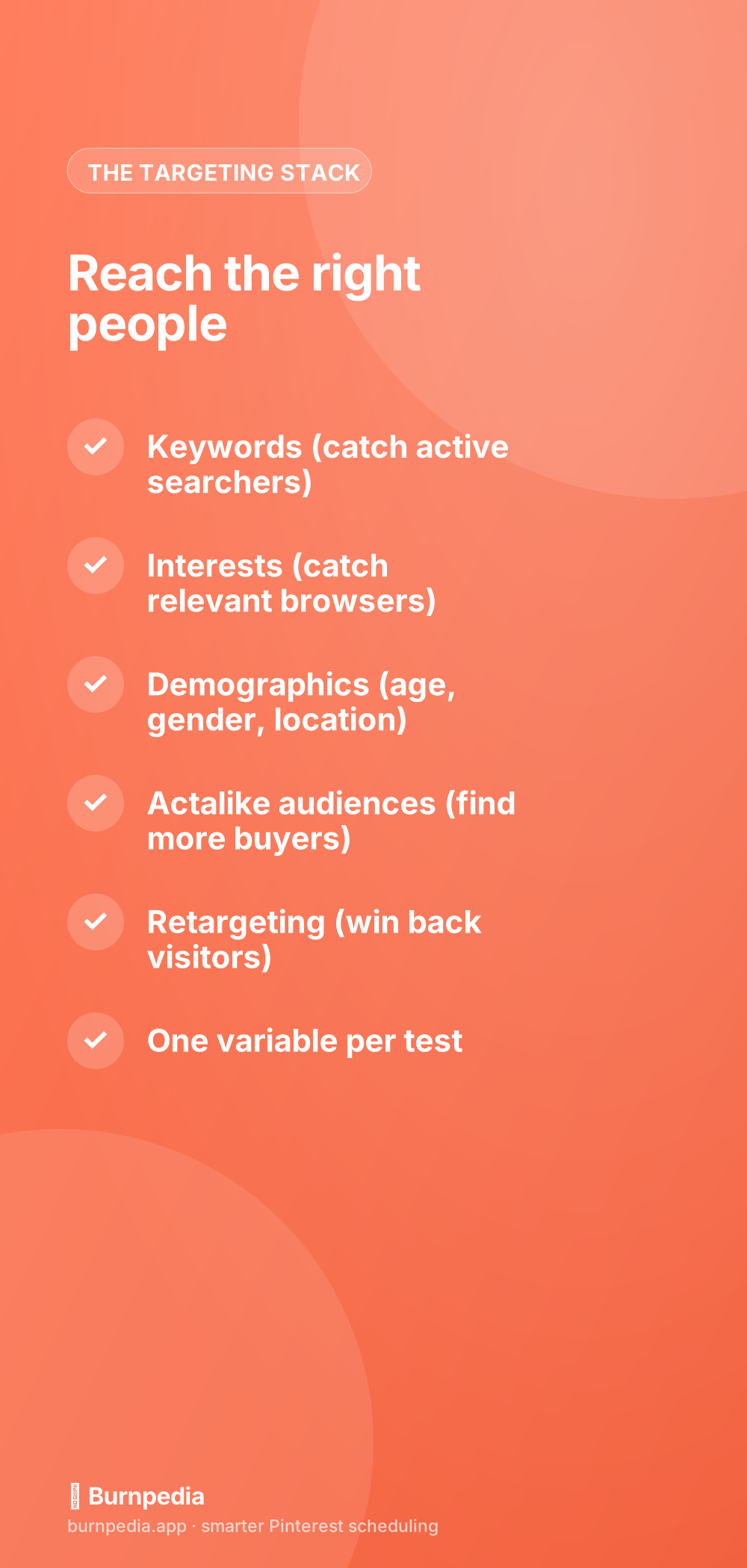
So, targeting in a nutshell: lead with specific keywords to catch buyers mid-decision, add interests and demographics to focus without over-narrowing, and graduate to retargeting and actalike audiences once you have data. Test one variable at a time, judge by cost per real result, and keep refining. Do that, and your ad budget stops spraying and starts landing squarely on the people most likely to buy — which is the whole game. Aim well, and everything else about Pinterest ads gets cheaper. — Sadie
The prices and budgets here are examples, not financial advice. What you pay depends on your audience, your bids and the season.
Written by Sadie Brooks
Hey — I’m Sadie. I grew up in a small town outside Columbus, Ohio, moved to Austin for a job I quit within a year, and somewhere in between I started a scrappy little food blog to keep myself sane.
These days I help creators, bloggers, and small U.S. business owners grow on Pinterest without turning it into a second full-time job. I write the Burnpedia blog because I genuinely love this stuff, and because I wish someone had explained it to me in plain English years ago. Pour a coffee, pull up a chair.
Try Burnpedia freeWant Pinterest to run itself?
Every tip on this blog gets easier when your Pins publish on schedule. Burnpedia batches, times, and posts them for you — start free, no credit card.
Try Burnpedia free