Is the Pinterest “Shadowban” Real? The Honest Answer
The Pinterest shadowban is the internet’s favorite explanation for a reach drop — and it is mostly wrong. Here is what is genuinely real, what is a myth, and how to tell the difference.

Say the word “shadowban” in any Pinterest group and watch the whole room nod grimly. It has become the universal explanation for every bad week: reach dropped, must be a shadowban; a pin flopped, shadowban; account feels quiet, definitely a shadowban. I get why — it is a comforting story. It means the problem is a shadowy force acting on you, not a set of choices you can examine. But comforting and true are different things, and the truth about the Pinterest shadowban is more useful than the myth. Let me give you the honest version, because it will save you weeks of worrying about the wrong thing.
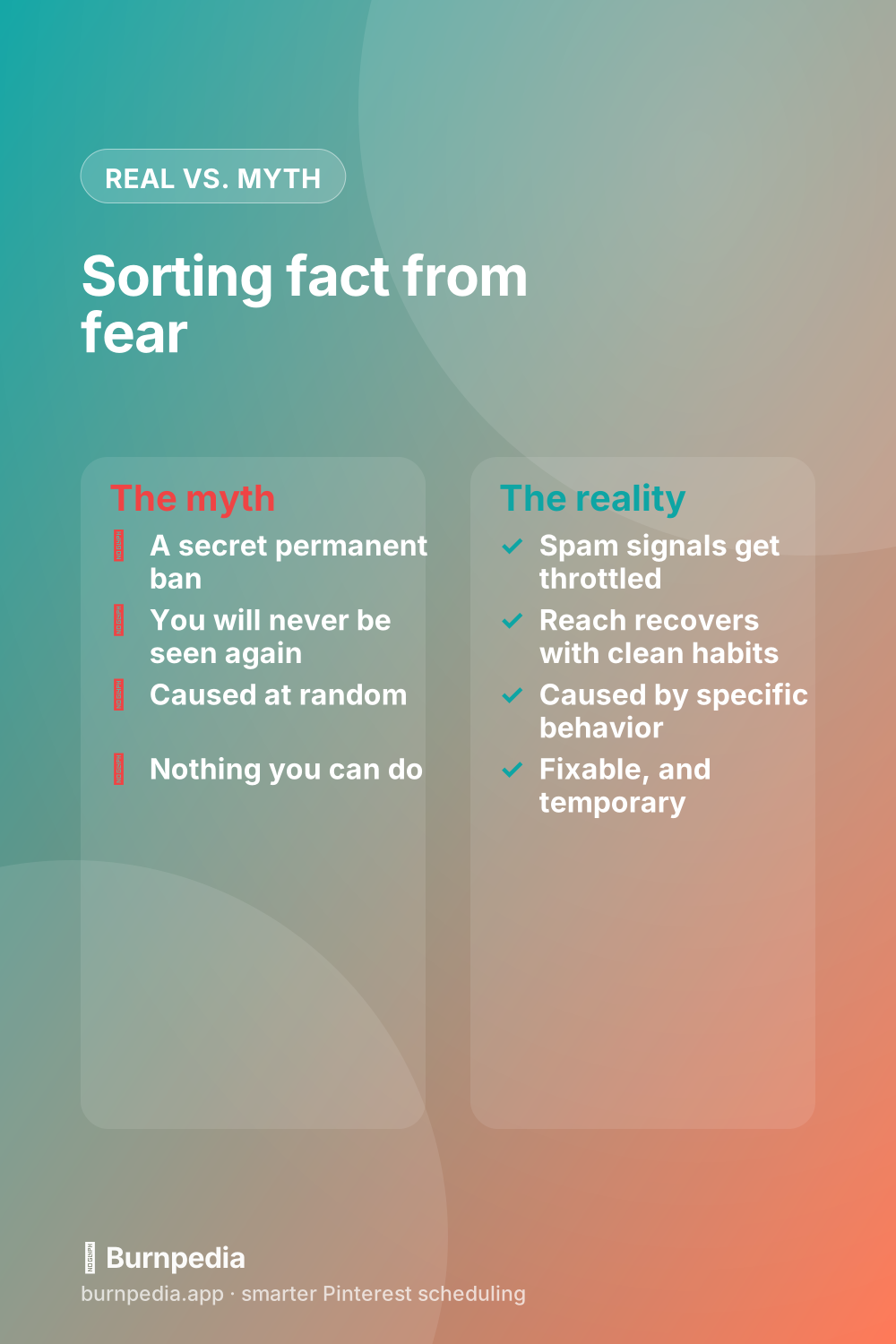
Here is the headline: Pinterest does not have a secret button labeled “shadowban” that it presses to invisibly punish you forever. What Pinterest does have is a distribution system that decides how widely to show each pin, and a set of spam and policy protections that can throttle content that trips them. Those are real. The permanent, mysterious, random curse people imagine is not. Once you understand the difference, a reach drop stops feeling like a haunting and starts feeling like something you can diagnose.
What is actually real
Let me be fair to the believers, because there are real phenomena underneath the myth. Pinterest genuinely can and does limit the distribution of content it thinks is spammy, low-quality, or against its guidelines. If you blast a pile of pins in one burst, hammer the same link over and over, use cloaked or banned URLs, or repost the same image endlessly, your reach can absolutely get quietly reduced. And a genuine policy strike on a pin or account will suppress you until it is resolved. These are real distribution limits — they are just not the arbitrary, permanent ban of legend.
The crucial difference is that these are behavior-triggered and recoverable. You did something the system reads as spammy, so it dialed you back; clean up the behavior and reach returns. That is the exact opposite of the myth, which says it is random and forever. Almost everything people call a shadowban is really one of the ordinary reach problems I catalogued in the impressions-dropping guide — a fresh-pin drought, a viral pin cooling off, or your off-season — dressed up in a scarier costume.
What is myth
Now the parts to let go of. There is no evidence that Pinterest secretly and permanently blacklists normal accounts for no reason. There is no magic to make your old reach reappear overnight — no incantation, no support ticket that flips a switch, no “detox” trick the gurus sell. And crucially, most reach drops are not a penalty at all; they are the natural math of a rolling window, seasonality, and how much fresh content you have been feeding the machine. Believing in the myth is actively harmful, because it makes you stop doing the boring fundamentals that actually recover reach, in favor of chasing a ghost.
What to do if you really did get a strike
Let us handle the rare-but-real case, because it does happen: you check your account status and there actually is a policy notice. First, do not panic — a strike is not the mysterious permanent curse of legend, it is a specific, usually resolvable issue. Read exactly what it says. Sometimes it is a single pin that tripped a guideline (a flagged image, a destination Pinterest distrusts, a claim that violates a policy), and the fix is simply to remove or correct that pin. Sometimes it is a broader account flag that comes with an appeals or review process. Either way, the path forward is to address the specific thing named, not to thrash around changing everything.
The most common real triggers are worth knowing so you can both fix and avoid them: destination links Pinterest considers spammy or unsafe, repeatedly hammering the same URL, cloaked or redirecting links, adult or prohibited content slipping through, or aggressive bursts that read as automation. Clean up whatever applies, remove offending pins, and if there is an appeal option and you genuinely believe it was a mistake, use it politely and specifically. Then get back to normal, healthy publishing and give it time — reach typically returns once the issue is resolved and you have re-established a clean, steady pattern. The key mindset is that even a genuine strike is a fixable event with a clear cause, not a verdict that you are doomed. Handle the specific problem, resume good habits, and be patient.
How to tell which one you have
Here is a simple diagnostic. First, check your account status in settings for any actual policy notice — if there is one, that is your answer, and you resolve it directly. No notice? Then look at whether any pins are still getting reach; if some are, you are not suppressed, you are just experiencing normal ups and downs. Next, ask honestly whether you have been publishing fresh pins consistently, spacing them out, and keeping your links clean. If the answer is no, you have found your real cause, and it is not a shadowban — it is habits.
- Account status shows a notice → resolve that specific issue directly
- Some pins still get reach → not suppressed, just normal variance
- You blast pins or spam one link → clean up and reach recovers
- You stopped pinning fresh content → resume a steady cadence
- Everything looks clean and it is early days → you just need more time
Notice that every branch of that tree ends in something you can do, not a wall you cannot climb. That is the whole point. If your account has broadly stalled rather than dipped, the fuller checklist in why your Pinterest is not growing will take you through the stack of small causes that are far more likely than any ban.

How to stay in the clear
Staying on the right side of Pinterest distribution is genuinely easy, because the rules are just “behave like a helpful human, not a spam bot.” Space your pins out instead of blasting them. Vary your designs and keep them fresh, as I explained in the fresh pins guide. Do not hammer a single link. Keep your content on-topic and your destinations real and fast. Do those things and you will never trip the spam protections that people mistake for a shadowban.
So the next time your reach dips and the word “shadowban” starts forming in your head, stop and run the diagnostic instead. Check for a real notice, see if any pins still perform, and audit your own habits before you blame a phantom. Nine times out of ten you will find the cause is ordinary and the fix is boring — space out your pins, keep them fresh, stay on-topic, and wait. Boring and fixable beats mysterious and hopeless every time, and it happens to be the truth. — Sadie
Written by Sadie Brooks
Hey — I’m Sadie. I grew up in a small town outside Columbus, Ohio, moved to Austin for a job I quit within a year, and somewhere in between I started a scrappy little food blog to keep myself sane.
These days I help creators, bloggers, and small U.S. business owners grow on Pinterest without turning it into a second full-time job. I write the Burnpedia blog because I genuinely love this stuff, and because I wish someone had explained it to me in plain English years ago. Pour a coffee, pull up a chair.
Try Burnpedia freeWant Pinterest to run itself?
Every tip on this blog gets easier when your Pins publish on schedule. Burnpedia batches, times, and posts them for you — start free, no credit card.
Try Burnpedia free