Pinterest Impressions Dropping? 9 Real Reasons (and How to Fix Each)
A sudden impressions drop feels like a punishment, but nine times out of ten it is one of a few boring, fixable causes. Here is how to diagnose yours and get your reach climbing again.

There is a specific flavor of dread that only Pinterest can produce. You open your analytics, the impressions line is pointing at the floor, and your brain immediately jumps to the worst possible conclusion: I have been banned, the algorithm hates me, it is all over. I have been there more times than I want to admit. So take a breath, because here is the truth that took me years to accept — an impressions drop is a diagnosis, not a sentence. Nine times out of ten it is one of a small handful of boring, completely fixable causes. Let us walk through all nine so you can find yours and stop spiraling.
Before we start, one grounding fact: impressions are just how many times your Pins appeared on screens, the very top of the funnel I mapped out in the metrics that matter. They are naturally the jumpiest number you have, so some wobble is not a problem to solve — it is just weather. We are hunting for the drops that are real.
First, make sure the drop is even real
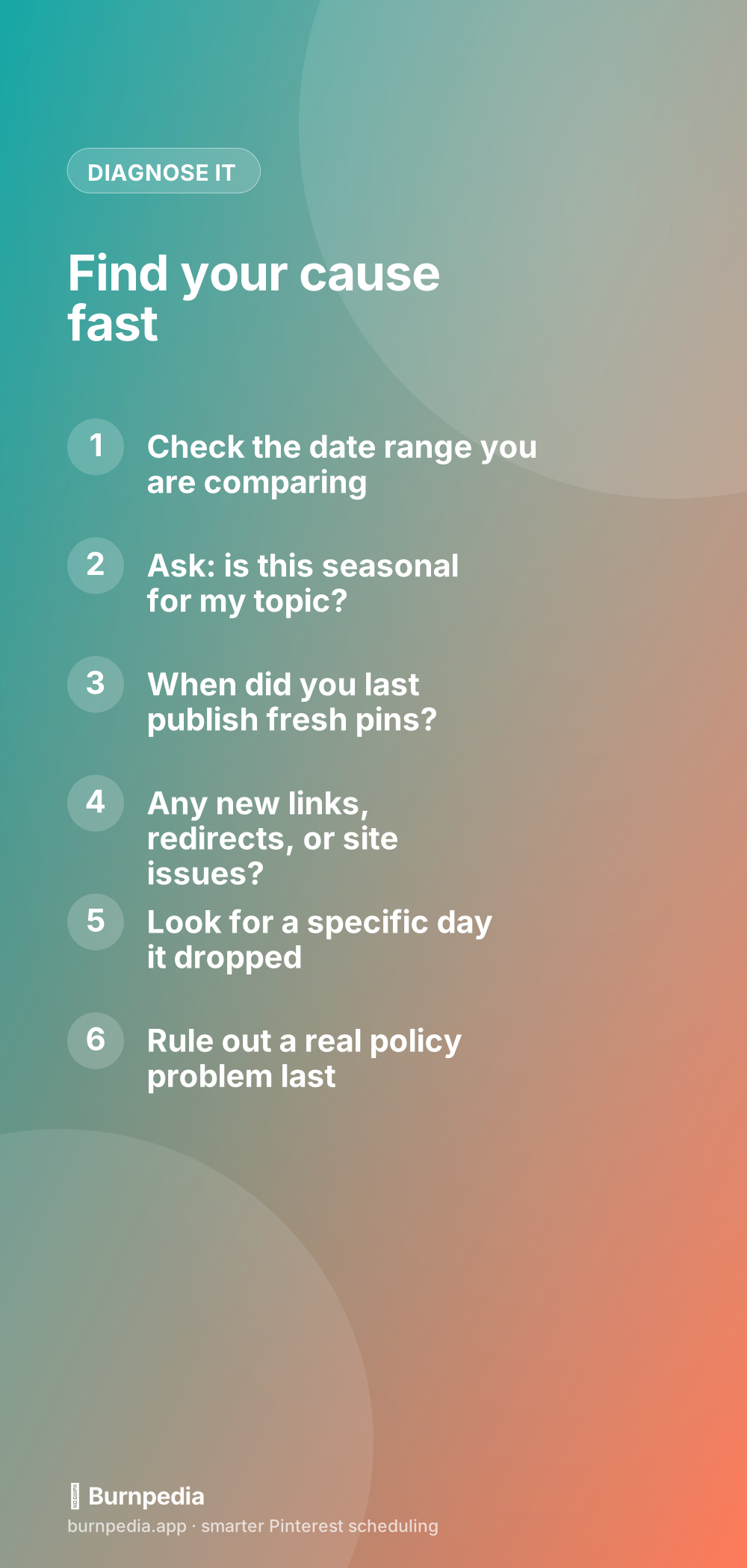
Before you diagnose anything, check what you are actually comparing. Pinterest date ranges trip people up constantly. If you are comparing a 30-day window that included a viral spike against a normal 30 days, of course it looks like a crash — you are comparing a fireworks show to a Tuesday. Line up like-for-like periods, and ideally look at a 90-day trend rather than a 7-day one. Half the panicked drops I get asked about vanish the moment we zoom out.
The 9 real reasons (and the fix for each)
Assuming the drop survives the zoom-out test, here is the ranked list of what is usually behind it. Start at the top — the common causes are common for a reason.
- You stopped publishing fresh pins. This is number one by a mile. Pinterest distribution is fed by new content; go quiet and it slowly starves. Fix: get back to a steady cadence of fresh designs.
- It is simply your off-season. A wedding or holiday or gardening account cratering in the wrong month is not broken, it is a calendar. Fix: nothing — plan around it and lean into your on-season.
- A previously viral pin cooled off. One hot pin can carry your whole account, and when it fades, everything looks like it fell. Fix: create more contenders so you are not riding a single horse.
- Your designs got stale and repetitive. Reposting near-identical pins trains the algorithm to ignore you. Fix: genuinely new layouts, angles, and headlines.
- A link or site problem. Broken URLs, sketchy redirects, or a slow site can quietly suppress reach. Fix: click your own pins and confirm they land somewhere fast and real.
- You leaned too hard on one board or keyword. Over-concentration makes you fragile to any single topic cooling. Fix: broaden your boards and search terms.
- A platform-wide shift. Sometimes Pinterest changes distribution for everyone and your dip is not personal. Fix: hold your process steady and wait it out.
- Aggressive or spammy behavior. Blasting many pins at once, or the same link over and over, can trip spam signals. Fix: space pins out and behave like a human.
- A genuine policy strike. Rare, but real — a flagged pin or account issue. Fix: check the account status in your settings and resolve any notice directly.
Notice that the scary one — an actual penalty — is dead last, because it is genuinely the least likely. Most people who are convinced they got hit with a mysterious ban are actually experiencing reasons one through four. If your mind keeps going to the ban, read the truth about the Pinterest shadowban before you waste a week worrying about a thing that mostly does not exist the way people think.

The fix that solves most drops
If you do not want to run the full diagnosis and just want the highest-probability fix, here it is: start publishing fresh Pins again, consistently. Freshness is the fuel Pinterest runs on, and a fresh-pin drought is behind more slow fades than every other cause combined. I unpacked exactly what counts as fresh in the fresh pins guide — the short version is a new image and design, not the same graphic re-uploaded. Commit to a batch of genuinely new pins every week and watch what happens over the next month.
A two-week recovery routine
If you want a concrete plan instead of a diagnosis, here is the exact two-week routine I run whenever an account of mine dips and I want it back. It is deliberately simple, because the goal is to restart the distribution engine, not to reinvent your whole strategy in a panic. Week one is about supply: commit to publishing a handful of genuinely fresh pins every single day, spaced out, targeting real search terms — new designs, new angles, not recycled graphics. You are telling Pinterest, loudly and consistently, that you are an active source worth distributing again.
Week two is about signal and cleanup. Keep the fresh pins flowing, but also audit the boring mechanics: click your own recent pins and confirm they land somewhere fast and real, make sure you are not accidentally blasting everything at 9 a.m., and check your account status for any actual notice. Then — and this is the hard part — leave it alone and let the two weeks compound before you judge anything. Reach recovers on a lag, exactly the way it fell on a lag, so daily refreshing of your stats will only make you miserable. Most dips that survive the zoom-out test respond to this routine within two to three weeks, because you are simply feeding the machine the fresh, well-behaved content it was missing. Patience plus a steady supply of fresh pins is not a glamorous fix, but it is the one that actually works.
When it really is a bigger problem
Sometimes a drop is not a blip — it is a symptom of an account that has quietly stopped working. If your impressions have been sliding for months and no single fix moves the needle, you are probably dealing with a stack of small issues rather than one dramatic cause. That is a different conversation, and I wrote the full checklist for it in why your Pinterest is not growing. Work through that if the nine reasons above did not obviously match your situation.
The most important mindset shift is to treat a drop like a mechanic treats a warning light: calmly, systematically, cheapest-and-most-likely cause first. Do not rip the engine apart because a hose came loose. Check the date range, ask if it is seasonal, confirm you are still publishing fresh pins, glance at your links — and only then, if all of that checks out, consider the rarer stuff. Reach on Pinterest is recoverable almost every time. The accounts that bounce back are the ones that diagnose instead of despair, and then quietly get back to shipping fresh pins. — Sadie
Written by Sadie Brooks
Hey — I’m Sadie. I grew up in a small town outside Columbus, Ohio, moved to Austin for a job I quit within a year, and somewhere in between I started a scrappy little food blog to keep myself sane.
These days I help creators, bloggers, and small U.S. business owners grow on Pinterest without turning it into a second full-time job. I write the Burnpedia blog because I genuinely love this stuff, and because I wish someone had explained it to me in plain English years ago. Pour a coffee, pull up a chair.
Try Burnpedia freeWant Pinterest to run itself?
Every tip on this blog gets easier when your Pins publish on schedule. Burnpedia batches, times, and posts them for you — start free, no credit card.
Try Burnpedia free