Pinterest Monthly Views, Explained: What That Number Actually Means
Monthly views is the biggest, shiniest number on your Pinterest profile — and the most misunderstood. Here is what it really counts, why it bounces around, and whether you should care.

Open your Pinterest profile and the first thing that hits you is one enormous number: your monthly views. Some months it reads 12,000. Some months it magically jumps to 90,000. Then, for no reason you can name, it collapses back to 20,000 and you spend a whole afternoon convinced you did something wrong. I have watched this number ruin more good Pinterest days than any other single thing, so let me pull it apart for you: what it actually counts, why it lurches around like that, and whether it deserves the throne it sits on. Spoiler — it does not.
Here is the honest version up front. Monthly views is real, it is not a scam, and it is not useless. But it is the single most misunderstood metric on the platform, and treating it as your scoreboard will quietly steer you toward the wrong decisions. By the end of this you will know exactly how much weight to give it, and which numbers deserve your attention instead.
What monthly views actually counts
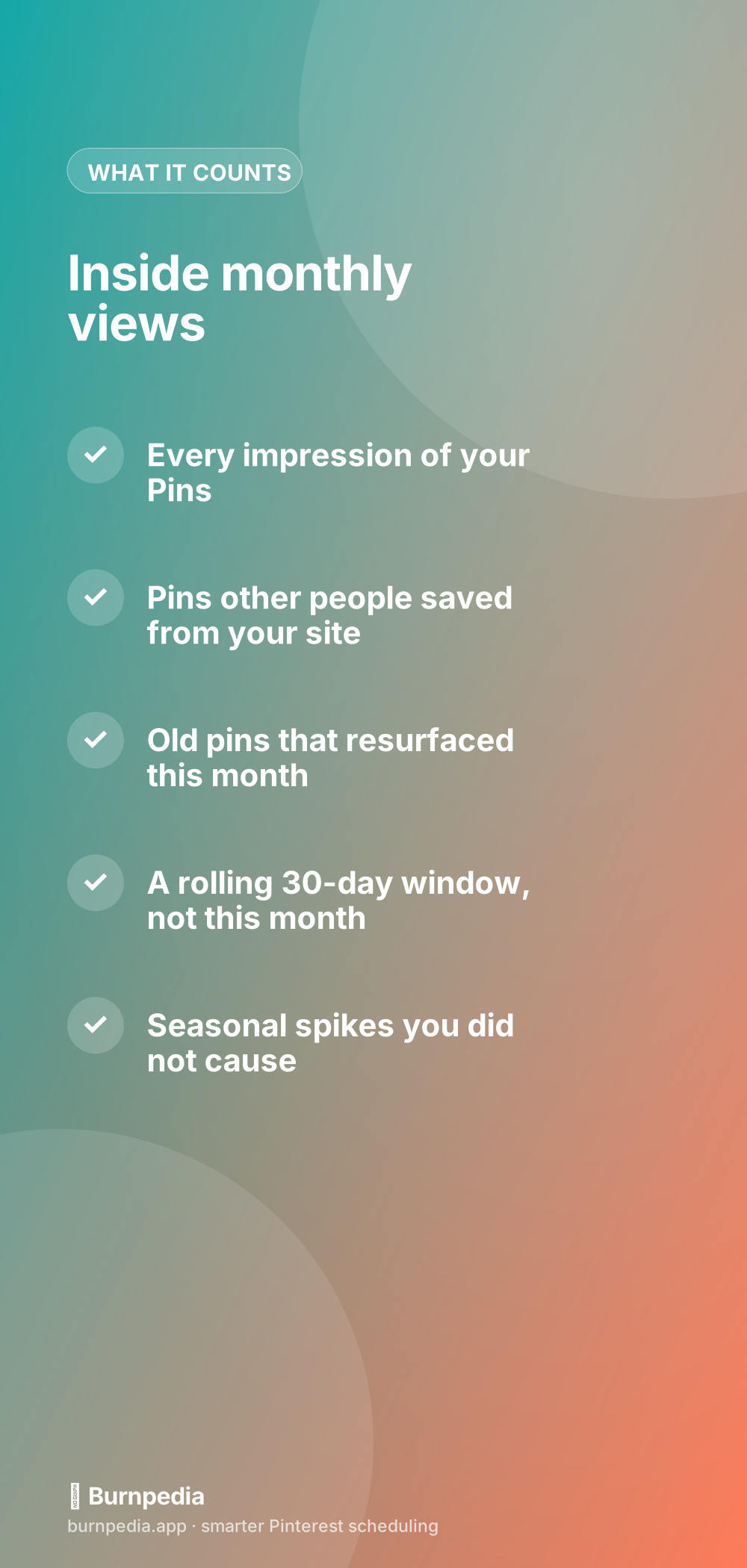
Monthly views is the total number of times your Pins — and Pins that link to your website — were seen across Pinterest in the last 30 days. Read that again slowly, because there are three sneaky things buried in it. First, it counts impressions, meaning times your Pin appeared on someone screen, not times someone did anything about it. A Pin that scrolled past a thousand bored thumbs counts a thousand times. Second, it includes Pins other people saved from your site, not just Pins you created — so someone else can inflate or deflate your number. Third, it is a rolling 30-day window that updates constantly, not a tidy calendar month.
That last detail is why the number never sits still. Because it is always summing the trailing 30 days, an old Pin that suddenly catches a wave of the algorithm can double your views in a week without you lifting a finger. This is the same impressions idea I dug into in the metrics that actually matter, just wearing a bigger, flashier outfit. Impressions are the top of the funnel, and monthly views is impressions with the volume turned all the way up.
Why the number swings so wildly
If your monthly views look like a heart-rate monitor, you are normal. There are a handful of reasons the number is naturally jumpy, and almost none of them are a verdict on your work. Seasonality is the biggest one: a wedding Pin in spring, a pumpkin recipe in October, a gift guide in December — these ride enormous seasonal waves that have nothing to do with how good you are. One Pin catching the algorithm can also spike everything, and then normalize weeks later, which reads as a crash even though nothing broke.
- Seasonal demand rising and falling around your topics
- A single Pin going semi-viral, then cooling off
- Pinterest tweaking its distribution behind the scenes
- Other people saving your content in bursts
- The rolling window dropping a big day off the back end
Notice how much of that list is outside your control. That is the core problem with worshiping this metric: you can do everything right and watch it fall, or coast for a month and watch it climb. A number you cannot steer makes a terrible steering wheel.

Do monthly views actually matter?
A little — as a trend, not as a trophy. A monthly-views number that is drifting upward over three to six months is a genuinely good sign that your reach is growing and Pinterest is showing your stuff to more people. But the day-to-day and week-to-week wiggle is pure noise, and the absolute number is close to meaningless. I have seen accounts with 500,000 monthly views sending barely any traffic to their site, and accounts with 15,000 monthly views quietly driving thousands of clicks a month to a shop. Views are a stage, not a destination.
The reason is simple: a view is just an eyeball, and eyeballs do not pay your bills. What pays your bills is what happens after the view — the save, the click, the visit, the sale. That is why I keep pushing people past impressions toward action metrics. If you only take one link from this post, make it the guide to outbound clicks, because that is the number actually tied to traffic landing on your site.
Monthly views vs. monthly viewers — not the same thing
One more source of confusion worth clearing up, because people mix these two up constantly. Monthly views is the total number of times your content was seen — the big number we have been talking about — and a single person can rack up many of those in a session. Monthly viewers, on the other hand, is the count of unique individual people who saw your stuff. They measure genuinely different things, and neither is a scoreboard, but the distinction matters for how you interpret a swing.
Here is why it is useful to know the difference. If your total views spike but your unique viewers barely move, that usually means the same audience is seeing your pins more often, not that your reach expanded — often a sign one pin got repeatedly shown to a similar group. If both climb together, your reach is genuinely widening to new people. That second pattern is the one you actually want, because new people are future clickers, savers, and customers. So when you glance at your profile numbers, do not just read the giant total in isolation; check whether the unique-viewer number is trending up alongside it. Growing views on flat viewers is a plateau wearing a costume, and knowing which one you have keeps you honest about whether you are truly reaching more people or just circling the same crowd.
The metrics to watch instead
If monthly views is the vanity number, here is the trio that tells you the truth. Saves show that people found your Pin valuable enough to keep — that is Pinterest true engagement signal, and it is what convinces the algorithm to show your Pin to more people. Outbound clicks show that people cared enough to leave Pinterest and visit you, which is the whole point of being here. And your pin click rate (clicks divided by impressions) tells you whether your designs and titles are actually earning the click or just decorating the feed.
I broke the difference between looking busy and actually working in impressions vs. engagement, and it is worth internalizing: a Pin can rack up huge views and near-zero saves, which means it is reaching people who do not care. Better to reach fewer, more interested people who save and click. If you are just getting your bearings in the analytics tab, the beginner analytics walkthrough will get you oriented without the overwhelm.

How to actually grow monthly views (as a side effect)
The irony is that the way to grow monthly views is to stop chasing them and chase the healthy metrics instead. Publish fresh Pins consistently so Pinterest has new material to distribute. Design for the save and the click, not just the scroll. Target real search terms so your Pins get found on purpose rather than by luck. Do those things for a few months and monthly views climbs on its own — as a lagging side effect of good work, which is exactly the role it should play.
So the next time your monthly views does its little rollercoaster thing, take a breath. Glance at the three-month trend, check whether your saves and outbound clicks are holding or growing, and then close the tab. That giant number is the weather — interesting, occasionally dramatic, and almost never worth reorganizing your whole strategy around. Watch the metrics that move because of you, and let the vanity number do whatever it wants. — Sadie
Written by Sadie Brooks
Hey — I’m Sadie. I grew up in a small town outside Columbus, Ohio, moved to Austin for a job I quit within a year, and somewhere in between I started a scrappy little food blog to keep myself sane.
These days I help creators, bloggers, and small U.S. business owners grow on Pinterest without turning it into a second full-time job. I write the Burnpedia blog because I genuinely love this stuff, and because I wish someone had explained it to me in plain English years ago. Pour a coffee, pull up a chair.
Try Burnpedia freeWant Pinterest to run itself?
Every tip on this blog gets easier when your Pins publish on schedule. Burnpedia batches, times, and posts them for you — start free, no credit card.
Try Burnpedia free