Outbound Clicks: The One Pinterest Metric That Actually Pays
Impressions feel good and saves feel flattering, but outbound clicks are the only Pinterest number that turns into visitors, subscribers, and sales. Here is how to grow the metric that matters most.

Let me tell you about the day I stopped caring about impressions. I had a pin doing genuinely huge numbers — tens of thousands of views a week — and I was thrilled, right up until I checked my website traffic and saw a rounding error. All those views, almost no visitors. Meanwhile a plain little pin I almost did not publish was quietly sending hundreds of people to my site a week. That was the day outbound clicks became the only Pinterest metric I truly obsess over, and I want to convince you to do the same, because this is the number that turns Pinterest from a hobby into a business.
An outbound click is exactly what it sounds like: someone saw your pin, tapped it, and left Pinterest to visit your website. That is it. That is the whole ballgame. Every subscriber you gain, every product you sell, every ad-revenue pageview you earn — all of it starts with an outbound click. Impressions are eyeballs, saves are bookmarks, but outbound clicks are actual human beings arriving at your door.
Why clicks beat impressions and saves
I love saves — they are a real engagement signal, and I explained in the metrics that matter why they help your distribution. But a save is a promise to come back later that most people never keep. A click is right now. It is intent turned into action. When someone clicks through, they have decided your thing is worth leaving the pretty infinite-scroll feed for, and that is the highest-value decision a Pinterest user can make for your business.
This is exactly why I keep steering people away from the big vanity numbers. If you have been staring at your monthly views wondering why they do not translate to traffic, the answer is that views were never supposed to. Views are the audition; the click is getting the part. You can have a small audience of clickers that outperforms a huge audience of scrollers every single day of the week.

The metric behind the metric: click rate
Raw outbound clicks tell you volume, but there is a sharper number hiding underneath: your pin click rate, which is clicks divided by impressions. This tells you what percentage of people who saw your pin actually tapped it. It is the truest measure of whether a specific pin is doing its job, because it strips out the luck of how many people happened to see it. A pin with a low click rate is being seen but ignored — the design or the title is not earning the tap. A pin with a high click rate is a winner you should make more of.
This is the single most useful diagnostic I know. Sort your pins by click rate and you instantly learn which designs, headlines, and topics your audience actually acts on. Then you do the obvious thing: make more like the winners, fewer like the losers. Most people never look at this number, which is exactly why most people plateau.
How to earn more outbound clicks
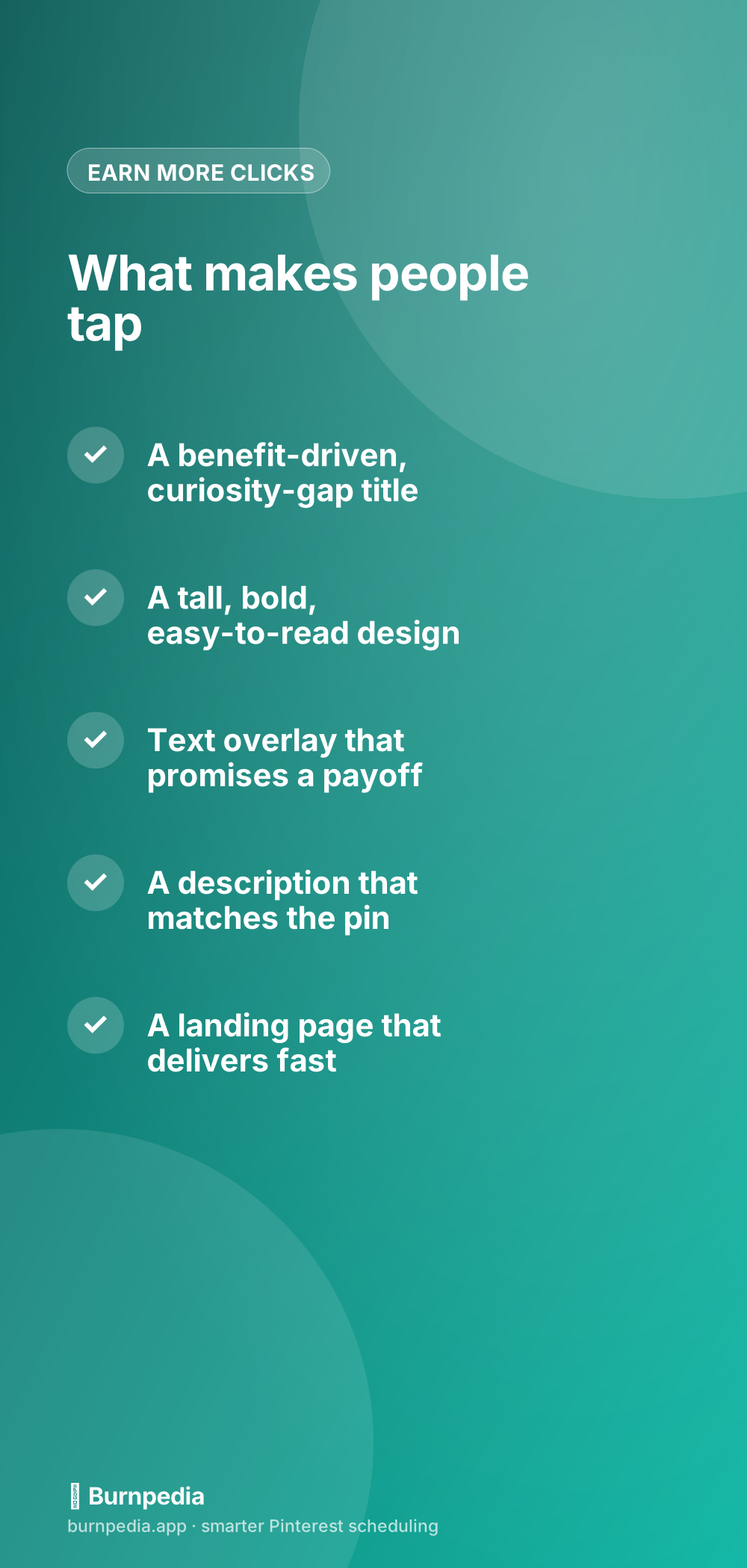
Clicks come from a promise made and kept. The pin makes a promise; the click is someone accepting it. So everything about earning clicks is about making a clearer, more tempting promise. Your title should lead with a concrete benefit or a curiosity gap — something the reader wants resolved. Your design should be tall, bold, and readable at a thumbnail size, because most people decide in half a second on a phone. And your text overlay should hint at the payoff without giving it all away, so the click is the only way to satisfy the itch.
- Lead the title with the outcome, not the topic
- Use a vertical 2:3 design that pops on a small screen
- Add a short text overlay that promises something specific
- Write a description that reinforces the promise and adds keywords
- Make sure the destination loads fast and delivers immediately
Design is doing more of this heavy lifting than anything else, which is why I spent a whole post on it — pin design that gets clicks walks through the exact visual choices that move click rate. If your impressions are healthy but your clicks are weak, the problem is almost always the pin failing to earn the tap, and design is where you fix it.
Why a handful of pins drive most of your clicks
Once you start watching outbound clicks seriously, you will notice something that feels almost unfair: a small number of your pins produce the overwhelming majority of your clicks. It is the classic 80/20 rule, except on Pinterest it is often more like 95/5. Most of your pins will trickle, and a few will pour. New pinners find this discouraging, but it is actually the best news there is, because it means you do not need every pin to be a winner — you need to find and feed the few that are.
So build your whole workflow around that reality. First, publish enough fresh pins that you give yourself real chances to hit a winner — you cannot find a pourer if you only ever make three pins. Second, watch your click and click-rate numbers to spot the winners early, then double down: make more pins in that style, on that topic, with that kind of title, and point them at that kind of landing page. Third, do not kill your tricklers, because collectively they still add up and any one of them might catch fire later. The mistake is treating all pins as equal and spreading your energy evenly; the move is to let the data tell you where the clicks concentrate and then deliberately manufacture more of that. A few click machines, discovered through volume and doubled down on through analytics, will out-earn a hundred pretty pins you made on vibes.
Do not waste the click you earned
Here is the mistake that quietly kills great click numbers: earning the click and then breaking the promise. If your pin says one thing and the landing page delivers another, or the page is slow, or the reader has to hunt for what they came for, they bounce — and Pinterest notices when people click and immediately leave. A click that does not convert is worse than no click, because it burns trust on both ends. The pin and the page have to tell the same story. Once you are getting real traffic, setting up conversion tracking lets you see which pins turn clicks into subscribers and sales, so you can double down on what actually pays.
So reset your scoreboard. Let impressions be background noise, enjoy your saves as a bonus, and put outbound clicks and click rate at the center of everything. When you make decisions based on what earns the tap, your Pinterest starts behaving like a traffic engine instead of a beauty pageant. Fewer, better pins that people actually click will always beat a wall of pretty pictures that people scroll right past. Chase the click, and the business follows. — Sadie
Written by Sadie Brooks
Hey — I’m Sadie. I grew up in a small town outside Columbus, Ohio, moved to Austin for a job I quit within a year, and somewhere in between I started a scrappy little food blog to keep myself sane.
These days I help creators, bloggers, and small U.S. business owners grow on Pinterest without turning it into a second full-time job. I write the Burnpedia blog because I genuinely love this stuff, and because I wish someone had explained it to me in plain English years ago. Pour a coffee, pull up a chair.
Try Burnpedia freeWant Pinterest to run itself?
Every tip on this blog gets easier when your Pins publish on schedule. Burnpedia batches, times, and posts them for you — start free, no credit card.
Try Burnpedia free