Pinterest for Course Creators: Fill Your Online Course With Students
Nobody buys a course from a single Pin — but Pinterest is one of the best top-of-funnel machines for course creators. Here’s the free-to-paid funnel that quietly fills your course with students.

Let me save you a lot of frustration right up front: nobody is going to see a single Pin and immediately buy your $300 online course. That’s just not how it works, and course creators who treat Pinterest like a billboard for their paid offer end up disappointed. But here’s the flip side, and it’s genuinely exciting — Pinterest is one of the best top-of-funnel machines on the planet for course creators. It’s brilliant at finding exactly the people who have the problem your course solves, and gently starting a relationship with them. You just have to understand that Pinterest fills the top of your funnel, and the funnel does the selling.
If you’re also a coach or consultant, a lot of this overlaps with Pinterest for coaches — the mechanics of building trust with a cold audience are the same. But courses have their own particular funnel, because you’re selling a self-paced transformation to people who need to believe you can actually teach them. Let’s build that funnel step by step.
The mindset: serve first, sell later
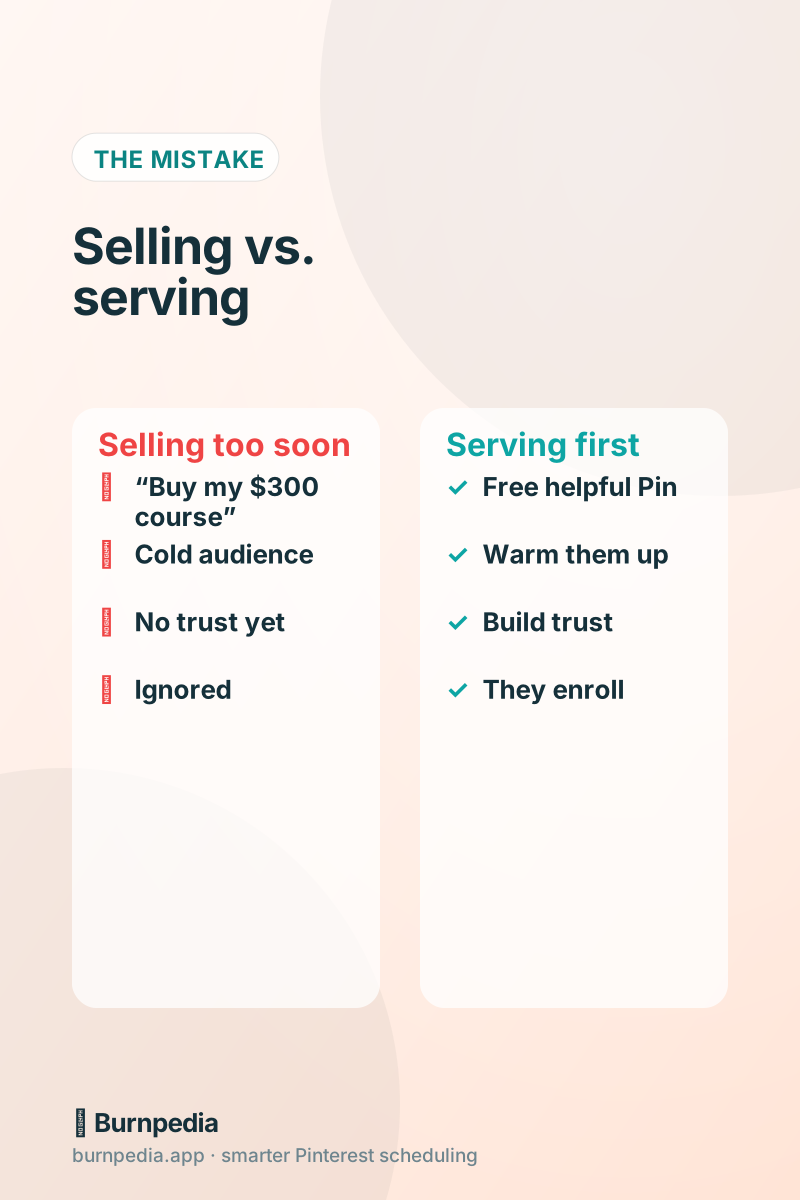
The creators who win on Pinterest lead with generosity. Instead of pinning “buy my course,” they pin genuinely helpful free content on the exact topics their course covers. If your course teaches watercolor painting, your Pins are “5 beginner watercolor techniques” and “how to fix muddy colors” — real, useful stuff. This does something powerful: it proves you can teach, builds trust, and attracts precisely the people who’d want the full course. You’re giving away slices so people want the whole cake.
This feels counterintuitive — “won’t free content cannibalize my paid course?” — but it’s the opposite. Free content demonstrates your expertise and warms up strangers into fans. The people who binge your free Pins are the exact people who eventually think, “I love how this person teaches; I want the structured, complete version.” Serving first isn’t giving away the sale; it’s earning it.
Keywords: find people with the problem
Your course solves a specific problem for a specific person, so your keyword strategy is about finding that person mid-search. Think about what someone struggling with your topic would type before they even know a course exists. For a course on freelancing: “how to find freelance clients,” “freelance rates calculator,” “quit my job to freelance.” Put those phrases in your Pins so you show up at the exact moment someone is feeling the pain your course cures.
The beauty of this is that Pinterest searchers are often earlier in their journey than people on other platforms — they’re researching, planning, dreaming. That’s the perfect time to enter their world with helpful content, long before they’re ready to buy. You get to be the trusted guide who was there from the start, which is a far stronger position than showing up with a sales pitch at the end.
The critical step: capture the email
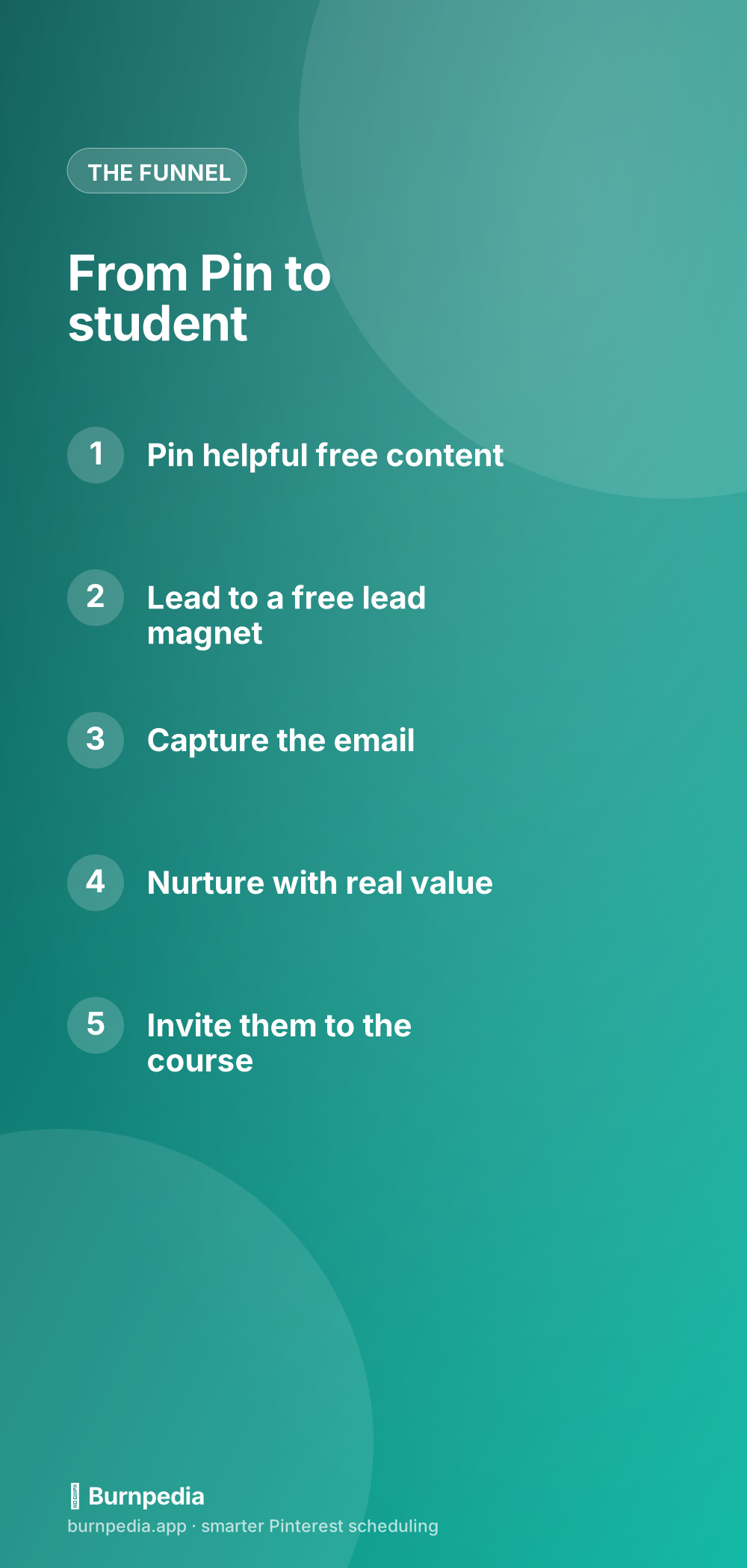
Here’s the piece that makes the whole thing work: don’t send your Pinterest traffic straight to your course sales page, and don’t let it just bounce off a blog post either. Send a good chunk of it to a free lead magnet — a mini-course, a checklist, a template, a free workshop — in exchange for an email address. Because the real money in course creation isn’t made on Pinterest; it’s made in the email sequence that follows. Pinterest’s job is to fill your email list with the right people.
This is why email is non-negotiable for course creators, and why growing your email list with Pinterest is essentially required reading here. A course launch to an engaged email list converts dramatically better than a cold sales page. Pinterest fills the list; the list buys the course. Get that chain right and everything else gets easier.
Nurture, then invite
Once someone’s on your list, you nurture. Send them genuinely valuable emails — more free teaching, stories, quick wins — so the relationship deepens and they experience your teaching style firsthand. By the time you invite them into your paid course, they already know, like, and trust you, and they’ve gotten real results from your free stuff. The sale stops feeling like a sale and starts feeling like the obvious next step. That’s the whole point of the funnel: warm people who are glad to be invited, not cold strangers being pitched.
Your paid course invitation can also live on Pinterest, just not as the front door. A portion of your Pins can point to your course or a webinar for people who are further along and ready to commit. But keep the majority pointed at free value and lead magnets, because that top-of-funnel volume is what keeps the whole machine fed. Roughly, think mostly free, some list-building, a little direct.
Repurpose your course into endless Pins
You already have a goldmine of content: your course itself. Every lesson, module, and concept can become free Pinterest content that both helps people and teases the depth of your paid material. Pull a single tip from a lesson and make it a Pin. Turn a framework into an infographic. Share a student win. Your course is months of Pin ideas hiding in plain sight — you’re not giving it away, you’re showcasing it.
This is the same repurposing logic that powers selling digital products on Pinterest — one asset, many Pins, each a fresh doorway in. And because Pinterest rewards fresh images and consistent volume, having this deep well of content to draw from is a real competitive advantage over creators who run dry after a few Pins.
Time your Pinterest push around launches
If you run your course in launches rather than selling it evergreen, timing your Pinterest effort matters. Because Pinterest is a slow-burn platform, you can’t start pinning the week before your cart opens and expect a flood. Instead, ramp up your helpful, list-building Pins a couple of months ahead of a launch, filling your email list with warm, relevant subscribers who’ll be ready when you open enrollment. Pinterest is the long game that feeds your launch, not the launch-day megaphone. Plan your pinning backward from your launch date, just like you’d plan seasonal content backward from a holiday.
For evergreen course sellers, the logic is even simpler: keep the top of the funnel consistently full year-round, and your enrollments become a steady drip rather than a spiky launch. Both models work beautifully with Pinterest; you just aim the timing differently. Either way, the principle holds — the free content and list-building come first, and the sale follows once trust has had time to build.
Consistency is what makes the funnel flow
A funnel only works if the top stays full, and that requires steady pinning — which is hard when you’re busy actually running your course, teaching, and supporting students. The answer, as always, is batching and scheduling. Set aside time to create a big batch of helpful Pins from your course material, then schedule them to flow out consistently. Your funnel stays fed, new subscribers keep arriving, and you’re free to focus on your students instead of feeding Pinterest by hand.
Pinterest won’t sell your course with a single Pin, and that’s okay — that was never its job. Its job is to find the people who need what you teach, before they even know your course exists, and gently draw them into your world. Serve them with free value, capture their email, nurture the relationship, then invite them in. Do that consistently, and Pinterest becomes a steady, self-refilling source of the right students — the quiet engine behind a full course. — Sadie
Written by Sadie Brooks
Hey — I’m Sadie. I grew up in a small town outside Columbus, Ohio, moved to Austin for a job I quit within a year, and somewhere in between I started a scrappy little food blog to keep myself sane.
These days I help creators, bloggers, and small U.S. business owners grow on Pinterest without turning it into a second full-time job. I write the Burnpedia blog because I genuinely love this stuff, and because I wish someone had explained it to me in plain English years ago. Pour a coffee, pull up a chair.
Try Burnpedia freeWant Pinterest to run itself?
Every tip on this blog gets easier when your Pins publish on schedule. Burnpedia batches, times, and posts them for you — start free, no credit card.
Try Burnpedia free