Pinterest Content Pillars: The Framework That Ends “What Do I Pin?”
If you never know what to pin, you don’t have a content problem — you have a structure problem. Content pillars are the fix: 3 to 5 core themes that make Pinterest easy and finally give your account focus.

If you regularly sit down to work on Pinterest and think “ugh, what do I even pin today?” — I have good news. You don’t have a creativity problem, and you don’t have a Pinterest problem. You have a structure problem, and it has a clean fix: content pillars. Content pillars are the 3 to 5 core themes your whole account revolves around, and once you define them, two magical things happen. You never run out of ideas, because you always know which buckets to fill, and Pinterest finally understands what you’re about, so it starts showing your Pins to the right people. Let me walk you through building yours.
The reason scattered accounts struggle is that Pinterest is a search-and-recommendation engine that thrives on clarity. When your Pins jump randomly between recipes, fashion, business tips, and travel, Pinterest can’t tell what you’re an authority on, so it hesitates to push any of it hard. Content pillars give the algorithm a clear, consistent signal — and give you a repeatable system so “what do I pin?” becomes a question you never ask again.
What content pillars actually are
Think of your account like a building. Content pillars are the few main columns that hold it up — the core topics that everything you pin fits under. A food blogger’s pillars might be “quick weeknight dinners,” “meal prep,” and “healthy desserts.” A finance creator’s might be “budgeting,” “side hustles,” and “investing basics.” Each pillar is broad enough to generate endless ideas, but specific enough that it clearly belongs to you. Everything you pin should ladder up to one of these columns.
This is closely tied to picking a focused niche — pillars are basically the sub-themes within your niche. If you haven’t nailed your niche yet, Pinterest niches that work is the place to start, because pillars work best when they sit inside a clear lane. But even within a niche you love, pillars are what turn a vague “I post about food” into a focused, findable, authority-building account.
How to find your 3 to 5 pillars
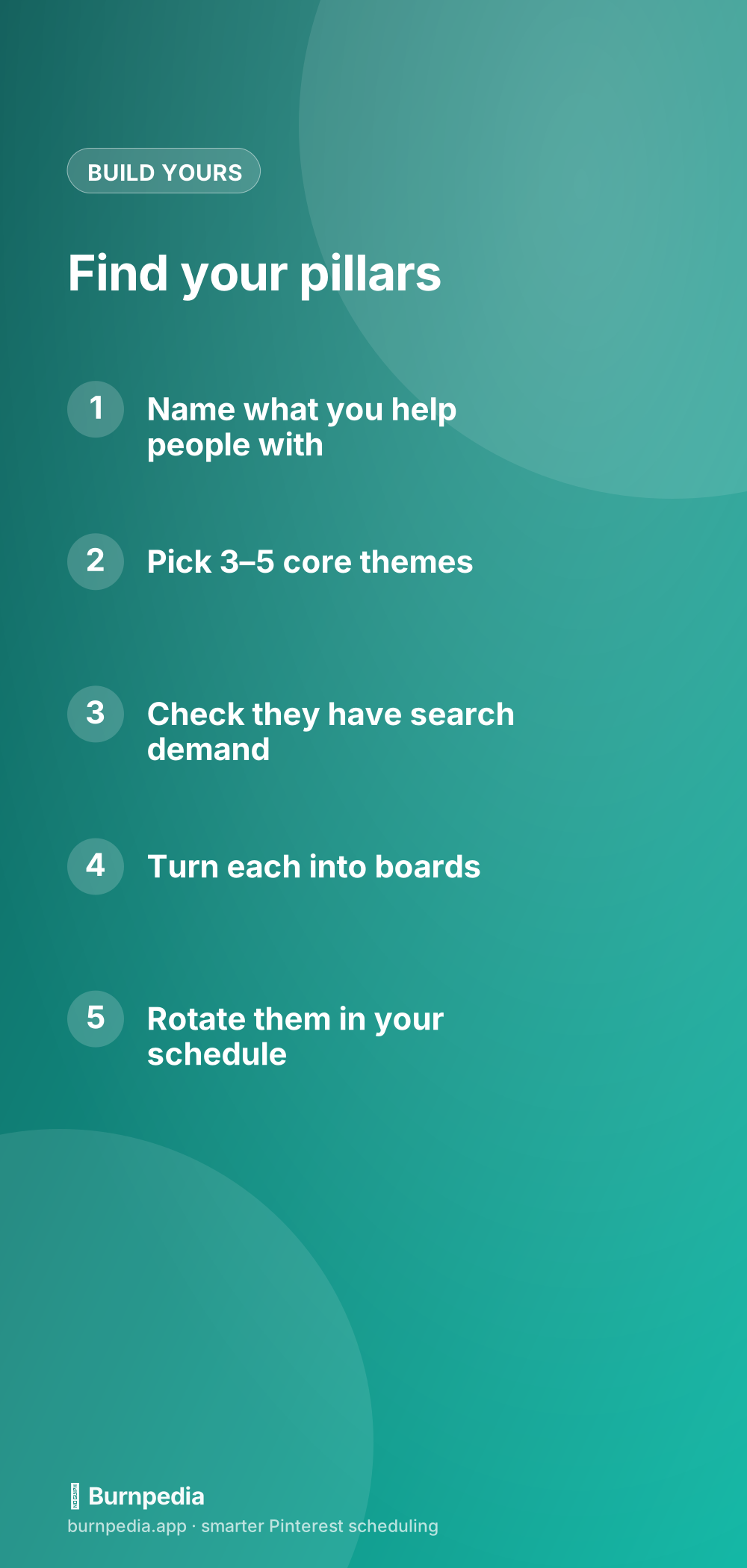
Start with a simple question: what do people come to you for? List the main things you help with, teach, or make. Then group them into a handful of themes — you’re looking for the natural clusters. Aim for three to five; fewer than three and your account feels one-note, more than five and you dilute your focus and confuse the signal again. The sweet spot gives you enough variety to stay interesting and enough focus to build authority in each area.
Then sanity-check each pillar against reality with two questions. Does it have search demand — do people actually look for this on Pinterest? (A quick search-bar test shows you.) And does it connect to your business — will content on this theme attract the right people, not just any people? A pillar that’s fun to make but attracts no one useful, or that nobody searches, is a hobby, not a strategy. Keep the pillars that pass both tests.
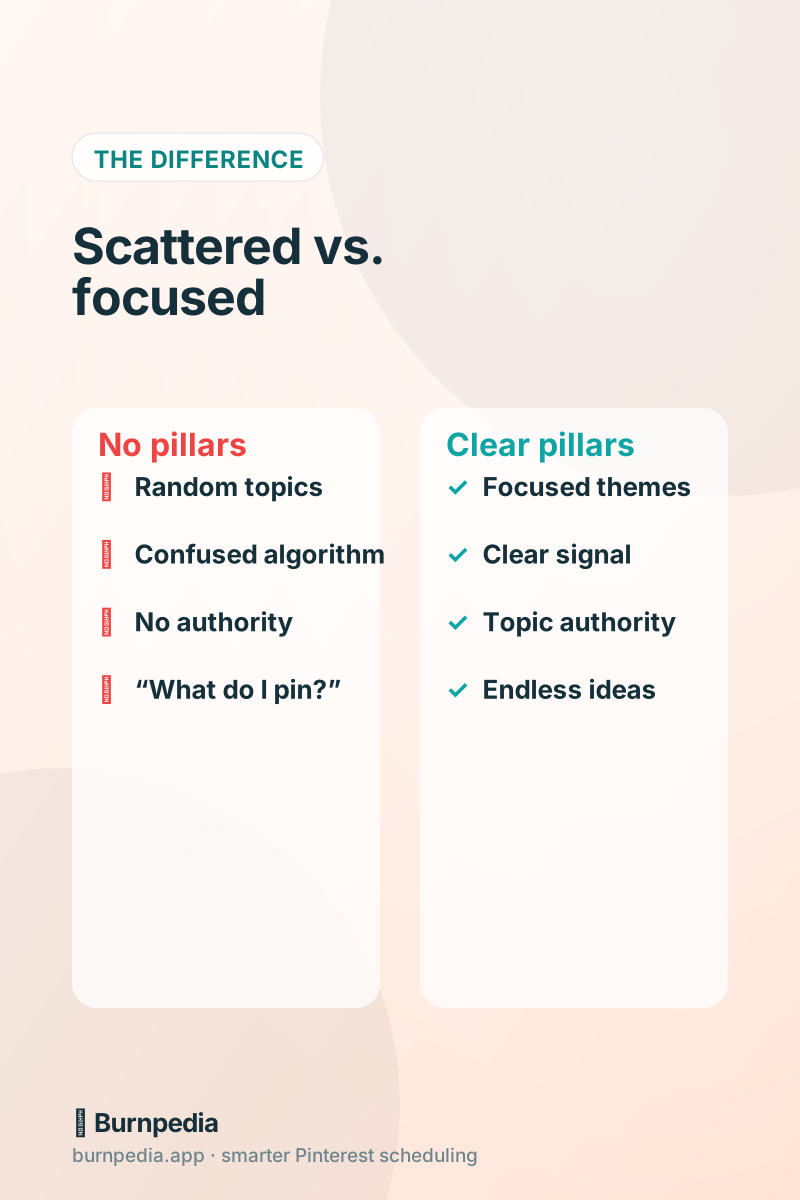
Turn pillars into boards and keywords
Once you’ve got your pillars, they should show up everywhere in your account structure. Each pillar naturally becomes one or more boards — keyword-named boards that collect all your Pins on that theme, giving Pinterest a tidy, well-labeled category to understand. Your pillars also become your keyword clusters: for each one, you have a set of search terms you consistently target. This is how the abstract idea of “focus” becomes concrete on-page structure that the algorithm can actually read.
This dovetails perfectly with board strategy and SEO — your pillars are the top level, your boards are the categories, and your keyworded Pins fill them in. It’s all one coherent system. And it makes an SEO audit trivial, because you already know exactly what each part of your account is supposed to be about. Structure at the top makes everything below it easier.
Rotate your pillars in your schedule
Here’s where pillars make your day-to-day genuinely easy. Instead of staring at a blank calendar wondering what to pin, you rotate through your pillars. Monday a meal-prep Pin, Tuesday a quick-dinner Pin, Wednesday a healthy-dessert Pin, and around again. You’re always covering your core themes in a balanced way, so no pillar gets neglected and your feed stays varied but focused. “What do I pin?” becomes “which pillar is up next?” — a question with an obvious answer.
This rotation slots right into a scheduling routine. When you plan your week or month, you fill slots by pillar, ensuring balance, then let your scheduler publish it all. It’s the difference between a content calendar that writes itself and a blank page that fills you with dread. Pillars turn planning from a creative struggle into a simple sorting task.
Pillars keep you from drifting
One quiet benefit of pillars is discipline. Without them, it’s easy to drift — chasing a trend here, a random idea there — until your account is a confusing grab bag again. Pillars act as guardrails: when a Pin idea doesn’t fit any of your columns, that’s a signal to skip it (or reconsider whether you need a new pillar). This keeps your account coherent over months and years, which is exactly what builds the topic authority that makes Pinterest start trusting and promoting you.
This connects to the bigger picture of having an actual strategy instead of just posting. Pillars are a core piece of a real Pinterest marketing strategy — the structural backbone that everything else hangs on. And they help you avoid one of the classic scheduling mistakes: pinning with no plan, just vibes. Pillars replace vibes with a system.
A bonus pillar most people forget
Most of your pillars will be topic-based — the subjects you teach or make. But consider adding one pillar that’s about you and your world: behind-the-scenes, your process, your story, your personality. On a search-driven platform this feels counterintuitive, but a personality pillar builds the connection that turns anonymous searchers into actual fans and customers. It doesn’t need to dominate — a smaller slice of your rotation is plenty — but weaving in a bit of your human self makes your account memorable in a way pure how-to content never is. People follow topics, but they buy from people they feel they know.
Just keep this pillar in proportion. It’s the seasoning, not the main dish — most of your Pins should still be the searchable, helpful content that gets you found in the first place. Think of it as the warmth that makes all your other pillars land harder: someone finds you through a useful Pin, then sticks around because they like who’s behind it. That blend of helpful and human is what quietly separates accounts people admire from accounts people actually love.
Let your pillars evolve
Your pillars aren’t carved in stone. As you grow, watch which ones your audience responds to most, and let the winners earn more of your attention. Maybe one pillar consistently outperforms and deserves to become two, or one falls flat and should be retired. Reviewing your pillars a couple of times a year keeps your strategy aligned with what actually works and where your business is heading. The framework stays the same; the specific pillars flex as you learn.
The next time you feel that “what do I pin?” dread, remember: it’s not a you problem, it’s a structure problem, and content pillars are the structure. Name the few core themes you want to be known for, turn them into boards and keywords, rotate them through your schedule, and let them keep you focused. Do that, and you’ll never face a blank calendar again — you’ll have a system that generates endless ideas and quietly tells Pinterest exactly who to show them to. — Sadie
Written by Sadie Brooks
Hey — I’m Sadie. I grew up in a small town outside Columbus, Ohio, moved to Austin for a job I quit within a year, and somewhere in between I started a scrappy little food blog to keep myself sane.
These days I help creators, bloggers, and small U.S. business owners grow on Pinterest without turning it into a second full-time job. I write the Burnpedia blog because I genuinely love this stuff, and because I wish someone had explained it to me in plain English years ago. Pour a coffee, pull up a chair.
Try Burnpedia freeWant Pinterest to run itself?
Every tip on this blog gets easier when your Pins publish on schedule. Burnpedia batches, times, and posts them for you — start free, no credit card.
Try Burnpedia free