How to Use Pinterest Trends to Plan Content People Are Already Searching
Guessing what to pin is exhausting. Pinterest Trends hands you the answer for free — what people are searching, when interest rises, and which words are climbing. Here’s how to actually use it.

Here’s a small confession from my early Pinterest days: I spent an embarrassing amount of energy guessing. Guessing what people wanted, guessing which keywords to use, guessing when to post my seasonal stuff. Then I discovered Pinterest Trends — a free tool Pinterest quietly gives everyone — and the guessing basically stopped. Instead of inventing demand, I started making pins for demand that already existed. That one shift did more for my traffic than any design tweak ever did.
Pinterest Trends shows you how often people search a term over time, how interest rises and falls across the year, and which related terms are climbing. In other words, it hands you a demand forecast for free. Let me show you how to actually use it, because most people open it once, poke around, and never come back — and that’s a shame.
Start with a seed topic, then follow the branches
Open Pinterest Trends and type a broad topic in your niche — “dinner recipes,” “home office,” “nail ideas,” whatever fits you. You’ll see a graph of search interest over the past year or more. That curve alone is useful, but the real gold is in the related terms it suggests. Those are the branches: more specific searches that tell you exactly what people want. A seed like “dinner recipes” might branch into “high protein dinners,” “30 minute dinners,” or “freezer meals.” Each branch is a content idea with proven demand.
This pairs beautifully with old-fashioned keyword research. Trends tells you what’s rising; the search bar tells you the exact phrasing people use. Do them together and you’ll never stare at a blank pin again. I cover the search-bar method in how to find Pinterest keywords.
Read the seasonal curve — and get ahead of it
The most valuable thing Trends shows you is timing. Search interest on Pinterest is deeply seasonal, and — this is the part people miss — it starts rising weeks before the actual event. People plan holidays, weddings, back-to-school, and summer trips well in advance, so they search early. If you wait until the week of the event to post, you’ve missed the planning wave entirely.
A good rule of thumb is to publish seasonal pins about four to six weeks before interest peaks. Trends shows you exactly when a topic starts climbing, so you can back up your calendar accordingly. This is the single biggest reason to schedule ahead rather than post in the moment — and it’s why seasonal content planning deserves its own place in your workflow.
Hunt for rising terms, not just big ones
It’s tempting to chase the biggest, most obvious keywords, but those are also the most competitive. The smarter play is to notice terms that are rising — smaller now, but climbing fast. Getting in early on a rising term means you build up saves and search authority before everyone else piles in. By the time it peaks, your pins are already established and Pinterest trusts them. That’s how small accounts occasionally punch way above their weight: they caught a wave early.
Keep a running list of rising terms in your niche. When you spot one climbing, make a few fresh pins for it that week. You’re essentially placing small, cheap bets on future demand, and a handful of them will pay off nicely. Even the ones that don’t cost you almost nothing.
Turn a trend into a batch of pins
Once you’ve found a promising trend, don’t make just one pin for it — make several. Different images, different angles, different headlines, all pointing at the same helpful page or product. Pinterest rewards fresh pins, so a single trend can fuel a whole week of content. This is where planning ahead and batching really shine: you find the demand once, then create a small stack of pins to meet it, and schedule them out.
Loading those pins into a scheduler means you can line them up to publish across the rising window, at good times, without you babysitting the calendar. That combination — Trends for the “what and when,” a scheduler for the “how,” — is genuinely powerful. If you haven’t set up smart scheduling yet, this is the reason to.
Use Trends to settle creative arguments
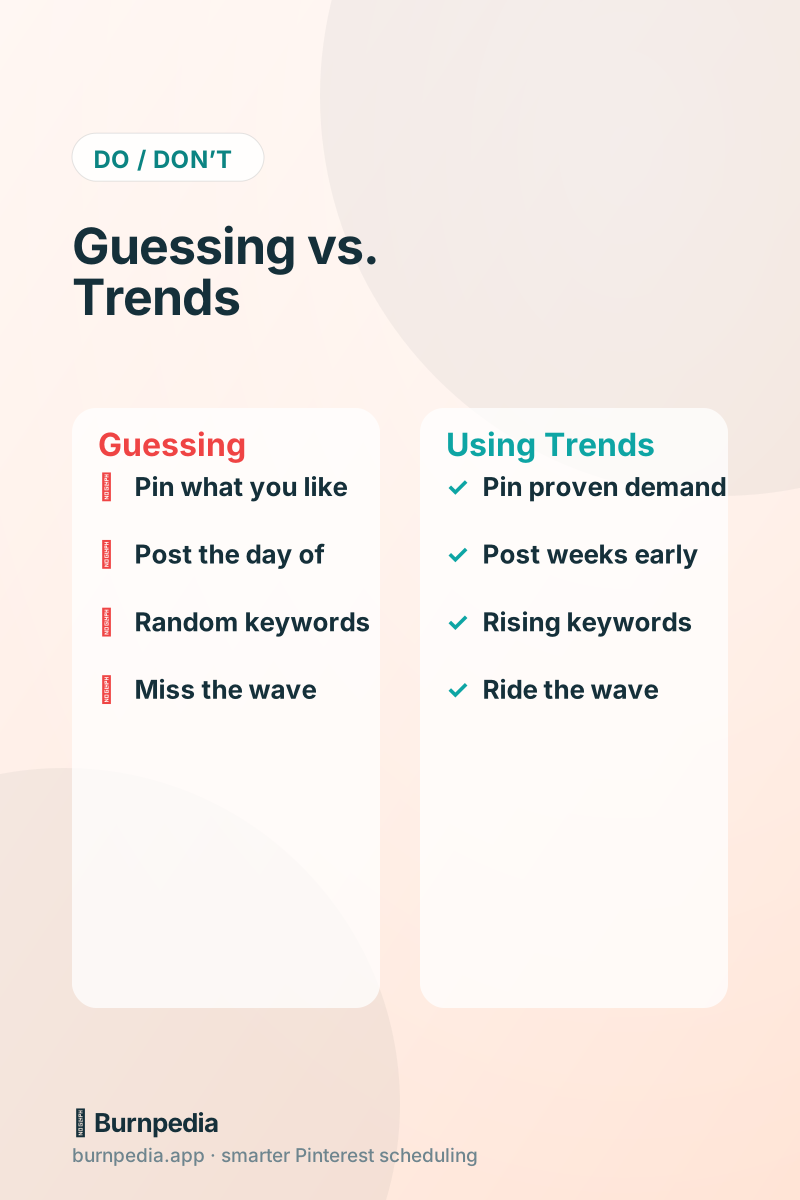
One underrated benefit: Trends kills a lot of pointless deliberation. Not sure whether to make “cozy” or “minimalist” fall content? Check which one has more search interest and rising momentum, and let the data decide. Torn between two product angles? See which language people actually search. This removes ego and guesswork from your content calendar and replaces it with evidence. Your pins get better not because you got more clever, but because you started listening to what people were already asking for.
A simple monthly Trends routine
Make this a small habit and it compounds. Once a month, spend twenty minutes in Pinterest Trends. Check the seasonal curves for your main topics so you know what’s coming up in the next six to eight weeks. Grab three or four rising related terms to build content around. Then plan your next batch of pins to match — a mix of the reliable evergreen topics and a few timely, trend-driven ones. Twenty minutes of research can shape a month of content that actually meets demand.
Over a year, this routine quietly transforms your account. Instead of a scattered pile of pins about whatever you felt like making, you build a library that consistently intercepts what people search for, right when they search for it. That’s the difference between shouting into the void and showing up in the exact moment someone’s looking.
Trend-research questions, answered
A few honest questions come up whenever I talk people through Pinterest Trends, so let me answer them directly. “How early should I really pin seasonal content?” Aim for four to six weeks before interest peaks — Trends shows you exactly when a topic starts climbing, so back up from there. “Should I chase the biggest keywords?” Not necessarily; rising terms that are smaller now but climbing fast are often the smarter, less-crowded bet. “How often should I check?” Once a month is plenty to stay ahead. “What if my niche seems flat on Trends?” Zoom into more specific sub-topics — the branches almost always reveal demand the broad term hides.
- Publish seasonal pins 4–6 weeks before the peak, not the week of.
- Favor rising terms over the biggest, most competitive ones.
- Check Trends monthly and grab a few climbing terms each time.
- Drill into related terms when a broad topic looks flat.
- Turn each promising trend into several fresh pins, not just one.
The mindset that ties it all together is simple: stop inventing demand and start meeting it. Pinterest Trends hands you a free forecast of what people will want and when they’ll want it — most marketers just never open it. Build a small monthly habit of checking the curves, catching a rising term or two, and planning your next batch around real demand, and your content stops being a hopeful guess and becomes a series of well-timed answers to questions people are already asking. That’s about as close to a cheat code as Pinterest gives you.
Pinterest Trends is one of the most generous free tools in marketing, and hardly anyone uses it well. Start there before you make your next batch of pins: find the demand, note the timing, catch a rising term or two, and create for what people already want. It’s the closest thing to a cheat code Pinterest gives you — and it’s just sitting there, waiting. — Sadie
Written by Sadie Brooks
Hey — I’m Sadie. I grew up in a small town outside Columbus, Ohio, moved to Austin for a job I quit within a year, and somewhere in between I started a scrappy little food blog to keep myself sane.
These days I help creators, bloggers, and small U.S. business owners grow on Pinterest without turning it into a second full-time job. I write the Burnpedia blog because I genuinely love this stuff, and because I wish someone had explained it to me in plain English years ago. Pour a coffee, pull up a chair.
Try Burnpedia freeWant Pinterest to run itself?
Every tip on this blog gets easier when your Pins publish on schedule. Burnpedia batches, times, and posts them for you — start free, no credit card.
Try Burnpedia free