How to Optimize Your Pinterest Profile for Search (2026)
Your name and bio aren’t decoration — Pinterest reads them to decide who you are and who to show you to. Here’s how to optimize every part of your profile for search.

Most people treat their Pinterest profile like a business card — something to make look nice and then forget. That’s a mistake, because your profile is actually searchable real estate that the algorithm reads to decide who you are and who to show your content to. Every element — your display name, your bio, even your username — is a chance to tell Pinterest (and searchers) exactly what you offer, using the words they’re typing. Optimize it well and you become findable; leave it vague and clever and you stay invisible. Let me walk you through tuning up every part of your profile for search.
This is a key pillar of your Pinterest setup, and it leans heavily on understanding keywords — the same skill that powers all of Pinterest SEO, which I cover in Pinterest SEO keywords. If your profile currently says something like “Just a girl who loves pretty things ✨,” don’t worry — we’re about to fix that into something that actually gets you found.
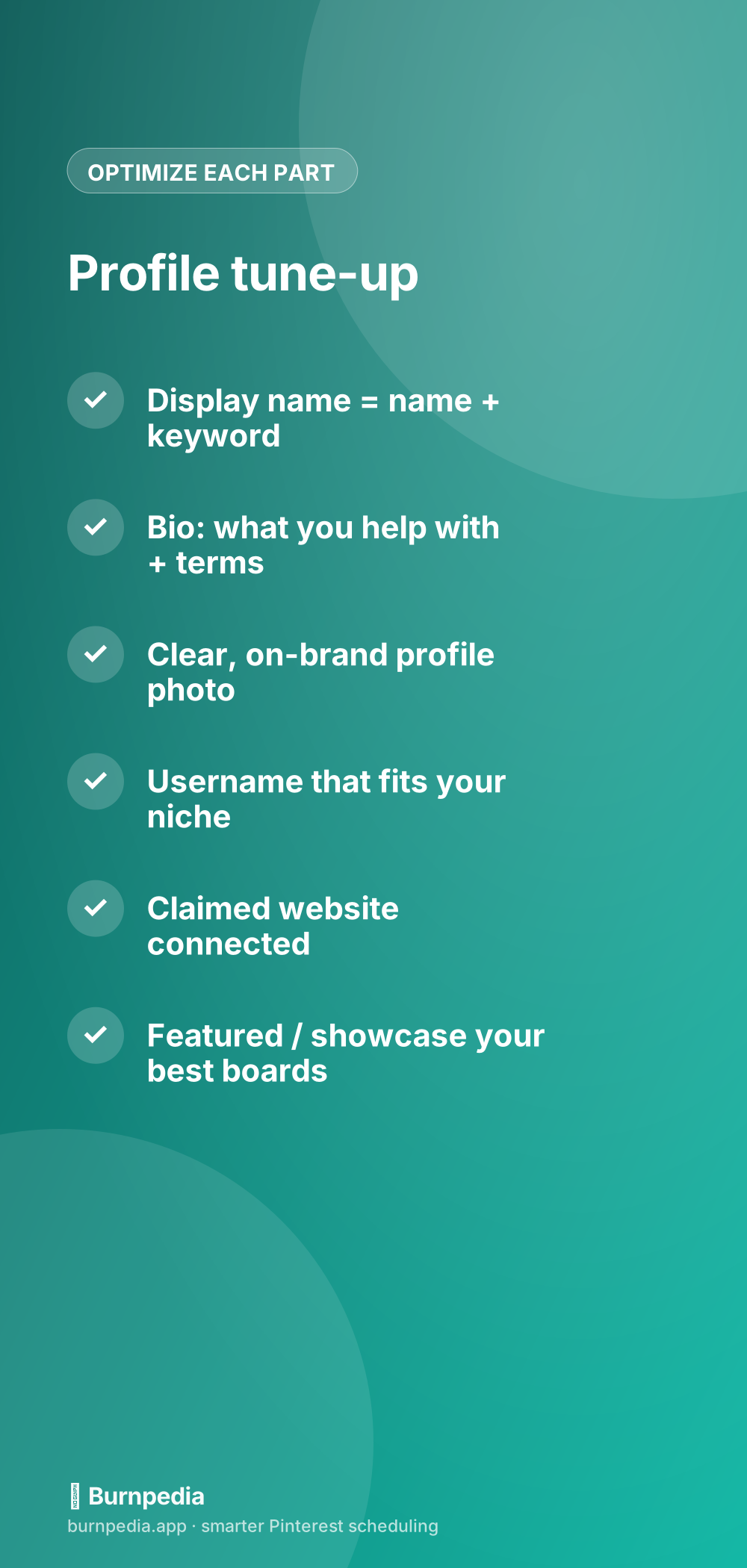
Your display name: the biggest lever
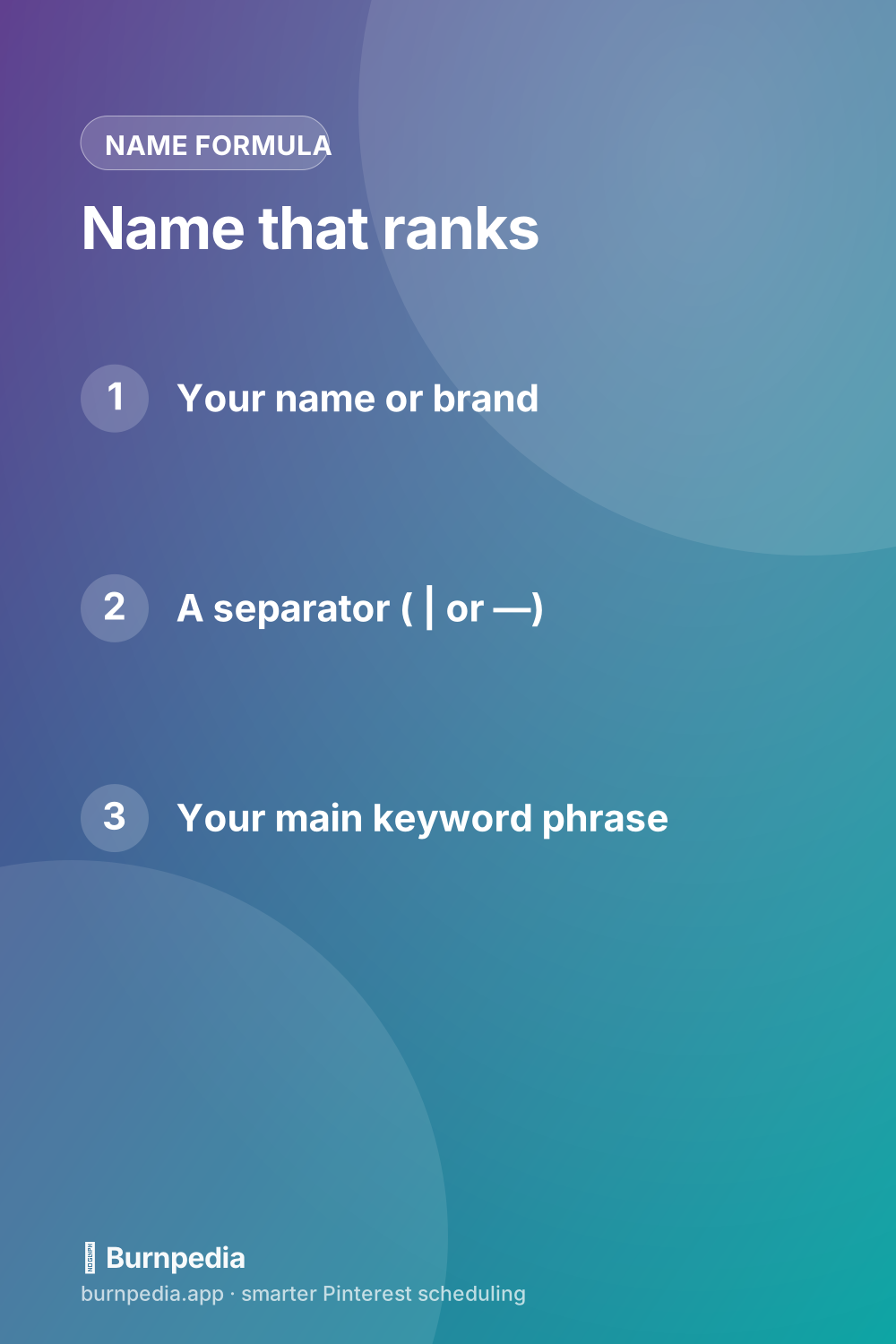
Your display name is prime keyword territory, and it’s the single highest-impact thing to optimize. Pinterest gives you generous space here, so don’t waste it on just your brand name. Use a formula: your name or brand, a separator, then your main keyword phrase. “Bloom Bakery” becomes “Bloom Bakery | Easy Cake Recipes & Decorating Tips.” “Alex Rivera” becomes “Alex Rivera | Minimalist Home Office Design.” Now, when someone searches those terms, Pinterest understands you’re relevant. This one change often does more for discoverability than anything else on your profile.
Choose the keyword that best captures what you want to be known for — the thing you’d most love to rank for and that your ideal customer actually searches. If you help with several things, lead with the most important one; you can weave the others into your bio and boards. The goal is a name that reads naturally to humans while clearly telling the algorithm your core topic.
Your bio: clear, keyworded, human
Your bio should answer one question fast: what do you help people do? Skip the vague poetry and say it plainly, working in the words people search. “I help busy parents make quick, healthy dinners — easy recipes, meal prep, and grocery tips.” That single sentence is warm, human, and stuffed with natural keywords. You can add a line of personality and a call to action (like where to click), but lead with clarity. I go deeper on crafting the perfect bio — including character limits and CTAs — in Pinterest bio optimization.
The balance to strike is keywords without keyword-stuffing. Your bio should read like a real person describing what they do, not a robotic list of search terms. Write it for a human first, then check that the important words naturally made it in. If it sounds like a spammy tag dump, soften it; if it sounds pretty but says nothing, sharpen it.
Photo, username, and the details
Round out the profile with the supporting pieces. Your profile photo should be clear and on-brand — a clean logo for a business, or a friendly, well-lit headshot for a personal brand (people connect with faces). Your username (the @handle) ideally reflects your niche or brand and stays consistent with your other platforms so people can find you everywhere. And make sure your claimed website is connected, so your profile links out and your Pins carry your attribution. These details won’t single-handedly rank you, but together they make your profile look legitimate and cohesive.
Showcase your best content
A profile isn’t just names and bios — it’s also the first boards a visitor sees. Make sure your most important, on-brand boards are prominent and well-named, because they reinforce what you’re about and give new visitors an obvious reason to follow. Tidy, keyword-named boards with attractive covers turn a profile visit into a follow. How to structure and name those boards is a whole topic of its own, which I cover in how to set up Pinterest boards the right way.
Think of the whole profile as a coherent first impression: a searchable name, a clear bio, a trustworthy photo, and a shelf of relevant boards. When those all point at the same core topic, both humans and the algorithm instantly “get” you — and getting understood quickly is exactly what earns you follows and distribution.
Keep it consistent across platforms
One easy win people overlook is cross-platform consistency. When your Pinterest username, profile photo, and brand voice match what you use on Instagram, your website, and elsewhere, people who discover you in one place instantly recognize you in another — and that recognition builds the trust that turns a casual browser into a follower and eventually a customer. Use the same handle where you can, the same profile image, and a bio that describes the same core thing you’re known for everywhere. It’s a small effort that makes your whole online presence feel like one coherent, trustworthy brand rather than a scatter of disconnected accounts.
This consistency also helps practically: it makes you easier to find on purpose. Someone who loved your Pin and wants to see if you’re on Instagram will guess your handle — make that guess correct. A recognizable, repeated identity across platforms quietly compounds, because every touchpoint reinforces the same memory of who you are and what you help with. In a sea of accounts, being instantly recognizable is a real advantage, and it costs nothing but a little coordination.
Finally, treat your profile as a living thing, not a set-and-forget form. Revisit it every few months and after any shift in your focus: does your display-name keyword still match what you most want to be found for? Does your bio reflect what you actually help people with now, or what you did a year ago? Are the boards a visitor sees first still your strongest, most on-brand ones? A quick seasonal tune-up keeps your profile aligned with where your business is heading, so it keeps attracting exactly the right people instead of slowly drifting toward describing an older version of you.
The beautiful thing about profile optimization is that it’s almost entirely a one-time effort with a permanent payoff. Unlike creating Pins, which you do forever, you write a keyword-rich name and bio once, set a clean photo once, connect your site once — and then every single search, every profile visit, and every Pin benefits from that work indefinitely. That’s an unusually high return for an afternoon’s effort. So even if the idea of “SEO” makes your eyes glaze, give your profile the small, focused attention it deserves this once. It quietly shapes how findable you are for as long as your account exists.
So stop treating your profile like decoration. Put your main keyword in your display name, write a clear bio that says what you help people do (in their words), use a clean photo and a consistent username, connect your claimed site, and showcase your best boards. None of it takes long, and together it transforms your profile from a pretty dead end into a findable, follow-worthy front door. Write for search, keep it human, and let the right people discover you. — Sadie
Written by Sadie Brooks
Hey — I’m Sadie. I grew up in a small town outside Columbus, Ohio, moved to Austin for a job I quit within a year, and somewhere in between I started a scrappy little food blog to keep myself sane.
These days I help creators, bloggers, and small U.S. business owners grow on Pinterest without turning it into a second full-time job. I write the Burnpedia blog because I genuinely love this stuff, and because I wish someone had explained it to me in plain English years ago. Pour a coffee, pull up a chair.
Try Burnpedia freeWant Pinterest to run itself?
Every tip on this blog gets easier when your Pins publish on schedule. Burnpedia batches, times, and posts them for you — start free, no credit card.
Try Burnpedia free