Pinterest Ads vs. Organic: Which Should You Actually Invest In?
Should you pay for Pinterest ads or grow organically? The honest answer: build the organic foundation first, then use ads to pour fuel on what already works. Here’s how to decide.

Sooner or later every Pinterest marketer hits the same fork in the road: keep grinding away at organic pins, or open the wallet and run ads? It’s a fair question, and the internet will happily give you two loud, opposite answers. Let me give you the calmer, more useful version, because the truth is they’re not really competitors — they’re teammates that play very different positions. Understanding what each is actually good at makes the decision easy.
The short version, which I’ll unpack: build your organic foundation first, because it compounds and it teaches you what works. Then, if and when it makes sense, use ads to pour fuel on the pins that are already proven. Ads are an amplifier, not a substitute — and amplifying something that doesn’t work just gets you a louder failure.
What organic Pinterest is great at
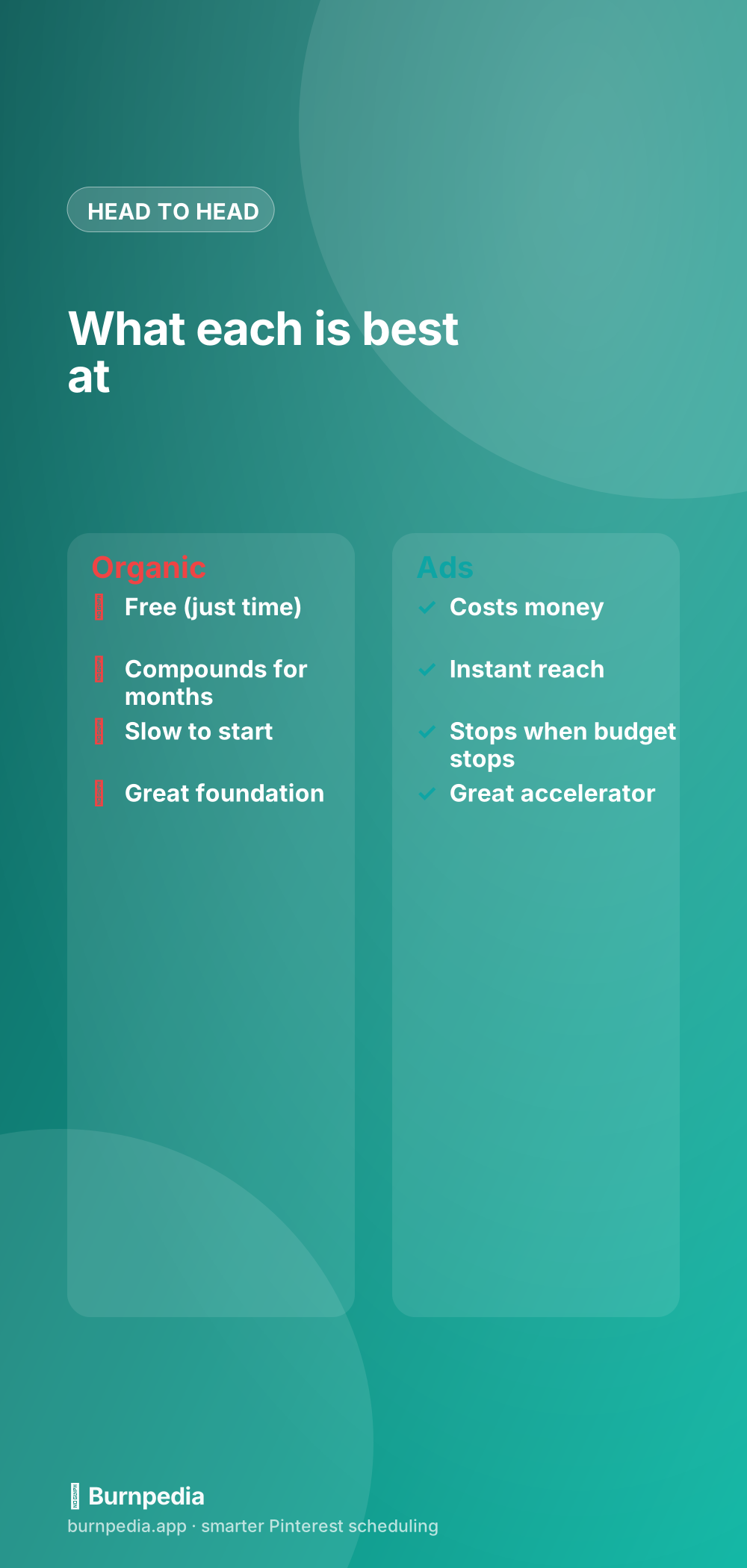
Organic pinning — making fresh, keyworded pins and letting them get discovered in search — has one superpower: it compounds. A pin you make today can keep getting found and clicked for months, at zero ongoing cost. You’re building a searchable library that keeps working while you sleep. The tradeoff is that it starts slow. A new account takes weeks to build authority, and you won’t see dramatic numbers on day three. Organic rewards patience and consistency, not urgency.
Organic is also where you learn. Every pin is a tiny experiment that teaches you which topics, images, and keywords resonate with your audience — insight you literally cannot buy. That knowledge is what makes any future ad spend efficient. If you skip it, you’re advertising blind. This is exactly why a solid organic strategy comes first in everything I recommend.
What Pinterest ads are great at
Ads flip organic’s tradeoffs. They cost money, but they give you speed and control. Promote a pin and it reaches people immediately — no waiting weeks for search authority. You can target specific keywords, interests, and audiences, and you can scale reach up or down by turning a budget dial. That makes ads brilliant for time-sensitive moments: a product launch, a seasonal push, a sale with a deadline. When you need reach now, ads deliver it.
The catch is that the moment you stop paying, the reach stops. Ads rent attention; they don’t build an asset the way organic does. That’s not a flaw — it’s just the nature of paid traffic. It means ads are best used as a deliberate accelerator for specific goals, not as your permanent foundation. Rent when you need speed; own for the long haul.
Why organic should come first
Here’s the core principle: ads amplify whatever you point them at. If you point them at a proven pin — one your organic data shows people already save and click — you amplify a winner and get an efficient return. If you point them at an untested pin, you’re paying to discover what you could have learned for free organically. Build the organic foundation first, and by the time you run ads, you already know which pins, offers, and audiences work. Your ad budget then buys scale, not tuition.
There’s a practical benefit too: your organic library keeps producing during and after any ad campaign. So even a modest, seasonal ad push sits on top of a base of traffic that never turns off. That combination — a compounding organic base plus targeted paid bursts — is far stronger than either alone, and much stronger than pouring money into ads with no foundation underneath.
How to run ads without wasting money
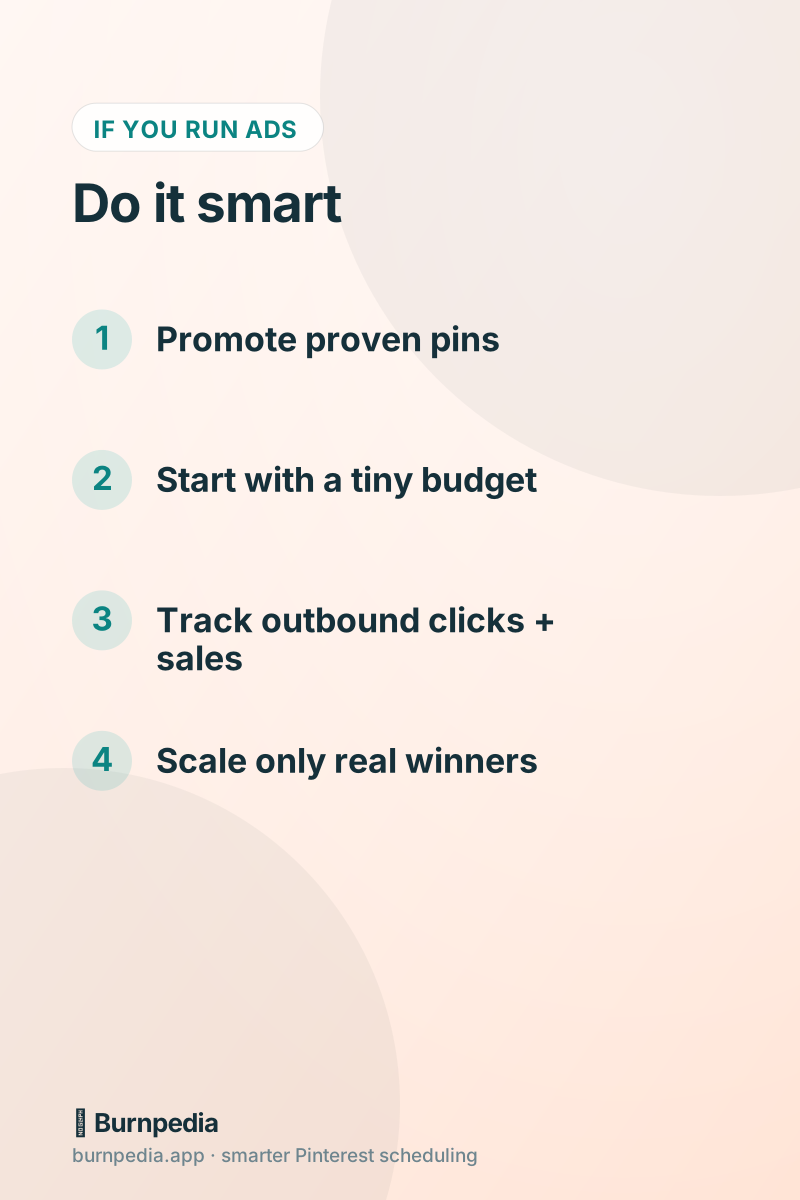
If you do decide to run ads, a few guardrails keep them sane. First, only promote pins that already performed organically — let your real data pick the candidates, not your gut. Second, start with a small budget you’re genuinely comfortable losing, and treat the first spend as research. Third, track the outcome that matters — outbound clicks and, ideally, the sales or sign-ups they produce — not vanity impressions. Fourth, scale only the pins that show a real, positive return, and cut the rest quickly.
This is the same measurement discipline that makes organic work, applied to paid. If you already read your analytics monthly and know your winners, you’re most of the way to running smart ads. Our metrics guide will help you focus on the numbers that actually predict a good return, whether the traffic is free or paid.
A simple decision framework
Not sure where you are? Use this. If you’re new, or your organic results are still thin, put your energy into organic — make fresh keyworded pins consistently, build your library, and learn what works. Don’t run ads yet; you don’t have proven pins to amplify. If your organic is humming and you’ve identified real winners, and you have a specific goal with a deadline — a launch, a season, a sale — layer in a small, focused ad campaign on those proven pins. Keep the organic engine running underneath the whole time.
For most creators and small businesses, the honest answer is “organic for a long time, then a little paid on top when it clearly helps.” Very few people actually need to start with ads. The ones who succeed with paid almost always built the organic foundation first — which is exactly why they knew what to promote.
A quick budget sanity check
Before you put a card down, run a small sanity check so ads stay a smart choice rather than an anxious one. Ask yourself: do I have at least a handful of pins that already earn real outbound clicks organically? Do I have a specific goal with a deadline that speed would genuinely help? Can I comfortably afford to treat the first spend as tuition-free research and lose it without stress? Do I have tracking in place to know whether the money actually produced sales or sign-ups? If you answered yes across the board, a small, focused campaign makes sense. If not, that’s your signal to keep building organically a while longer.
- Promote only pins with a proven organic click-through rate — amplify winners, not guesses.
- Start with a daily budget so small it can’t hurt, and treat week one as pure learning.
- Track outbound clicks and the sale or sign-up behind them, not vanity impressions.
- Give a test enough time and data before judging it — a day or two proves nothing.
- Scale only the pins showing a clear positive return, and cut everything else quickly.
The healthiest way to think about the two is as a base and a boost. Organic is the base that quietly grows and compounds no matter what. Ads are a boost you switch on deliberately when a specific moment — a launch, a season, a sale — deserves extra reach, and switch off when it passes. Keep the base running always; use the boost sparingly and only on proven pins. Do that, and you get the best of both worlds without the classic trap of paying to discover what free traffic would have taught you.
So, ads or organic? Both, in the right order. Organic is your foundation — free, compounding, and endlessly instructive. Ads are your accelerator — fast, controllable, and best aimed at pins you’ve already proven. Build the first, then add the second when it earns its place. Do it that way and you’ll never waste money advertising something that was never going to work in the first place. — Sadie
Written by Sadie Brooks
Hey — I’m Sadie. I grew up in a small town outside Columbus, Ohio, moved to Austin for a job I quit within a year, and somewhere in between I started a scrappy little food blog to keep myself sane.
These days I help creators, bloggers, and small U.S. business owners grow on Pinterest without turning it into a second full-time job. I write the Burnpedia blog because I genuinely love this stuff, and because I wish someone had explained it to me in plain English years ago. Pour a coffee, pull up a chair.
Try Burnpedia freeWant Pinterest to run itself?
Every tip on this blog gets easier when your Pins publish on schedule. Burnpedia batches, times, and posts them for you — start free, no credit card.
Try Burnpedia free